
By Eugene Davis
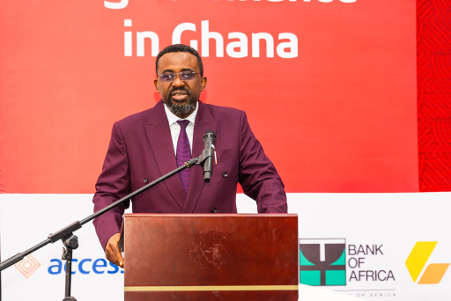
The Governor of the Bank of Ghana, Dr. Johnson P. Asiama, has reaffirmed the central bank’s commitment to maintaining macroeconomic stability, stressing its preparedness to respond decisively to shocks and market volatility.
Speaking at the Ghana Association of Banks’ Industry Thought Leadership Event, held under the theme “Banking the Last Mile: An Industry-Led Strategy for Accelerating Digital Finance,” Dr. Asiama emphasized that while African economies — including Ghana — remain vulnerable to global headwinds, the central bank is taking proactive steps to preserve economic resilience.
“Let me be clear: we are not pursuing a rigid exchange rate target or a predetermined band. The Bank of Ghana remains committed to a flexible exchange rate regime — one anchored in fundamentals, responsive to shocks, and supported by credible policy tools,” he stated. “We remain vigilant and fully prepared to act in a timely and measured manner to preserve orderly market conditions and safeguard macroeconomic stability — the foundation for innovation and inclusion.”
External Pressures and Domestic Progress
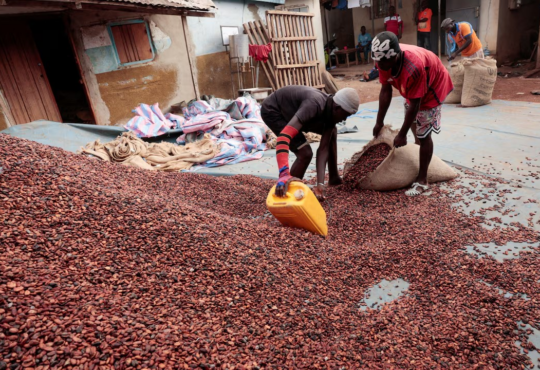
Global developments — from trade tariffs to escalating tensions in the Middle East — continue to pose significant risks for commodity-reliant economies like Ghana. The nation’s dependence on cocoa, gold, and oil makes it particularly sensitive to fluctuations in global demand and pricing. A decline in gold prices, for instance, directly reduces export earnings and national revenue.
Nevertheless, Ghana’s economy has shown encouraging signs. In the first quarter of 2025, Gross Domestic Product (GDP) expanded by 5.3% year-on-year — the strongest growth since Q3 2024 — driven by rebounds in the gold and cocoa sectors, according to Government Statistician Alhassan Iddrisu.
Currency Stability: Not by Chance
Dr. Asiama emphasized that the recent stability of the Ghanaian cedi is no coincidence. Rather, it is the outcome of deliberate and disciplined policy measures.
“The stability is not artificial. It stems from sound monetary policy, enhanced transparency in the FX market, and improved external sector fundamentals,” he noted. The central bank has shifted away from over-reliance on reserves and embraced a market-oriented FX auction system, backed by improved surveillance and stricter alignment of foreign exchange demand with real-sector transactions.
These reforms have curtailed speculative pressures and ensured that foreign exchange flows reflect legitimate trade, investment, and remittances.
IMF Programme and Market Confidence
The macro-fiscal adjustments under Ghana’s IMF-supported programme are beginning to yield results. Fiscal discipline is helping to rebuild policy credibility, while external financing flows have improved. These, combined with sustained disinflation, positive real interest rates, and strong remittance inflows, have helped anchor market expectations and restore confidence in the cedi.
Interoperability is Key
Looking ahead, Dr. Asiama called for deeper interoperability of digital platforms, extending beyond payments to include digital identity, credit scoring, and data portability.
He revealed that the Bank of Ghana is collaborating with relevant agencies to introduce a biometric financial authentication infrastructure, enabling unique identification of individuals across all financial institutions and platforms.
He urged industry leaders to: build shared digital infrastructure,co-invest in secure APIs, and align systems with open banking standards.
Responsible Innovation and Agile Regulation
While embracing innovation, Dr. Asiama cautioned against allowing it to outpace safety. As Ghana ventures into areas such as tokenized money markets, blockchain settlements, and AI-driven credit scoring, the BoG is adopting regulatory sandboxes and risk-based supervision.
He also announced the upcoming Virtual Assets and VASPs Bill, which aims to provide legal clarity while encouraging innovation.
“To the banking and fintech community, I say: partner with us. Bring your pilot projects into our regulatory co-creation spaces. Let’s set global standards right here in Ghana,” he charged. Citing the UK’s FCA’s partnership with AI leader Nvidia, he noted, “Ghana too can — and must — lead in this space on the African continent.”
Key Policy and Regulatory Initiatives
Dr. Asiama announced three major initiatives:
National Digital Finance Interoperability Forum (by Q4 2025):
A quarterly platform for dialogue among banks, fintechs, telcos, and regulators to ensure coordinated policy implementation.
Digital Identity Integration Mandate:
New guidelines will require all financial service providers to adopt interoperable digital identity standards for KYC and fraud prevention.
AI and Risk Governance Working Group:
In partnership with the Ghana Fintech and Payments Association and selected banks, this group will craft policies on AI use in credit scoring, fraud detection, and financial decision-making.
“These are not standalone measures,” Dr. Asiama concluded. “They represent a long-term vision for a safe, inclusive, and innovation-driven financial ecosystem — one where industry plays a co-architect role.