Minority criticizes gov’t for prioritizing symbolism over meaningful legislative reform



The Minority in Parliament has strongly criticized the government for prioritizing symbolic actions over substantive legislative reforms, pointing to the expedited amendment of Ghana’s Holidays Act as a troubling example.
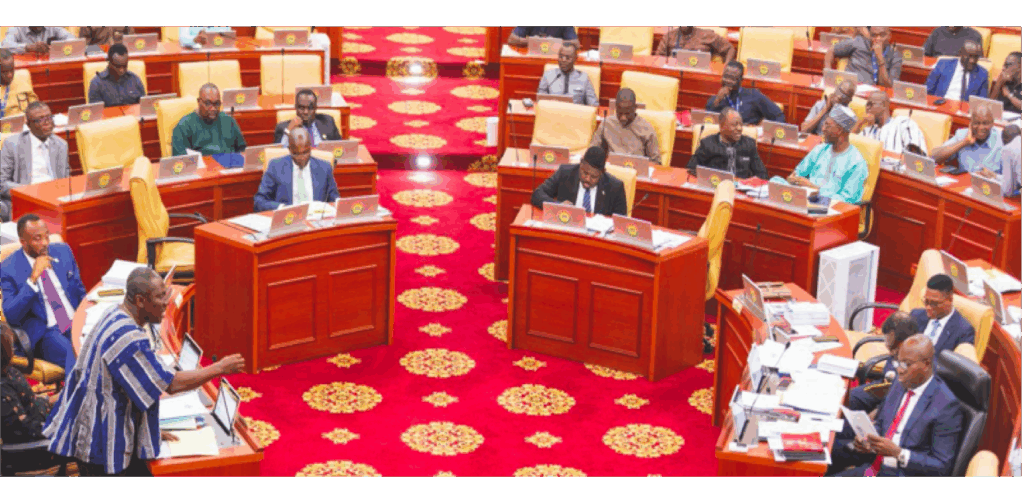
During a heated parliamentary debate on Wednesday, Minority Leader Osahene Alexander Kwamina Afenyo-Markin condemned the government’s push to fast-track changes to the Public Holidays and Commemorative Days Act, 2001 (Act 601) under a certificate of urgency.
“At a time of economic hardship, the government seems more concerned with rearranging the national calendar than fixing the economy,” Afenyo-Markin said. “Urgency is being applied to declare new holidays instead of passing legislation that creates jobs or provides social protection.”
The proposed amendment, tabled by the Minister for the Interior, seeks to reinstate July 1st as Republic Day and designate it a National Day of Prayer and Thanksgiving — a fulfillment of a campaign promise by President John Mahama. While the Minority acknowledged the value of national history, they described the move as “misguided and poorly timed.”
“What’s the emergency?” the Minority asked, arguing that a certificate of urgency should be reserved for national crises, not ceremonial observances. “This is a misuse of a legislative tool meant for urgent, critical national interest.”
They further criticized the government’s failure to prioritize long-promised legislative initiatives, including:
Property Rights of Spouses Bill: Intended to ensure equitable division of marital property and safeguard women’s rights, yet still not presented to Parliament.
Domestic Workers Bill: Aimed at formalizing labor protections for domestic staff, but missing from the agenda.
Intestate Succession Amendment Bill: Meant to address inheritance laws for spouses and children, yet inactive.
Scholarships Reform Bill: Promised to depoliticize scholarship awards, but not introduced despite a 120-day deadline by the President.
Tax reforms and auto policy revisions: Including the repeal of the ban on salvaged vehicles, which were promised within 90 days but remain unfulfilled.
Anti-corruption laws: Such as conflict-of-interest provisions and bans on public officials acquiring state assets, are completely absent.
Constitutional reforms: Including elected MMDCEs and the abolishment of ex-gratia payments, have stalled after initial committee formation.
1D1F and Galamsey: Unfulfilled Promises
The Minority also accused the government of quietly abandoning the One District, One Factory (1D1F) industrial initiative without offering any alternative. Additionally, they expressed disappointment at the lack of legal action against illegal mining (galamsey), despite strong campaign pledges. Legislative Instrument (LI) 2462 — criticized and promised for repeal — still remains in force.
Silence on Anti-LGBT+ Bill
The Minority also highlighted the government’s silence on the Anti-LGBT+ Bill, which had been a central campaign promise. “In opposition, they were vocal. In power, they’ve gone mute,” they said, decrying the lack of a government-sponsored bill or any legislative timetable.
Substance Over Symbolism
The Minority accused the government of chasing “low-risk, high-visibility wins” instead of confronting deeper systemic challenges. “Senior Citizens’ Day and a new National Day of Prayer were rushed through Parliament,” they said, “but key reforms on affirmative action, women’s rights, youth employment, and procurement have been ignored.”
They also pointed to youth-focused programs such as the National Apprenticeship Programme and One Million Coders, noting that while these initiatives were launched with enthusiasm, they lack legislative backing and sustainable funding.
A call for legislative priorities that reflect citizens’ needs
In conclusion, the Minority called on the government to match legislative urgency with the everyday realities of Ghanaians.
“This isn’t about opposing public holidays,” they clarified. “It’s about demanding equal urgency for laws that create jobs, protect the vulnerable, and strengthen institutions.”
They urged Parliament to resist rubber-stamping ceremonial legislation at the expense of impactful reform.
“The legislative calendar must reflect the real needs of the people — not just the symbolic interests of the executive.”