Parliament reaffirms commitment to openness, inclusion, and gender equity on International Day of Parliamentarianism

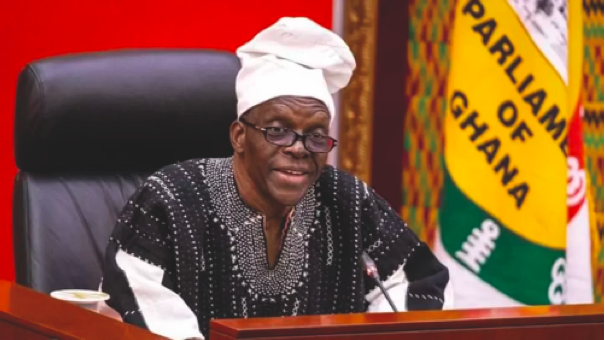

Ghana’s Parliament has reaffirmed its dedication to transparency, inclusive governance, and gender equity during the commemoration of the International Day of Parliamentarianism. The event, held at Parliament House in Accra, featured a triple-launch ceremony to mark the day—globally observed every 30th June under the auspices of the Inter-Parliamentary Union (IPU).
The three-fold observance included:
The inauguration of the Ghana Open Parliament Steering Committee
The launch of Ghana’s Open Parliament Action Plan
The formal celebration of Parliamentarianism Day
Bagbin: A Moment of Reflection and Renewal
Delivering the keynote address, Speaker of Parliament, Rt. Hon. Alban Sumana Kingsford Bagbin, described the occasion as an opportunity to reflect and recommit to the ideals of Parliament.
“As Socrates reminds us, ‘An unexamined life is not worth living.’ And as the Ga people say, Wogbɛ Jɛkɛ—we have indeed come a long way,” he noted.
“Our 32-year democratic journey under the Fourth Republic has seen significant strides in institutionalizing governance, inclusivity, and public accountability.”
Open Governance at the Core
Mr. Bagbin underscored the significance of aligning the three events, describing the timing as both “strategic and purposeful,” and in harmony with Ghana’s obligations under the Open Government Partnership (OGP).
The newly launched Open Parliament Action Plan is anchored on four pillars:
Transparency
Accountability
Citizen Participation
Innovation
The plan seeks to tackle key challenges including limited public access to legislative proceedings, low youth and gender participation, and perceived disconnect between Parliament and citizens.
The Speaker expressed confidence in the newly inaugurated Steering Committee, calling it “diverse and capable” of delivering on its mandate.
Celebrating Gains, Confronting Gaps
Speaker Bagbin praised Ghana’s peaceful democratic transitions, key reforms like the Right to Information Act, and the strengthening of oversight mechanisms. However, he lamented the slow progress in gender representation in Parliament.
Reflecting on this year’s IPU theme, “Achieving Gender Equality, Action by Action,” he called Ghana’s current global ranking—137th out of 168 countries—a wake-up call.
“From 8% in 1995 to just 14.6% in 2025, we have not moved fast enough. Compared to our African peers, we are lagging behind. It’s time to break down the systemic and cultural barriers holding women back.”
He emphasized the importance of the Affirmative Action (Gender Equity) Act, 2024 (Act 1121), which introduces a phased quota system across various sectors.
“Parliament must lead by example. Political parties must comply with the law, and we must ensure its enforcement.”
Strengthening the Women’s Caucus and Citizen Engagement
The Speaker called for enhanced institutional support for the Women’s Caucus, including a dedicated budget and active participation in legislative planning. He also urged the launch of a national civic education campaign to promote women’s political participation.
He highlighted the Citizens’ Bureau Office, established under the OGP, as a key platform for fostering transparency and sustained citizen engagement with Parliament.
Quoting former U.S. President John F. Kennedy, he remarked:
“Partnership is not mere posturing; it is an ongoing process defined by shared goals and collective commitment.”
A Call to Action
Concluding his remarks, Speaker Bagbin called on Ghanaians to take full ownership of their democracy:
“This is your Parliament, your home. Seize the opportunities being created. Engage your MPs. Use the Right to Information Law. Be part of the transformation.”
He then officially launched the Open Parliament Action Plan and inaugurated the Steering Committee—ushering in what he described as “a new chapter in Ghana’s open governance journey.”
“Let us recommit ourselves to building a Ghana where Parliament is celebrated across Africa as the most open, accountable, and responsive institution—a Ghana where every citizen feels a genuine sense of belonging to our democracy,” he concluded.