A Position Paper on the New Patriotic Party’s adoption of the Top-Down Approach for the Selection of Flagbearer

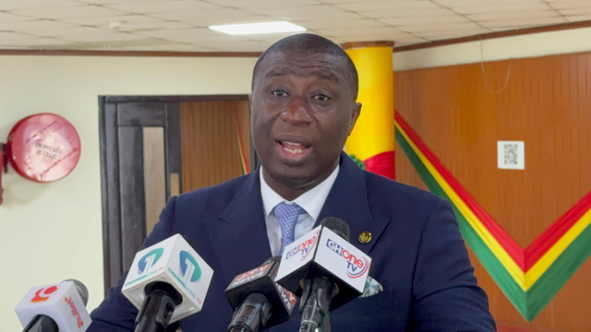

By: Hon. Patrick Yaw Boamah
The New Patriotic Party (NPP), one of Ghana’s leading political parties, has historically had a decentralized, bottom-up system of internal decision-making. This approach reflected the commitment of the party to participatory and inclusive governance.
Since 1992, the NPP’s electoral journey has reflected the value of grassroots mobilization and widespread internal cohesion. In the 2012 general elections, the party narrowly lost to the National Democratic Congress (NDC). However, the party rebounded in 2016 with a historic victory, securing over 53% of the national vote and winning a significant parliamentary majority. The party maintained its hold on power in 2020, though with a reduced parliamentary edge. The outcome of the 2024 election clearly shows a party that needs reforms and the restoration of its identity to help build trust among the Ghanaian electorates.
The increasing apathy among party members highlights the need for active grassroots participation and internal democracy aimed at fostering a strong, united front ahead of the 2028 presidential and parliamentary elections. The electoral strength of the NPP has always been tied to the enthusiasm, commitment, and mobilization of its base. Therefore, there is a high probability of the New Patriotic Party winning an election if the grassroots feel a sense of ownership over party decisions.
Recently, the National Council of the New Patriotic Party (NPP) has opted for a top-down approach in selecting the party’s next flagbearer. In as much as the National Council has the constitutional powers to take such an important decision, there is the need for the officers of the party to tread cautiously in implementing this decision.
The party currently has a fundamental problem of apathy among its core supporters. From the perspectives of development experts, you do not adopt a top-down approach when you have a problem with participation and apathy; rather, you strengthen the bottom-up
approach to promote participation and inclusivity and this will help gain back the trust of the party grassroot.
Key Issues
a. The New Patriotic Party (NPP) National Council’s decision to follow a top-down approach may be constitutional; however, this approach will not help address the current problem of apathy among the party grassroots. Also, the adoption of the top-down approach will conflict with the party’s commitment to inclusivity and grassroot participation. Rather, it will be more feasible to maintain the bottom-up approach where the process starts from
the polling station and proceed to the constituency, regional and the national levels. This can be consolidated with the expansion of the electoral college.
This institutional design will ensure that decision-making is broad-based, inclusive, and guided by the principles and philosophy of the New Patriotic Party.
b. The adoption of the top-down approach instead of the bottom-up approach used by the party previously has implication for participatory legitimacy and compromises institutional
ownership. The party’s organizational strength has historically depended on the active involvement of polling station executives,electoral area coordinators, constituency leaders, and regional executives. These actors are not only critical for selecting candidates but also for mobilizing support, enforcing discipline, and leading campaign efforts at the local level.
Also, it will be strategic for the prospective flagbearer to be elected after new party executives with whom he will be working with are elected since the current party executive’s tenure of office will end few months after the former is selected. Thus, the election of the flagbearer by party executives whose tenure of office is ending will disrupt political cohesion and could compromise the party’s functional effectiveness and electoral fortunes.
c. The top-down approach which in development arena refers to command or centralized decisions may be viable in situations where expert led decisions are required and the party structures do not have problems with apathy. The adoption of the top-down approach in the present state of the New Patriotic Party will not be strategic and needs careful reevaluation.
d.There have been some strong arguments among party stalwarts for the need to conduct early primaries for the selection of a flagbearer. In as much as most of these arguments may be valid, there is the need for the party to know that there has still not been broad consultation on the reasons why the New Patriotic Party lost the 2024 election. The party has not built consensus on the strategies that will help address the causes of the electoral defeat.
The neglect of the strategic process involved in addressing the causes of the party’s electoral defeat will only lead to the party repeating its mistakes.
Recommendations
- To strengthen internal democracy and ensure institutional integrity, there is the need for the New Patriotic Party (NPP) to take a critical look at the adoption of top-down approach since it will not help solve the current apathy the party is facing at the grassroot.
Rather, the party should maintain and strengthen its current bottom-up approach. This will ensure that the significant roles of grassroots members, polling station executives, electoral area coordinators, and constituency executives are retained in thedetermination of the party’s future direction. This will not only enhance ownership and legitimacy but also restore confidence in the democratic principles of the party.
b.Furthermore, the party should make sure that new executives are elected before the election of the flagbearer. The flagbearer is obviously going to work with the new executives during campaigns for the 2028 elections. It is therefore strategic to wait for the tenure of office of the current executives to elapse next year before electing the flagbearer.
c.The New Patriotic Party is confronted with the problem of voter apathy. Going forward, the party needs to put in place strategies to help address this problem. There is the need for the party to expand the electoral college to help improve the participation of members.
d.As the founding democratic political party in the Fourth Republic, the party should be committed to allowing all party members in good standing to vote in all party elections. This is going to be an expensive endeavor; therefore, being in good standing must include the payment of membership dues. This will help generate funds to support this expensive exercise.
The founding fathers of the New Patriotic Party had a vision of building a political system that will make Ghanaians enjoy the dividends of democracy through good governance with emphasis on “Property Owning Democracy”. The genuine commitment of the party to this important ideology is enough for the New Patriotic Party to maintain its enviable position in Ghana’s democracy.
In the eyes of the Ghanaian electorate, the New Patriotic Party was known and respected as a party of intellectuals committed to democratic principles and national development.
The party was not known for propaganda and politics of insults. Based on the results of the 2024 election, the party needs serious introspection, self-examination and truthful feedback.
This should serve as the basis for short-term, medium term and long-term structural reforms. Logically, there is the need for the structural reforms before electing a flagbearer because a good party structure will help elect a presidential candidate capable of winning national elections whilst a weak party structure will produce a flagbearer capable of winning only at a delegates’ conference.
Conclusion
The ability for the New Patriotic Party to rise from its 2024 electoral defeat depends on the ability of the party to make decisions that will help improve on its existing structures based on the lessons learnt from the electoral defeat. These decisions should not be made in
haste but must follow the strategic process focused on restoring the confidence of the Ghanaian electorate in the competences of the party.
The decision by the National Council to adopt a top-down approach may not violate any the party’s constitution; however, it will not be able to address the increasing apathy among the party supporters. The strengthening of the bottom-up approach will rather help improve participation, ownership, and accountability among the party supporters. To safeguard its democratic values and electoral competitiveness, the New Patriotic Party must reaffirm its
commitment to inclusive and constitutionally guided decisionmaking.