Forex wins at risk without real economic diversification – BoG



By Eugene Davis
The Governor of the Bank of Ghana, Dr. Johnson Pandit Asiama, has emphasized that diversifying Ghana’s economy and export base is essential to withstanding external shocks and curbing long-term pressure on the Cedi.
Speaking at the Graphic Business/Stanbic Bank Breakfast Meeting on the theme “Sustaining Forex Gains: Business and Economic Impact”, Dr. Asiama noted that while the Cedi has appreciated by over 42% year-to-date, reversing much of the depreciation recorded in 2022 and 2023, the gains must be protected through deliberate economic reforms.
Ghana’s gross international reserves now stand at $11.1 billion, offering close to 5 months of import cover, up from $8.98 billion at the end of 2024. The country also recorded a trade surplus of $4.14 billion between January and April 2025, driven by strong performance in gold, cocoa, and oil exports. The current account surplus rose sharply to $2.12 billion, compared to just $66 million a year earlier. Remittance inflows remain resilient, and Ghana’s ongoing IMF programme has passed successive reviews, contributing to a credit rating upgrade from Selective Default to CCC+ by S&P.
“These outcomes signal a return of macroeconomic credibility,” Dr. Asiama said, “but they must not lead to complacency. Sustaining forex stability is far more complex than achieving it. It requires forward-looking action, resilience, and structural transformation.”
Persistent Risks Despite Gains
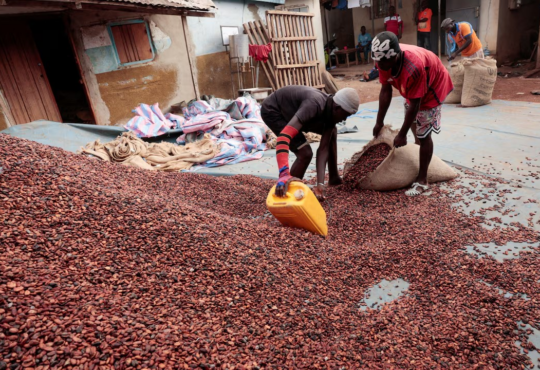
He cautioned that Ghana’s economy remains vulnerable due to its narrow export base. “Our current account and reserves still rely heavily on a few commodities—gold, cocoa, and oil—which are subject to global price volatility,” he said.
For instance, gold prices currently exceed $3,200/oz, partly due to geopolitical instability such as the Iran-Israel conflict. While this boosts export earnings temporarily, a drop in prices could quickly erode the trade surplus.
Ghana’s import profile is also heavily tilted toward energy, capital goods, and essential commodities, creating seasonal spikes in forex demand—especially in the second half of the year. Without diversification, even modest global shifts could reignite pressure on the Cedi.
Challenges of Dollarization and Low Reinvestment
The Governor also addressed Ghana’s persistent culture of dollar pricing, especially in real estate, education, and luxury retail, warning that it erodes trust in the Cedi and contravenes legal tender regulations.
He expressed concern that while export earnings are increasing, much of the revenue is either held offshore or not reinvested locally. Ghana’s savings rate remains low, and many small and informal sector exporters retain only a fraction of the value they generate.
Policy Dilemma: Managing a Strong Currency
Dr. Asiama acknowledged the policy balancing act faced by the central bank. While a strong Cedi supports lower inflation and improves terms of trade, prolonged appreciation could hurt export competitiveness and slow the industrial recovery. The Bank of Ghana must therefore manage forex strength carefully, avoiding excessive tightening that could stifle private sector credit and economic growth.
Beyond Stability: Turning Forex Gains into Growth
According to the Governor, the focus must now shift from sustaining the Cedi to leveraging it for real economic transformation. He outlined four priority areas:
Encourage Local Reinvestment of Forex Earnings
Incentivize exporters to reinvest foreign earnings in Ghana through tax reliefs, improved credit access, and preferential treatment in public procurement.
Empower SMEs to earn and retain forex using digital platforms, such as fintech trade tools and streamlined export documentation.
Diversify Exports Beyond Raw Commodities
Cocoa: Invest in value-added processing and branding for global markets.
Gold: Promote local refining and reserves management.
Oil and Gas: Develop a domestic petrochemical industry.
Support non-traditional exports such as technology, education, professional services, and the creative economy.
Deepen and Modernize Forex Markets
Expand the use of FX forward auctions, and introduce tools like currency swaps and forwards to help businesses manage exchange rate risk.
Encourage banks and corporates to adopt these instruments, enhancing market depth and stability.
Promote the Use of the Cedi
Enforce existing legal tender laws requiring pricing in Cedis, especially in high-profile sectors like housing and education.
Accelerate the rollout of the eCedi to support digital payments.
Strengthen regulation of cryptocurrency platforms to ensure safe, transparent participation in the digital finance space.
The Role of Businesses and Banks
Dr. Asiama stressed that maintaining long-term stability requires active participation from businesses and financial institutions. He called on:
Exporters to reinvest locally—not only out of patriotism, but for sustained profitability.
Companies that price in Cedis or hedge against forex risks to be supported with easier access to credit and foreign exchange.
All businesses to make forex risk management a core part of their strategy.
He posed key questions for reflection:
Do you understand how exchange rates affect your operations?
Do you have plans to manage forex risk?
Are you adjusting your investment strategies based on currency trends?
Forex awareness, he said, must expand across all sectors that import, export, or invest.
A Call for Partnership
The Governor concluded with a call for stronger collaboration between the Bank of Ghana and the private sector. “We must act not just as regulators, but as co-architects of Ghana’s monetary future,” he said. He encouraged businesses to:
Share market intelligence to improve policy planning and FX auction design.
Partner with the Bank in developing fintech solutions that support cedi-based payments, cross-border trade, and access to credit.
“Our forex gains must become the foundation for a more resilient, inclusive, and competitive Ghanaian economy,” he affirmed.