Mid-Year Budget Review : Gains of first six months just the beginning -Ato Forson

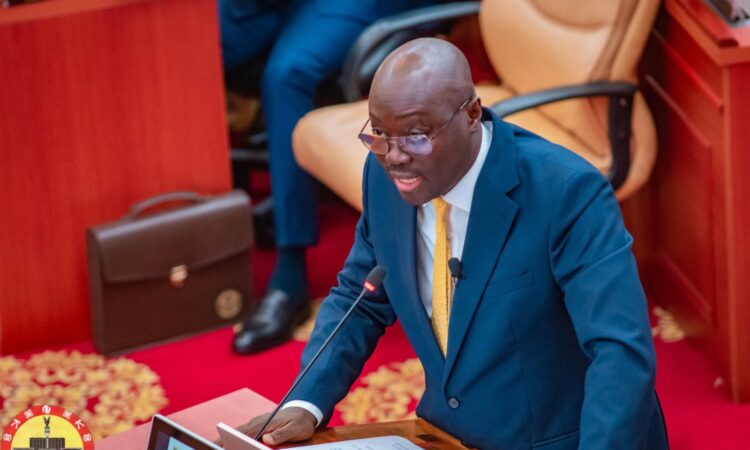

By Eugene Davis, Parliament House
Ghana’s Finance Minister, Dr. Cassiel Ato Forson, says the bold reforms introduced by the new administration are producing tangible results across key sectors.
Presenting the 2025 Mid-Year Budget Review to a Majority-only Parliament—following a walkout by the Minority—the Minister highlighted progress achieved within the first 200 days.
The government’s renewed social contract involved hosting a National Economic Dialogue and Education Forum and engaging broadly with stakeholders such as market women, trade unions, youth groups, and traditional leaders. Fiscal discipline has been tightened while protecting social programmes, with the IMF commending the reforms and releasing $370 million under its 4th review—bringing total disbursements to $2.3 billion.
Strategic investments have increased in education, health, agriculture, infrastructure, and job creation, while the establishment of the Ghana Gold Board (Act 1140) aims to boost forex reserves and stabilise the cedi. Coordination between the Finance Ministry and the Bank of Ghana has also improved to ensure cohesive economic management.
Key economic indicators show a strong fiscal performance, with a primary surplus of 1.1% of GDP (exceeding the 0.4% target) and a fiscal deficit reduced to 0.7% of GDP (better than the 1.8% target). Inflation fell from 23.8% in December 2024 to 13.7% in June 2025, and the 91-day Treasury bill rate dropped from 27.73% to 14.73%.
Foreign reserves improved to $11.12 billion—covering 4.8 months of imports—up from $8.98 billion in December 2024. The cedi appreciated 42.6% against the US dollar, 30.3% against the British pound, and 25.6% against the euro, marking the strongest recovery in 60 years.
According to the Finance Minister, investor confidence has returned, with Fitch upgrading Ghana’s rating to B- (Stable), net capital inflows reaching $792.12 million by June 2025, and the IMF’s 5th review scheduled for September 2025.
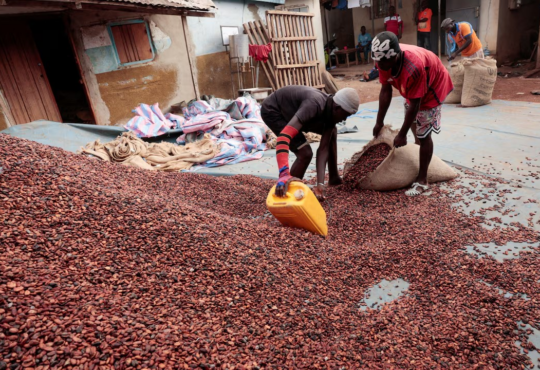
Trade performance was strong, with the trade surplus increasing from $1.65 billion in June 2024 to $4.93 billion in June 2025—a 200% jump driven by robust gold and cocoa exports. The current account surplus also rose sharply to $2.97 billion, up from $283.11 million a year earlier.
Policies driving cedi stability include the Ghana Gold Board’s contribution to forex reserves, reduced fiscal deficits, Bank of Ghana’s FX forward auctions, and efforts to promote a 24-hour economy and boost exports.
Looking ahead, Dr.Forson disclosed that a new VAT bill will be introduced by October 2025 for the 2026 Budget. The proposed reforms will abolish the COVID-19 Levy, reduce the effective VAT rate, remove the cascading effects of NHIS and GETFund levies, unify the VAT structure, raise the registration threshold to exempt small businesses, and enhance compliance through public education and electronic invoicing.
Under the revised fiscal framework,the Finance Minister revealed that a total revenue and grants have been adjusted upward from GH¢227.1 billion to GH¢229.9 billion (now 16.4% of GDP). Primary expenditure has been slightly revised to GH¢206.8 billion to accommodate energy sector support. Domestic interest payments have been cut by GH¢5.1 billion through prudent debt management, while external interest payments rose by GH¢2.2 billion due to post-cut-off creditor disbursements. Energy sector payments also increased by GH¢2.9 billion to cover fuel purchases for power generation.
So far, GH¢4.9 billion has been saved in domestic interest payments between January and June 2025, he noted.
Dr. Forson stated, “Ghana’s economy is stabilizing fast—with strong fiscal discipline, falling inflation, a stronger cedi, and renewed global confidence. We remain committed to reforms for long-term growth.”