Deputy Governor: ESG now central to Ghana’s financial supervision


By Eugene Davis
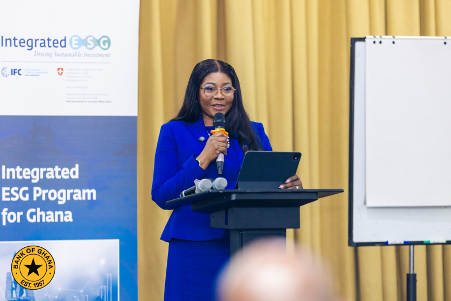
Matilda Asante Asiedu, Second Deputy Governor of the Bank of Ghana, has highlighted the transformative impact of Environmental, Social, and Governance (ESG) principles on the nation’s banking industry.
She stressed that ESG is not a peripheral concern but a core pillar for safeguarding financial stability, fostering long‑term value creation, and promoting responsible economic stewardship.
Speaking at the Ghana Sustainable Banking Principles (GSBP) Construction Sector Deep Dive in Accra, Deputy Governor Asiedu noted,
“We are entering an era where ESG factors are redefining how banks assess risk and seize new opportunities. Our industry must lead this evolution.”
To that end, the Bank of Ghana has mandated that all commercial banks overhaul their governance structures, risk‑management frameworks, and internal policies to align with the central bank’s ESG directive by 31 December 2025. Full compliance will take effect on 1 January 2026.
A Decade of Progress
2015: Establishment of the Sustainable Banking Committee—the Bank’s first initiative to pinpoint ESG vulnerabilities within the sector.
2019: Launch of the Ghana Sustainable Banking Principles, following extensive stakeholder consultations and endorsed by the CEOs of all commercial banks.
2021: Roll‑out of a standardized ESG reporting template via the Online Regulatory Analytics and Surveillance System (ORASS). That same year, all 23 banks received training on the seven GSBP, and the Bank of Ghana joined the Network for Greening the Financial System (NGFS).
2024: Issuance of the Climate‑Related Financial Risk Directive, aligning domestic regulation with international standards such as the Basel Committee’s climate‑risk guidance.
Since reporting began in March 2021, average compliance with the GSBP has risen from 42.3% to 73.1% as of March 2025—an achievement the Deputy Governor attributes to close collaboration between the Bank and regulated institutions.
Strategic Partnerships and Future Roadmap
The Bank of Ghana has forged alliances with global and local organisations—including the Sustainable Banking and Finance Network, the Alliance for Financial Inclusion, and the Ghana Meteorological Agency—to share best practices and co‑develop tools. A new Green Finance Taxonomy, created with the Ministry of Finance, now provides a unified framework for identifying sustainable investments.
In 2023, the Bank established its Climate and Sustainability Office to drive strategy, coordinate stakeholder engagement, and build capacity across the financial sector. Building on sector‑specific dialogues held with manufacturing (April 2024) and agriculture (October 2024), today’s focus on construction marks the next step in Ghana’s sustainable‑finance journey.
The Bank of Ghana remains steadfast in its commitment to guide, supervise, and support the industry as it transitions toward more resilient and sustainable practices.