BoG cautions banks: Grow lending without compromising loan quality


By Eugene Davis
Banks in Ghana have been called upon to expand credit to the private sector—particularly to industries that drive real economic growth—while maintaining strong risk management to protect the quality of their loan books.
This call came from the Governor of the Bank of Ghana, Dr. Johnson P. Asiama, who emphasised that credit growth should not undermine the financial stability the sector has worked hard to achieve.
Dr. Asiama noted that the banking industry has seen a steady decline in non-performing loans (NPLs), a development he attributed to both a more stable macroeconomic environment and the stronger credit underwriting standards adopted in recent years.
He added that the recapitalisation process, powered by retained earnings and fresh capital injections, has strengthened banks’ balance sheets, making them more resilient and better positioned to withstand shocks while seizing new growth opportunities.
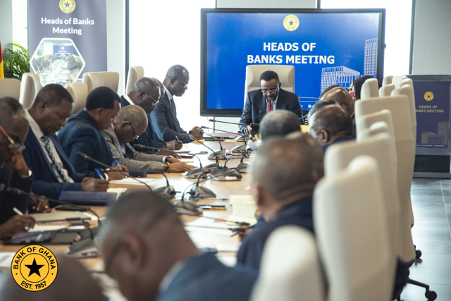
Speaking at the Post-Monetary Policy Committee Meeting with Heads of Banks under the theme “Translating Macroeconomic Gains into Sustainable Banking Sector Growth,” the Governor stated:
“With this resilience comes responsibility. Our monetary policy stance is shifting to support growth, and banks must respond by stimulating private sector credit, especially in productive areas of the economy. This must be done prudently, ensuring that credit expansion does not compromise the quality of loan books. The challenge is to grow lending while preserving the stability that now defines our financial system.”
Regulatory and Compliance Agenda
The Governor also unveiled an ambitious set of regulatory reforms aimed at strengthening resilience, improving transparency, and aligning Ghana’s banking sector with top-tier international standards. These measures address both immediate compliance gaps and long-term reforms to “future-proof” the sector.
Key highlights include: Credit & Risk Governance,Mandatory action against deliberate loan defaulters.
Introduction of a Credit Risk Management Directive in line with Basel principles, setting minimum standards for loan underwriting, monitoring, and provisioning.
Launch of a Bancassurance Directive to strengthen oversight of bank-insurance partnerships.
A Large Exposures Directive and new credit concentration guidelines to reduce overreliance on a few borrowers or sectors.
Liquidity & Capital Resilience
A new Liquidity Risk Management Directive requiring banks to hold sufficient high-quality liquid assets to cover 30-day stress periods.
Closing loopholes in reserve requirement reporting, including the misclassification of deposits as borrowings.
Clear rules on the treatment of e-money float accounts.
Strengthened capital planning through the Internal Capital Adequacy Assessment Process (ICAAP) and robust stress testing for early risk detection.
Market Conduct & Foreign Exchange Compliance:
Stricter enforcement of the Foreign Exchange Act and guidelines for inward remittances.
Prohibition of unapproved remittance channels, FX swaps within remittance operations, and the use of unprescribed FX rates.
Weekly inward remittance reporting to the BoG, with penalties for non-compliance under the Payment Systems and Services Act and the BSDI Act.
The Governor also announced structured engagements with the Ghana Association of Banks to address foreign exchange market issues, liquidity concerns, and forward auction mechanisms.
Forward-Looking Strategy
The Bank of Ghana will conduct a strategic review of banking business models to assess long-term sustainability, requiring active input from boards and senior executives.
These reforms, Dr. Asiama stressed, form a single, coherent framework to enforce compliance, strengthen competitiveness, and position Ghana’s banking sector to better support inclusive and sustainable economic growth.
He charged bank leaders to translate macroeconomic stability into tangible growth by: Expanding financing to SMEs and infrastructure projects, supporting agricultural and manufacturing value chains and leveraging digital innovations to serve rural and underserved communities.
Ghana’s economy has shown signs of recovery, with GDP growth picking up in the first quarter of the year. Inflation eased to its lowest level since December 2021, the cedi strengthened, and foreign reserves remained healthy.
Dr. Asiama asserted that the regulatory agenda is forward-looking and positions Ghana’s banking system to meet the highest global benchmarks while staying anchored in the country’s development priorities.