IFS warns gov’t to quell renewed appetite for dicey foreign bonds


By Patrick Paintsil
Ghana’s dearth of revenue to fund capital expenditure and a seemingly favourable credit rating from budget under execution positions it as a prime candidate for external borrowing, but that is a trap that the government must not fall for, warns the fiscal policy think tank, Institute for Fiscal Studies (IFS).
With the economy already reeling from the far-scathing impact of the recent debt restructuring—arising from default on monies owed to the country’s foreign creditors and the subsequent shutdown, the IFS says it is wrongly-timed and dicey for government to re-enter the foreign bond market.
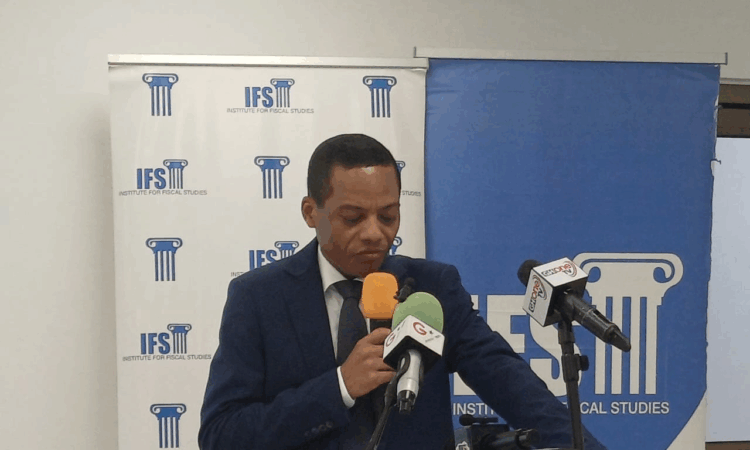
“Government should not fall to that temptation in light of recent history. It must tread cautiously with its ponderings to return to that market—the same market that tossed us out not too long ago and triggered a debt crisis,” said Leslie Dwight Mensah, a research fellow of the institute.
The institute argued that a rushed return to international bond market will cause the already high debt levels to sharply worsen and rapidly raise debt service costs—risking another debt crisis.
“This is a market that has shown that it could discipline us, if it becomes necessary. A return to the foreign bond market is a promise to bondholders to do well with their monies this time, but as it stands, there has been no radical improvement in revenue to guarantee such.
Analysis of IFS’ fiscal data on the first-half of 2025 showed weak revenue performance amid a harsh financing environment with government unable to meet its targets for both domestic revenue and foreign grant which fell short by GH¢2.90bn or 2.9percent and GH¢338.72million or 31.7percent respectively.
Government was also able to raise a net budget financing of GH¢15.2bn, representing 45.9percent, against the programmed target of GH¢32.96bn. The think tank sees this trend closing the year, making it untenable for additional risks from excessive borrowing.
In the place of excessive borrowing and taxation, the fiscal think tank implored government to generate sustainable revenue from its natural endowments with active participation in the lucrative extractives sector.
“We can’t always assume that somebody’s money is the way to go; neither can we depend on excessive taxation, which will rein in the revenue but at the expense of business competitiveness and private sector growth,” senior research fellow, Dr. Said Boakye, remarked.