Africa’s energy transition must be driven by partnerships, innovation, and inclusive financing – experts at FEC



By Eugene Davis
Governments, investors, and energy stakeholders have been urged to rethink Africa’s approach to financing the continent’s energy transition by moving away from aid dependency toward genuine partnerships and innovative financial solutions.
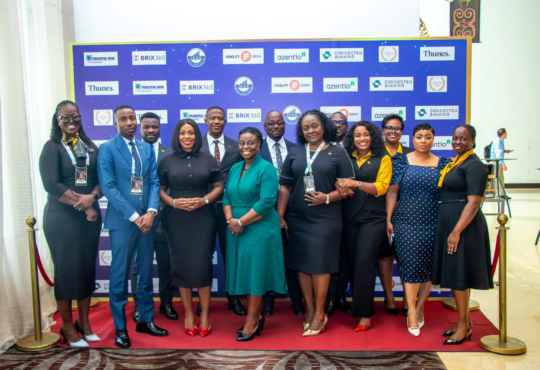
This call was made at the Future of Energy Conference (FEC) in Accra, organized by the Africa Centre for Energy Policy (ACEP) under the theme: “Financing Africa’s Energy Future: Unlocking Investments for Energy Access and Economic Transformation.”
Dr. Olufunso Somorin, Regional Principal Officer at the African Development Bank (AfDB), stressed that Africa must adopt a bold shift in mindset. “Too often, we approach the world asking for grants and cheap loans—funds that come from other taxpayers. We need to ask ourselves how we can use our own limited resources differently, strengthen our financial management systems, and put more of our own skin in the game,” he said.
According to him, redefining how Africa allocates and leverages its resources will help reposition the continent from a “come and help us” posture to a “come and partner with us” agenda. “We need to partner with people who align with our goals, who truly see the need for our development while valuing who we are. Only then will the conversations begin to change,” Dr. Somorin added.
Delivering the keynote, Suneeta Kaimal, President & CEO of the Natural Resource Governance Institute, emphasized that Africa’s energy transition must be context-specific. “For transitions to succeed, they must reflect country needs. Integrating renewables will diversify economies, reduce risks, and build more resilient growth pathways. Stronger regional collaboration will also align benefits, reduce vulnerabilities, and increase domestic value creation across the continent,” she noted.
On her part, Shaima Hussein, Deputy Resident Representative of UNDP Ghana, called for urgent action to unlock Africa’s clean energy potential. “Africa holds vast renewable resources, yet attracted only 2% of global clean energy investment between 2000 and 2020. To change this, we must scale up innovative financing—ranging from blended finance and green bonds to carbon markets and diaspora investments. Above all, energy transition must be inclusive. Without women, youth, and vulnerable groups leading the way, it will never be a just transition,” she said.
A high-level panel discussion explored how Africa can move from ideas to investments by making clean energy projects more bankable, especially in high-risk markets. Experts identified three key priorities:
Ensuring financial viability of projects;
Clear risk allocation and stronger mitigation strategies;
Building safeguards to address climate impacts and natural disasters.
The panelists further noted that energy access must go beyond grid expansion to ensuring that households, businesses, schools, hospitals, and industries can afford and productively use electricity. “Energy access is not just about connections; it is about dignity, equity, and opportunity,” they emphasized.
With Africa’s population projected to reach 2.5 billion by 2050, experts agreed that universal, reliable, and affordable energy access will be critical for boosting productivity, raising household incomes, advancing gender equity, and driving inclusive economic transformation.
At the same time, governments—already fiscally overstretched—cannot bear all the risks. Participants called for innovative financial instruments to de-risk investments while attracting private capital. They also urged governments to strengthen capacity in negotiating and structuring bankable energy projects, including engaging professional transaction advisors to avoid poorly designed contracts.
Finally, participants highlighted the need for regional cooperation through integrated energy markets and cross-border infrastructure to enhance efficiency, ensure energy security, and accelerate Africa’s just and inclusive energy transition.
The conference also featured:
Innovation Challenge – A pitch platform for entrepreneurs, researchers, and professionals to showcase new energy solutions.
Innovation & Investment Arena – An exhibition connecting innovators with investors to foster partnerships.
Policy Roundtables – Focusing on innovative funding strategies, regional energy integration, and practical solutions to reduce energy poverty.
The Future of Energy Conference reinforced that Africa’s energy future must be anchored in partnerships, inclusive financing, and strong institutions—with the ultimate goal of building sustainable, competitive, and resilient energy systems that power the continent’s economic transformation.