The Role of Women in the Success of AfCFTA: Opportunities and Challenges



Introduction
The African Continental Free Trade Area (AfCFTA) represents a transformative opportunity for economic growth and development across the continent. By creating a single market for goods and services, AfCFTA aims to boost intra-African trade, enhance industrialization, and create employment opportunities.
Women, who constitute a significant proportion of Africa’s workforce, play a critical role in the success of this agreement. Moreso, the Protocol to the Agreement establishing the African Continental Free Trade Area on Women and Youth in Trade [“Protocol”] is a welcome effort to help alleviate endemic challenges faced by women and the youth. This paper will highlight the contributions of women to African trade, the challenges they encountered, the in roads made by the Protocol and how the protocol can be properly implemented to ensure the active involvement of women in Africa’s economic transformation.
Women as Key Drivers of Trade and Economic Growth
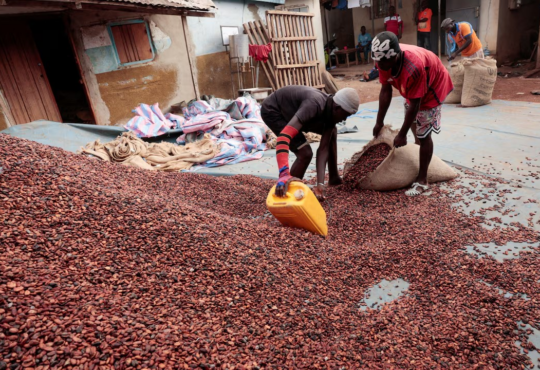
Women have historically been at the forefront of trade in Africa, particularly in the informal sector. According to the United Nations Economic Commission for Africa (UNECA), women account for approximately 70% of informal cross-border traders on the continent. These traders are vital to the supply chains that sustain local economies, providing goods and services to both urban and rural areas. Additionally, women-led small and medium-sized enterprises (SMEs) contribute significantly to job creation and economic resilience. The International Trade Centre (ITC) estimates that women-owned businesses account for over 30% of registered SMEs in Africa. With AfCFTA’s potential to expand markets and remove trade barriers, women entrepreneurs can access new opportunities to scale their businesses and compete on a continental level.
Demographic and Socioeconomic Context
Africa has experienced a sustained population boom for decades, with its current population estimated at approximately 1.5 billion in 2024.[1] Projections indicate that this figure will rise by an additional 950 million, reaching 2.5 billion by 2050.[2] Women comprise nearly half of this population and, on average, have a higher life expectancy than men, living approximately four years longer.[3] In fact between 2000 and 2019, the region’s healthy life expectancy for women increased from 46.62 to 57.09 years, marking an improvement of approximately 10.5 years.
This demographic trend clearly shows the critical role and potential of women in Africa’s socioeconomic transformation.
Challenges Women Face in Africa
Despite their contributions and the important position of women, women traders and entrepreneurs encounter several structural and systemic barriers that limit their participation in cross-border trade.
First, there is a limited access to Finance by women on the continent. Access to capital remains a major obstacle for women in trade. Women entrepreneurs face a $42 billion financing gap compared to men. Many female entrepreneurs struggle to secure loans due to lack of collateral, restrictive lending policies, and gender biases in financial institutions. This financial exclusion prevents them from expanding their businesses and taking advantage of new markets under AfCFTA.
Second, there are several Informal Trade and Legal Barriers which affect women. A large proportion of women engage in informal trade, which exposes them to harassment, bribery, and inconsistent regulatory frameworks at border crossings.[4] Reports for instance in Democratic Republic of Congo reveal that about 38% of women traders are abused by border officials.[5] Without formal registration, they cannot benefit from trade agreements or access essential business support services.
Third, there is inadequate Market Information and education which hinders their trade. Many women traders lack access to critical market information, such as pricing, demand trends, and trade regulations. This challenge may be because of the unavailability of information in local languages spoken by the women. For instance, research in Burundi show that many women do not understand the differences in the taxes and duties owed by them and this ignorance sometimes results in fines, penalties which invariably leads to the increase in prices of the goods. [6]
Fourth, are socio-cultural constraints. Gender norms and traditional roles continue to limit women’s mobility and decision-making power in trade. In many African societies, women face restrictions on property ownership, education, and business leadership, affecting their ability to fully engage in AfCFTA’s opportunities.[7]
Last, Poor Infrastructure and Trade Logistics are part of the challenges women face. Limited access to transportation, storage facilities, and digital trade platforms pose a significant barrier to women traders. Poor infrastructure increases transaction costs and reduces the competitiveness of women-led businesses in the AfCFTA framework.
How is the Protocol on Women and Youth in Trade seeking to empower women
The Protocol on Women and Youth in Trade is a good step by the AfCFTA to address the challenges women. Predominantly the Protocol provides for the following-
- Elimination of Non-Tariff barriers affecting women- Non-tariff barriers (NTBs) are trade restrictions that restrict trade but are not in the form of direct taxes or tariffs. These barriers can make it more difficult or expensive for foreign goods and services to enter a market,
The Protocol at article 6 seeks to eliminate these non-tariff barriers by requesting of state parties to progressively eliminate the non-tariff barriers which affect women and youth in trade.
- Inclusive Socio-economic development- The protocol in its bid to facilitate an inclusive socio-economic development allows for member states to undertake where appropriate to promote and facilitate the empowerment and the effective integration of Women in Trade,[8] to amend or repeal legislation; identify, and progressively eliminate discriminatory practices against Women in Trade,[9] to promote quality education and information awareness programmes on trade,[10] to enhance the productive capacity of Women in Trade,[11] to strengthen and support associations of Women responsible for coordinating and advocating trade issues,[12] to collect and share information on best practices relating to the inclusion of Women,[13] and to take such other measures aimed at eliminating prejudices against and promote equality for Women and.
- Access to Finance for Women- Also, the protocol makes provision for access to finance for women by allowing state parties to implement in accordance with their national legislation, measures in collaboration with financial service providers that facilitate access to affordable financial instruments services and guarantees which are adapted to trading activities by women.[14] Moreover, the state party is obligated to establish and/or strengthen business development services to train Women in financial literacy and services[15] and to facilitate access to relevant knowledge and information on financial products and services and make it available to Women[16]
d. Other Provisions- The Protocol further provides for development of capacity[17] participation in formal trading activities by women[18] protection against harassment such that state parties are given the obligation to establish mechanisms to address issues of harassment of women.[19] It also provides for digital trade and for measures to support business association and business clusters of Women and women led micro, small and medium-sized enterprises.[20]
[1] See https://www.worldometers.info/world-population/africa-population/#:~:text=The%20current%20population%20of%20Africa,%22)%2C%20ordered%20by%20population.
[2] Stanley A, African Century, https://www.imf.org/en/Publications/fandd/issues/2023/09/PT-african-century
[4] Laurache-Maltais, A, Central African borders: A danger zone for women traders https://unctad.org/news/central-african-borders-danger-zone-women-traders
[7] The Futures Report, Making The AfCFTA Work, https://au.int/sites/default/files/documents/39689-doc-ss_afcftafuturereport.pdf