
By Eugene Davis
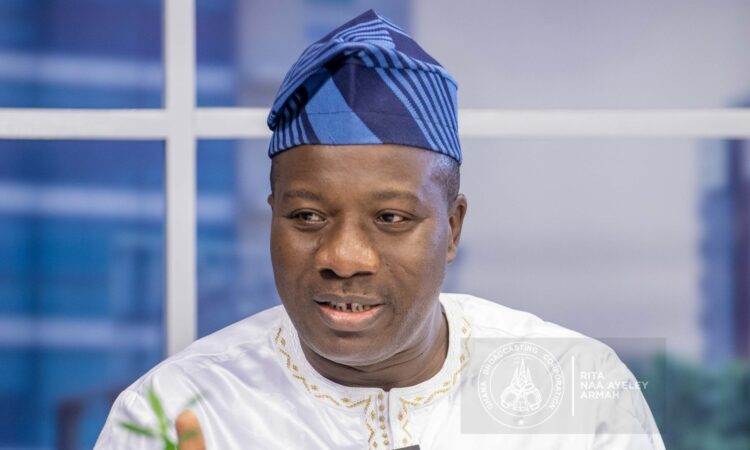
The Majority Leader in Parliament, Mahama Ayariga, has reiterated that Ghana’s economy is steadily rebounding, citing signs of fiscal discipline, stable macroeconomic indicators, and renewed investor confidence.
According to him, the government’s prudent spending and targeted economic interventions are beginning to yield results, with key indicators pointing in the right direction. Ghana’s economy, he noted, expanded by 6.3 percent year-on-year in the second quarter of 2025, up from a revised 5.7 percent in the same period last year, driven mainly by growth in the services sector.
“The country is once again gaining global economic respectability — so far, so excellent,” Mr. Ayariga declared, drawing attention to what he described as steady improvements across several sectors.
He said the Ghana cedi had shown remarkable stability in recent months, inflation had dropped to single digits, and the cost of living was gradually easing for many households. “We are paying our debts and at the same time not accumulating needless ones. We are spending within our means — spending, but spending wisely. So far, so excellent,” he said with emphasis during his opening remarks following the resumption of the legislature from a three month recess.
Mr. Ayariga also touched on education, noting that the Free Senior High School (Free SHS) programme remains fully funded and running smoothly. “Our schools are functioning well, and we have not experienced any disruption to the school year calendar in our constituencies during our recess — so far, so excellent,” he stated.
On the health front, the Majority Leader highlighted progress in the operations of the National Health Insurance Authority (NHIA), announcing that a total of GHS 2.84 billion in claims had been paid to accredited healthcare providers across the country — the most consistent payment record since the scheme’s inception.
“As I address you, there are no arrears outstanding. Claims payments are now up to date, with reimbursements made monthly — a marked improvement from previous years when payments were delayed for months,” he said.
He explained that the government’s decision to un-cap the National Health Insurance Levy (NHIL), championed by President John Dramani Mahama, had released an additional GHS 3.4 billion into the NHIA. This, he said, represents “a historic fiscal breakthrough” that secures sustainable funding for timely claims payment, the expansion of healthcare coverage, and the implementation of flagship reforms such as Free Primary Health Care and MahamaCares.
Mr. Ayariga also underscored Parliament’s commitment to oversight, assuring that the NDC majority would continue to hold the Executive accountable. “We will continue to demand performance and delivery of promises made in our manifesto. Bipartisanship shall be our hallmark — but we will not shy away from genuine criticism or from demanding results,” he noted.
Touching on environmental governance, the Majority Leader called for stronger collaboration among Members of Parliament to tackle illegal mining (galamsey), which he described as one of the most pressing challenges in their constituencies.
“After all, it is happening in our various constituencies and by our own constituents. We perhaps hold the key to solving this problem,” he said, adding that Parliament would demand full accountability from the Minerals Commission and the Environmental Protection Agency (EPA) in the issuance of mining licenses and the environmental consequences that follow.
Analysis:
Mr. Ayariga’s address reflects a tone of optimism that contrasts with the economic uncertainty of recent years. While his “so far, so excellent” refrain captures a spirit of progress, it also subtly acknowledges that the recovery remains a work in progress.
His emphasis on fiscal prudence and transparency aligns with growing public demand for accountability in how government resources are managed. Yet, as many citizens continue to grapple with the rising cost of goods and services, the real test of this economic rebound will be whether these macroeconomic gains translate into tangible improvements in everyday life.
For now, the message is one of cautious confidence — a belief that Ghana is, perhaps, turning a corner. Whether this optimism holds will depend on sustained discipline, good governance, and the government’s ability to match rhetoric with results.