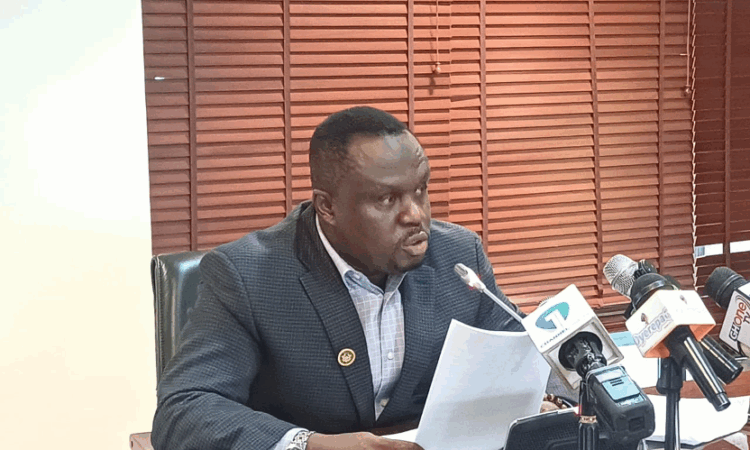

The new 30-year framework, dubbed the Ghana Infrastructure Plan (2027–2057),developed by government through the National Development Planning Commission(NDPC) is expected to be financed by the domestic market and from the private sector locally, Chairman of Parliament’s Economy and Development Committee, Dr. Eric Afful, has disclosed.
The plan identifies key priority sectors including Energy, Water and Sanitation, Transport, Human Settlements and Housing, Social, Civic and Commercial Infrastructure, ICT Infrastructure, Institutional Development, and Financing Strategies.
He also noted that government will institutionalize the newly launched National Development Plan into law to ensure continuity across successive administrations.
The 30-year framework, dubbed the Ghana Infrastructure Plan (2027–2057), was launched by the President under the auspices of the National Development Planning Commission (NDPC). It outlines Ghana’s long-term development priorities with a focus on sustainable infrastructure and inclusive growth.
Dr. Afful, who also serves as the Member of Parliament for Amenfi West, explained that one of the reasons previous development plans have failed to yield lasting results is the tendency for new governments to abandon existing blueprints in favour of their own manifestos.
“When this plan becomes law, every succeeding government will be bound to follow it,” Dr. Afful stated in an interview after the launch. “If you want to develop your manifesto, it will have to be guided by this plan — especially in the area of infrastructure. Infrastructure is the engine that drives national growth.”
The plan identifies key priority sectors including Energy, Water and Sanitation, Transport, Human Settlements and Housing, Social, Civic and Commercial Infrastructure, ICT Infrastructure, Institutional Development, and Financing Strategies.
According to Dr. Afful, the financing of the plan will rely largely on domestic resources rather than external borrowing.
“We are not going to the international market to seek loans. This plan will be financed internally through budgetary allocations. This makes it different from previous plans,” he noted.
He further highlighted that government’s ‘Big Push’ initiative, which seeks to invest about US$10 billion in infrastructure during each term, forms a major part of the funding strategy. Additionally, the forthcoming 2026 national budget, expected to inject close to GH¢30 billion into critical infrastructure projects, aligns with the long-term development framework.
Dr. Afful emphasized that increased public investment in infrastructure would stimulate economic growth.
“When government increases its expenditure on infrastructure, it triggers a national income multiplier effect. The more we invest, the higher the returns for our people — there will be jobs, more money circulating in the economy, and improved access to goods and services,” he explained.
The National Development Planning Commission (NDPC), established by law, remains the statutory body responsible for coordinating the country’s overall development agenda. Parliament’s Economy and Development Committee, under the Standing Orders, has oversight responsibility for NDPC and plays a key role in ensuring that Ghana’s growth strategy is properly aligned with national priorities.
“Our central mandate,” Dr. Afful concluded, “is to ensure that development planning in Ghana is consistent, long-term, and insulated from political cycles. That’s the only way we can guarantee sustainable growth for future generations.”