GRA Chief says three-year tax education drive will boost compliance and growth


By Eugene Davis
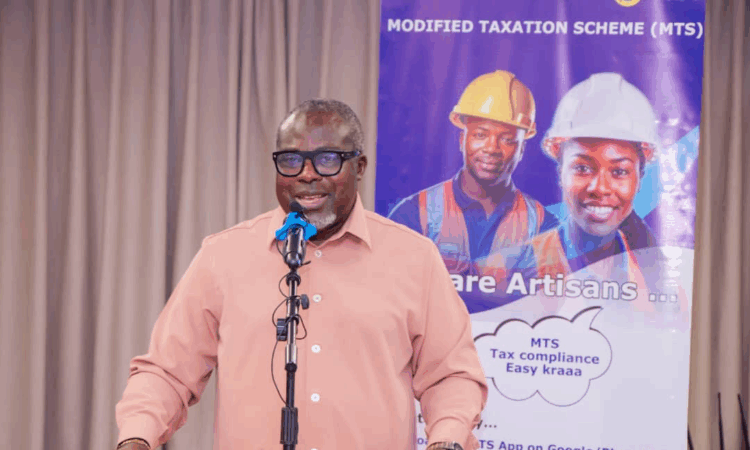
The Commissioner-General of the Ghana Revenue Authority (GRA), Mr. Anthony Sarpong, says a sustained programme of taxpayer education will strengthen compliance and accelerate Ghana’s economic progress.
Speaking at a media engagement in Accra, Mr. Sarpong said domestic revenue from taxes is the lifeblood of national development — it pays for roads and schools, equips hospitals, empowers local government and underpins security and stability. He explained that when citizens understand what is expected of them and how tax revenues are used, they are more likely to file returns and pay voluntarily.
“We have designed a three-year Sustained Tax Education Programme,” Mr. Sarpong said. “Its purpose is simple: to help Ghanaians know their tax obligations, understand how taxes are spent, and make it easier for people and businesses to register, file and pay on time. If more people pay their fair share, we can raise the revenue needed to transform infrastructure, build schools and hospitals, and drive the nation forward.”
The session — which also covered the GRA’s Modified Taxation Scheme and customs processes — gave journalists a detailed overview of the agency’s role in revenue mobilisation. Mr. Sarpong said the initiative, mandated in the 2025 Budget Statement, moves beyond short campaigns to make tax education a sustained, nationwide effort.
The three-year plan targets a wide range of audiences, including micro, small and medium enterprises, large companies, schools and universities, markets, professional associations and digital platforms. It is designed to deepen public understanding of the tax system, reward compliance, build trust and create a user-friendly experience that makes paying taxes straightforward and fair.
“We want a system that rewards compliance, promotes trust, and makes it easy for taxpayers to fulfil their civic duty,” Mr. Sarpong added.
“The VAT reforms have been done to give certain reliefs to businesses and individuals and the first thing government has done is to reduce the rate – what it means is that the rate has been reduced from 21.9percent to 20percent, so it gives them opportunity to be able to have a bit more in our wallets and pockets to be able to spend more.
He further explained that, under the current VAT structure, about 6 percent of the tax is non-deductible—meaning it becomes a direct cost to businesses. By removing this 6 percent through the new reform, business costs are expected to fall, giving companies room to increase their profit margins and, importantly, create the opportunity to reduce prices for consumers.
He added that the reforms also offer significant relief to small businesses. Many young and growing enterprises often struggle with the complex processes involved in filing and complying with VAT requirements. Currently, any business with an annual turnover above GH₵200,000 is required to register for VAT.
With the new reform, the threshold has been raised to GH₵750,000. This means that businesses with turnover below that figure will no longer be required to register or comply with VAT procedures.
According to him, this adjustment will allow small businesses the space and time to focus on growth rather than administrative burdens. Once they expand and exceed the new threshold, they can then be brought into the VAT system to contribute their fair share.
Ghana’s tax-to-GDP ratio remains below both African and global averages. A key contributor is low tax literacy — many individuals and informal businesses do not fully understand the tax system, available incentives, filing requirements, or penalties for non-compliance. Research by GRA and international partners shows that sustained education, not just one-off campaigns, significantly improves compliance.
The GRA’s initiative — triggered by the 2025 Budget revenue targets — therefore moves beyond ad-hoc outreach and becomes a structured, nationwide programme. It aims to embed tax awareness in communities, schools, business associations and the digital economy.
The Ghana Revenue Authority’s functions include domestic tax revenue mobilization, customs administration, taxpayer services and education, enforcement and compliance monitoring and policy advice and revenue forecasting.
Anthony Sarpong