Central bank aims to cut non-performing loans to 10% by 2026


- Governor targets NPL reduction as interest rates ease
- NPL ratio currently stands at 19.5% as of October 2025
- Banks urged to support export strategy, finance export-oriented firms
The Bank of Ghana (BoG) Governor, Dr Johnson Asiama, has disclosed that the central bank is working to reduce the Non-Performing Loan (NPL) ratio to 10 per cent by the end of 2026.
The current NPL ratio stands at 19.5% as of October 2025.
According to the Governor, the target forms part of a broader strategy to ensure that asset quality within the banking sector remains a top priority, especially as interest rates begin to ease.
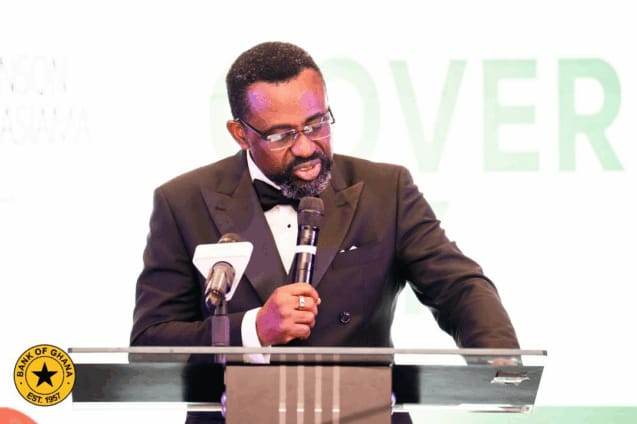
Dr Asiama made the disclosure in a speech delivered at the Governor’s Day Annual Bankers’ Dinner, organised by the Chartered Institute of Bankers.
He explained that the improving macroeconomic environment should provide room for intelligent loan restructuring by commercial banks, without compromising prudential standards.
“As we turn toward 2026, the central question is no longer whether stability can be restored. The question is how that stability is used,” the Governor stated.
He added that, “If 2025 was the year confidence was rebuilt, then 2026 must be the year that confidence is put to work—carefully, productively, and with judgment—in service of a stronger, more competitive Ghanaian economy.”
Dr Asiama also urged commercial banks to intensify their support for Ghana’s export strategy as the country heads into 2026.
He called on banks to strengthen export finance desks, support agro-processing and non-traditional exports, and engage more deliberately with trade opportunities under the African Continental Free Trade Area (AfCFTA).
The Governor stressed that banks must play a more active role in financing export-oriented enterprises, managing trade risks, and supporting firms in transitioning from domestic markets to regional and global value chains.
“The banking sector must not sit on the sidelines of Ghana’s export agenda but help shape it,” he said, adding that this is the moment for banks to design export-ready loan products, build sector-specific expertise, support risk-sharing and hedging instruments, invest in digital trade platforms, and actively support exporters from production to payment.
“When banks nurture exporters, they are not doing charity; they are expanding the country’s foreign exchange base, strengthening their own balance sheets, and deepening the resilience of the financial system,” he noted.
He observed that every container shipped, every processed good sold abroad, and every new export contract strengthens both the real economy and the banking sector that supports it.
Reflecting on the past year, Dr Asiama described 2025 as a period marked by difficult choices and decisions whose consequences extended far beyond the moment they were taken.
“As the year 2025 draws to a close, I find myself, like many of you, taking a moment to breathe out,” he said.
He recalled that when he assumed office earlier in the year, the challenge was not a lack of ideas or policy tools, but an erosion of confidence—confidence in signals, coordination, and the consistency of policy implementation.
“At the time, market behaviour reflected uncertainty rather than conviction, and in such an environment, even well-intended actions struggled to gain traction,” he added.
He noted that these reforms helped stabilise the cedi and significantly slow inflation. According to him, inflation, which stood above 23 per cent at the start of the year, declined steadily into single digits by November, reaching levels not seen since 2019.