G-DNA conference pushes Multidisciplinary, Diaspora-led healthcare solutions for Africa


By Eugene Davis
The President and Co-Founder of the Ghanaian-Diaspora Nursing Alliance (G-DNA), Professor Yvonne Commodore-Mensah, has described the Alliance’s third annual conference in Ghana as a major milestone in advancing collaborative and innovative healthcare solutions for Africa.
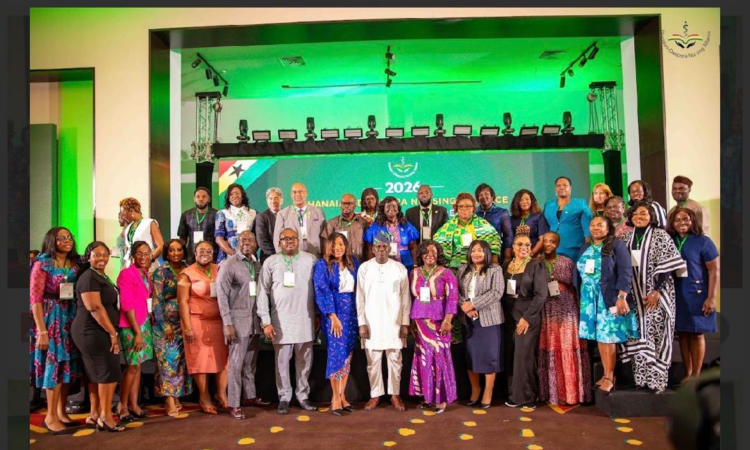
She explained that while the first two conferences focused largely on nurses and midwives from Ghana and the diaspora, this year’s event marked G-DNA’s first multi-disciplinary healthcare conference, bringing together over 400 healthcare professionals, including nurses, midwives, doctors and pharmacists from Ghana, across Africa and the diaspora.
Held under the theme “Voices of Change: Shaping the Future of African Healthcare,” Prof. Commodore-Mensah said the conference reflects the belief that innovations developed in Ghana can inspire healthcare transformation across Africa and globally. She also noted the need to shift the narrative from brain drain to “brain gain,” noting that many Africans in the diaspora maintain strong ties to the continent and are eager to contribute.
“Our goal is to bring everyone together to collaborate, share knowledge and inspire the next generation of healthcare professionals,” she said.
Highlighting collaboration as a core value of G-DNA, Prof. Commodore-Mensah pointed to challenges such as unemployment and underemployment among nurses and midwives in Ghana, stressing the need for innovative solutions. She cited the Mama CVD Programme, an initiative developed after G-DNA won a hackathon sponsored by Johnson & Johnson and Microsoft, which trains unemployed nurses and midwives—especially in rural areas—to use portable, AI-powered ultrasound devices to detect heart failure during pregnancy.
According to her, 57 midwives were trained in June, helping to bridge gaps in specialist care in underserved communities where access to cardiologists is limited.
Dr. Hafez Adam Taher, representing the Deputy Minister of Health, has reaffirmed the government’s openness to stronger partnerships with diaspora and private sector groups to advance healthcare delivery in Ghana.
He said such collaborations already exist through public–private partnerships (PPPs) under the government’s Comprehensive Primary Healthcare Programme, offering opportunities in capacity building, infrastructure development and retooling of health facilities.
Dr. Taher noted that the Ministry of Health has opened its doors to PPPs, encouraging diaspora groups to contribute within an enabling government framework.
He also highlighted Mahama Cares (Ghana Medical Trust Fund) as a complementary intervention to the National Health Insurance Scheme (NHIS), particularly in supporting critical and specialised care.
He urged healthcare organisations and diaspora groups to leverage these flagship programmes, stressing that collaboration is key to achieving national health goals.
President of the Ghana Registered Nurses and Midwives Association (GRNMA), Perpetual Ofori-Ampofo, said the conference offers a vital platform for diaspora professionals who have excelled abroad to share practical skills and knowledge that can improve patient care and health outcomes.
She maintained that strengthening health systems across Africa requires policy coherence, data, financing and sustained dialogue, expressing hope that discussions at the conference would influence decision-making at the highest levels and support progress toward universal health coverage, regardless of income or location.
President of the Ghana Medical Association (GMA), Professor Ernest Yorke, underscored the importance of multi-disciplinary care, stressing that effective healthcare delivery depends on the combined efforts of doctors, nurses, pharmacists and allied health professionals.
He raised concerns about the migration of health workers, inequitable distribution of professionals—mostly concentrated in urban centres—and chronic healthcare financing challenges, noting that many countries fall short of the Abuja Declaration’s 15 per cent budgetary allocation to health.
Special Guest Dr. Sheldon Fields, President of the National Black Nurses Association (NBNA), described the conference theme as a call to action, linking it to the World Health Organization’s Triple Billion targets for 2025–2028. He stressed that Africa, which carries more than a quarter of the global disease burden but has less than five per cent of the global healthcare workforce, cannot meet these goals without empowered nurses and ethical diaspora engagement.
Organisers say the conference underscores G-DNA’s commitment to mobilising healthcare professionals of African descent worldwide to drive sustainable, people-centred healthcare systems. While nurses and midwives remain central, the Alliance maintains that lasting transformation requires strong multidisciplinary collaboration.
The 2026 G-DNA Conference is expected to attract over 400 healthcare professionals, policymakers and researchers from across Africa and beyond, creating an expanded platform for innovation and cooperation.