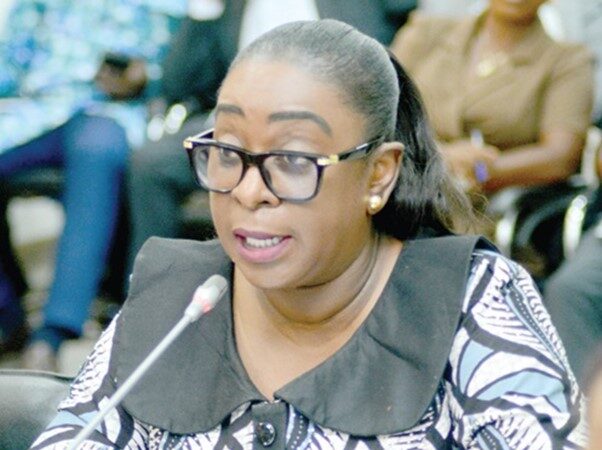

Managing Director of the Ghana Airports Company Limited (GACL), Yvonne Nana Afriyie Opare, has assured Parliament that government, through her outfit, is taking steps to attract more domestic airlines into the country as part of efforts to bring down the cost of local air travel.
Her comments come at a time when domestic airfares have become a growing concern for travellers. A one-way ticket from Accra to Kumasi currently costs between about ₵1,570 and ₵1,689, while fares on the Accra–Tamale and Accra–Takoradi routes are generally higher, with prices starting from roughly ₵1,092 to ₵1,099 and rising depending on the airline, booking period and prevailing economic conditions. For many passengers, these prices now rival international short-haul flights, putting domestic air travel beyond the reach of the average Ghanaian.
Appearing before Parliament’s Public Accounts Committee (PAC) on Tuesday, Ms. Opare was asked why domestic airfares remain so high. She did not dispute the concern, admitting that domestic flights are indeed expensive. However, she explained that ticket pricing falls largely outside the mandate of the Ghana Airports Company Limited.
“Unfortunately, pricing does not lie within the domain of the Ghana Airports Company. It is largely an airline issue,” she said, adding that GACL’s role as an airport operator is limited to engaging airlines and appealing to them to review their fares.
She pointed to the structure of the domestic aviation market as a key factor driving high prices. At present, only two airlines dominate domestic routes, creating what she described as a duopoly.
“With just two domestic carriers operating, competition is limited. If we are able to attract more airlines, competition will naturally force prices down,” she explained.
Ms. Opare revealed that GACL is actively working to make the market more attractive to new entrants, stressing that efforts are underway to encourage additional domestic carriers to operate in the country.
In the past, domestic airline operators have defended fare increases by citing rising operational costs. According to them, expenses have more than doubled in recent years, compelling airlines to raise ticket prices in order to remain viable.
These costs, industry players argue, are driven by a combination of factors, including fuel prices, maintenance costs and broader economic pressures. Jet fuel prices, which remain elevated in the post-pandemic period, account for a significant portion of airline operating expenses. In addition, earlier episodes of cedi depreciation increased the cost of fuel—priced in US dollars—as well as aircraft maintenance and spare parts.
Although the cedi has recently shown signs of stability and even appreciation against the dollar, many passengers are yet to see this reflected in ticket prices, fueling expectations that domestic airfares could ease in the coming year.
Limited competition continues to give airlines strong pricing power, while inflationary pressures have also pushed up costs related to staff wages, airport charges and auxiliary services—costs that are often passed on to passengers.
For now, travellers can only hope that increased competition and improved macroeconomic conditions will translate into more affordable domestic air travel in the months ahead.