
By Eugene Davis
The Minority in Parliament has called on President John Dramani Mahama to immediately remove Samuel Okudzeto Ablakwa as Minister for Foreign Affairs, accusing him of incompetence and an inability to effectively manage Ghana’s foreign relations.
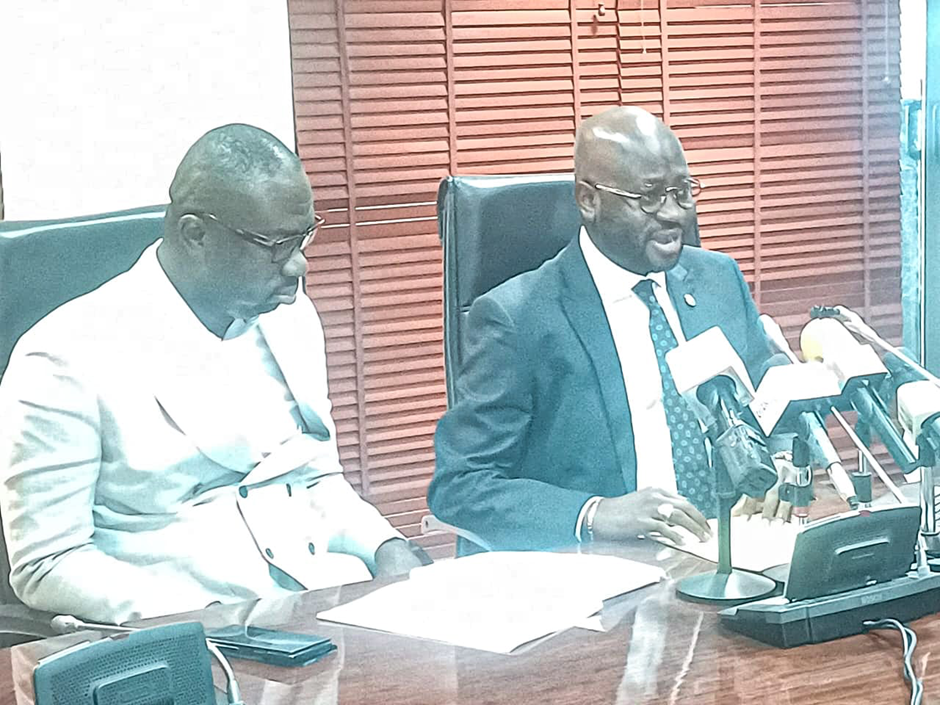
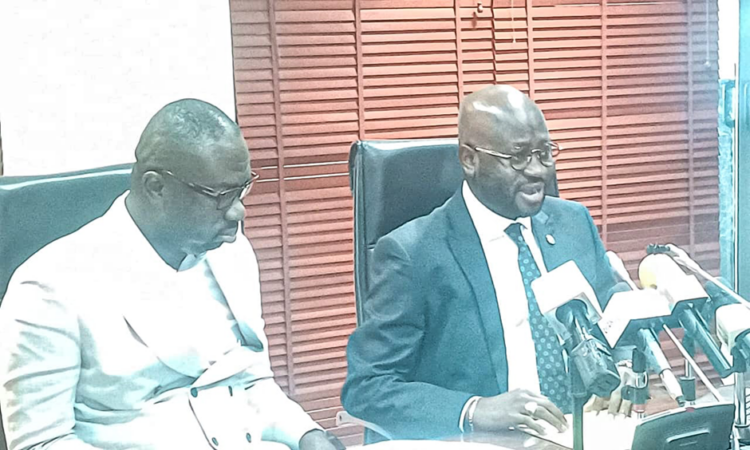
Addressing the media in Accra on Tuesday, January 20, the Deputy Ranking Member on Parliament’s Foreign Affairs Committee, Nana Asafo-Adjei Ayeh, said the Minority had lost confidence in the Foreign Minister’s leadership, particularly in light of recent diplomatic developments involving the United States.
“The Minority calls on His Excellency the President to remove Samuel Okudzeto Ablakwa from the Foreign Affairs portfolio immediately and appoint, in his place, a competent diplomat of proven experience, steady judgment and a genuine commitment to Ghana’s long-term national interest, rather than personal political theatre,” he said.
Mr. Ayeh stressed that the call was not driven by partisan considerations but by what he described as the urgent need to protect Ghana’s international standing.
“This is not a partisan matter. It is a matter of national survival,” he added, urging civil society organisations, professional bodies, diaspora groups and what he termed “patriotic Ghanaians” to add their voices to the call.
Beyond the demand for the Minister’s removal, the Minority outlined a series of immediate actions it wants government to take to address what it sees as a growing diplomatic crisis. These include the establishment of a high-level technical working group with the United States to resolve outstanding migration, documentation and consular cooperation issues.
The caucus also called on government to abandon what it described as a “tit-for-tat” deportation policy with Israel and restore normal consular relations in line with established international practice. In addition, it wants the appointment of a special envoy on diaspora and migration affairs who would report directly to the President.
The Minority further demanded urgent public accountability from the Ministry of Foreign Affairs, insisting that within seven days the ministry must hold a comprehensive press conference to address key concerns. These include all official communications between Ghana and the United States over the past 18 months on migration cooperation, deportation issues and visa processing.
According to Mr. Ayeh, the ministry must also explain the specific reasons given by Washington for placing Ghana on a list of 75 countries affected by visa-related restrictions, as well as outline any concrete strategy in place to secure Ghana’s removal from the list.
He further called for a full disclosure of remittance projections and a detailed assessment of the economic impact of the visa restrictions, warning that the situation could have serious consequences for millions of Ghanaian households that depend on remittances from relatives abroad.
“The welfare of Ghanaians, our economic interests and Ghana’s international reputation are all at stake,” he said.
As part of its proposals, the Minority urged the President to immediately deploy a respected presidential special envoy to Washington to engage US authorities at the highest level. It also called for the creation of a joint technical task force involving the Ministries of Foreign Affairs, Interior and Justice to address American concerns on deportation cooperation and documentation.
In addition, the caucus wants Ghana to mobilise its ECOWAS, African Union and European Union partners to advocate collectively on its behalf, while also engaging members of the US Congress directly to highlight the potential damage the visa restrictions pose to trade, security cooperation and initiatives such as AGOA.
Mr. Ayeh accused the Foreign Minister of lacking the temperament required to manage complex bilateral relationships and prioritising public applause over diplomatic results. He said the Minister had, in the Minority’s view, demonstrated that he was no longer fit to lead Ghana’s foreign policy at a critical moment.
“Ghana cannot continue on this current foreign policy path,” he concluded.