
By EatGhanaRice
In Ghana, the humble bowl of rice tells a story—one of taste, trade, and, increasingly, of national choice. As our markets overflow with imported varieties, a quiet revolution is brewing, championed by farmers, policymakers, and health advocates. The campaign to cultivate and consume Ghanaian rice on a large scale is more than an agricultural directive; it is a foundational strategy for economic resilience, nutritional security, and cultural pride.
At its heart, this is a matter of economic sovereignty. Ghana spends hundreds of millions of dollars annually importing rice, a massive outflow of foreign exchange that weakens the Cedi and drains resources that could be invested domestically.
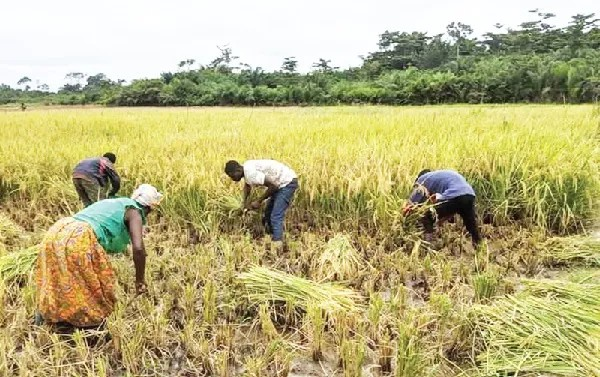
This reliance makes us vulnerable to global price shocks and supply chain disruptions. By contrast, scaling up local production—through sustained government focus on irrigation, mechanization, seed improvement, and fair financing for farmers—creates a virtuous cycle. It keeps billions of Cedis circulating within the Ghanaian economy, from the fields of the Northern and Volta regions to the mills and markets across the country.
Every bag of local rice purchased sustains a farming family, creates jobs in processing and logistics, and revitalizes rural communities, stemming the tide of youth migration to cities.
For the Ghanaian citizen, choosing local rice is a powerful lifestyle decision with direct nutritional benefits. Unlike imported rice, which spends months in transit and storage, our locally grown rice is fresher. It retains more of its natural nutrients, including essential B vitamins and minerals. Furthermore, Ghana boasts excellent indigenous and adapted varieties, such as the aromatic Jasmine or the nutritious AGRA rice, which are cultivated to thrive in our specific soils and climates, often requiring fewer chemical inputs than mass-produced imports. Eating local rice means consuming a fresher, potentially cleaner grain, contributing to better family health.
The environmental argument is equally compelling. Imported rice carries a heavy “carbon footprint” from international shipping and long-distance transportation. Ghanaian rice, especially from farms adopting sustainable practices, dramatically reduces this environmental cost. Supporting local production encourages the preservation of our agricultural biodiversity and promotes farming methods that protect our precious water and land resources for future generations.
Yet, for this campaign to succeed, citizen patronage must move beyond occasional purchase to become a conscious habit of heritage. It’s about reconnecting with the story on our plates. Choosing Made-in-Ghana rice is a celebration of the hard work of our local farmers, whose toil under the sun ensures our national larder is full. It is a vote for Ghanaian industry and a statement of confidence in our own products.
Overcoming the perception challenge is key. The government, through agencies like the Ministry of Food and Agriculture (MoFA) and the Ghana Rice Interprofessional Body (GRIB), must continue to enforce and promote strict quality assurance, ensuring local rice is well-milled, clean, and competitive. Marketing campaigns that highlight its superior freshness and taste can shift mindsets. Meanwhile, citizens can lead by example—in our homes, at our ceremonies, and in our restaurants—by demanding and savoring Ghana rice.
The “Eat Ghana Rice” campaign is an invitation to participate in nation-building with every meal. It is a practical act of patriotism that nourishes the body, empowers the farmer, strengthens the economy, and protects the environment. Let us embrace this grain of sovereignty. Let us make the choice for Ghana Rice a consistent, proud, and flavorful part of our daily lives, for a more self-reliant and prosperous Ghana.
About
The “Eat Ghana Rice” campaign, #EatGhanaRice as championed by a group of six students from (UNIMAC IJ), transcends the boundaries of experimental academic work to emerge as a tangible blueprint for national renaissance.