AI and drones promise tighter controls over Ghana’s billion-dollar mining industry



By Eugene Davis
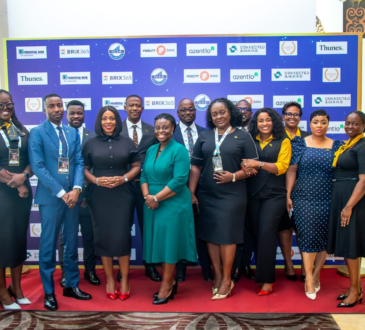
Emmanuel Kwamena Anyimah, Deputy Chief Executive Officer of the Minerals Commission, says drone and artificial intelligence technologies are fast becoming central to Ghana’s efforts to curb illegal mining, arguing that innovation must be matched by clear and forward-looking regulation.
Speaking at the Drone Ignite Africa Summit in Accra, Mr Anyimah framed technology not as an optional add-on but as a regulatory necessity for a sector that underpins the national economy.
“It is our responsibility to ensure that Ghana’s mineral resources are developed responsibly, sustainably and in the national interest,” he said.
Mining remains one of Ghana’s most important economic pillars, contributing significantly to export earnings, public revenues and employment. Yet the industry also presents persistent challenges — illegal mining, environmental degradation and the difficulty of supervising vast and often remote concessions.
Traditional inspection methods, Mr Anyimah noted, are increasingly inadequate.
“This is where drone technology has become a game changer.”
Drones allow regulators to conduct real-time surveillance of mining sites, detect unauthorised operations early, assess environmental damage and verify compliance with approved mine plans. The result is faster inspections, lower operational costs and improved safety for field officers, alongside more reliable evidence to support enforcement.
When paired with artificial intelligence, the capabilities deepen. AI tools can process large volumes of aerial and geospatial data, automatically flag anomalies, identify signs of non-compliance and anticipate environmental risks before they escalate — shifting oversight from a reactive posture to a preventive one.
In Ghana, the Minerals Commission has already deployed drone surveillance across environmentally sensitive areas in the Ashanti and Western regions. According to Mr Anyimah, the technology has helped identify unlicensed operators, track land degradation and coordinate enforcement with agencies including the Environmental Protection Agency and the National Anti-Illegal Mining Operations Secretariat.
The effect has been tangible: quicker response times, more precise targeting of offenders and stronger, data-backed decision-making.
Beyond enforcement, he argued, the economic case is equally compelling.
Illegal mining costs the state millions of dollars annually in lost royalties and taxes, damages farmland and water bodies, and raises rehabilitation costs that ultimately fall on the public purse. Better monitoring protects revenue flows, preserves investor confidence and safeguards communities whose livelihoods depend on the land.
“Data, in today’s mining economy, is as valuable as capital,” he said.
However, Mr Anyimah cautioned that technology alone cannot deliver results without supportive policy.
Governments, he said, must establish clear legal frameworks governing drone use in regulatory oversight, harmonise mining, aviation and data-protection rules, and build institutional capacity to manage digital intelligence. Policy certainty, he added, encourages collaboration with technology providers and local innovators while giving investors confidence that the regulatory environment is predictable.
“At the Minerals Commission, our objective is to ensure that innovation strengthens regulation while safeguarding safety, privacy and the national interest,” he said. “Strong policies provide confidence to investors, reassurance to communities and effectiveness to regulators.”
For Ghana — and much of Africa — the broader stakes are economic as well as environmental. Smarter oversight can reduce leakages, improve compliance, boost state revenues and help position the mining sector as a more sustainable engine of growth.
Drone innovation, backed by sound governance, Mr Anyimah concluded, offers governments “a practical pathway to responsible mining and shared prosperity”.