
– domestic bonds earmarked to stabilise cocoa finances
Ghana’s Majority Caucus has mounted a robust defence of the government’s decision to lower the farmgate price of cocoa, arguing that immediate sacrifices are unavoidable if the country is to restore stability to one of its most important export industries.
Last week, the Producer Price Review Committee set a new producer price of GH¢41,392 per tonne for the remainder of the 2025/26 crop season — equivalent to GH¢2,587 per 64kg bag — down from GH¢58,000 announced in October last year.
The reduction has unsettled many farmers. But the Majority insists the headline figure masks a structural shift in how revenues are shared.
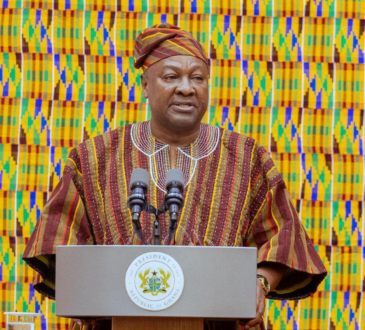
Speaking at Parliament House in Accra, Isaac Adongo, chair of the Finance Committee, said the revised price represents 90 per cent of the free-on-board (FOB) export price, compared with roughly 70 per cent previously. In other words, farmers are receiving a larger proportion of export earnings even as global prices retreat.
“This is not about abandoning cocoa farmers,” Mr Adongo said. “It is about rebuilding the sector on a financially sound foundation.”
A sector under strain
The defence comes against the backdrop of mounting financial distress at COCOBOD. By early 2025, the board’s indebtedness had climbed to about GH¢32.9bn, equity had been eroded and its accounts had slipped into negative territory.
At the same time, global cocoa prices fell sharply — by roughly 76 per cent between January 2025 and February 2026 — a swing the Majority describes as the steepest in three decades.
Lawmakers reject suggestions that the crisis stemmed from a failure to hedge. At the start of the 2025/26 season, COCOBOD had forward-sold about 530,000 tonnes — roughly 82 per cent of projected output — at an average FOB price of around $7,200 per tonne. Only a small share of volumes was left exposed to spot prices as the market slid below $6,000.
Instead, the caucus points to legacy imbalances. In 2023/24, forward commitments far exceeded actual production, leading to costly rollovers and an estimated $927mn in lost revenue. Meanwhile, production has trended downward since 2016, except for a one-off bumper season in 2020/21, weighed down by Cocoa Swollen Shoot Virus Disease affecting an estimated 40 per cent of farms.
Operational inefficiencies compounded the strain. Procurement contracts for inputs and jute sacks continued even as output declined, tying up scarce liquidity. A $600mn African Development Bank rehabilitation facility also underperformed: of 156,400 hectares targeted for rehabilitation, only about 40,000 had been completed by early 2025.
Financing reset
At the core of the government’s response is a shift in financing. After failing to secure a syndicated loan for 2024/25, COCOBOD adopted a buyer pre-financing model, under which buyers advance about 80 per cent of contract value upfront. While this provided short-term liquidity, it increased dependence on buyer appetite during a period of falling prices.
The new plan seeks to replace foreign syndicated borrowing with domestic cocoa bonds, structured so that repayment is tied to crop-year sales. The revolving mechanism is intended to stabilise working capital, smooth farmer payments and reduce exposure to external credit shocks.
Alongside this, the government has converted key liabilities — including obligations to the Bank of Ghana and parts of Ministry of Finance facilities — into equity to ease pressure on the balance sheet. Inherited cocoa roads commitments are to be rationalised and transferred to the Roads Ministry.
A new COCOBOD Bill is also being prepared to curb quasi-fiscal spending and impose tighter fiscal discipline, while a forensic audit covering the past eight years of operations is planned to strengthen accountability.
Broader economic stakes
Cocoa remains one of Ghana’s largest sources of foreign exchange and underpins millions of rural livelihoods. For the sovereign, COCOBOD’s debt has represented a significant contingent liability, with implications for fiscal sustainability and investor confidence.
If the restructuring succeeds, the benefits could ripple beyond the sector. A credible domestic bond programme would deepen local capital markets. Stronger governance could reduce fiscal risks. And a policy mandating that at least 50 per cent of beans be processed locally from 2026/27 could expand manufacturing, create jobs and help cushion the economy from raw commodity price swings.
The risks, however, are immediate and political. Lower nominal prices squeeze rural incomes at a time when confidence in state institutions is fragile. Restoring trust will depend not only on policy announcements but on prompt payments, visible improvements in farm rehabilitation and disciplined financial management.
For now, the Majority argues that stabilisation must precede expansion. “A financially resilient and well-governed COCOBOD is essential for the prosperity of millions of Ghanaians,” Mr Adongo said, signalling plans to anchor the reforms in legislation.
For Ghana’s cocoa sector, long regarded as a pillar of economic stability, the coming seasons will test whether this reset marks a durable turnaround — or simply another attempt to steady an industry vulnerable to both global volatility and domestic missteps.