
By Eugene Davis
Ghana’s finance minister has set out an ambitious plan to raise the country’s gross international reserves to the equivalent of 15 months of import cover by 2028, arguing that the traditional three-month benchmark is no longer sufficient in a more volatile global economy.
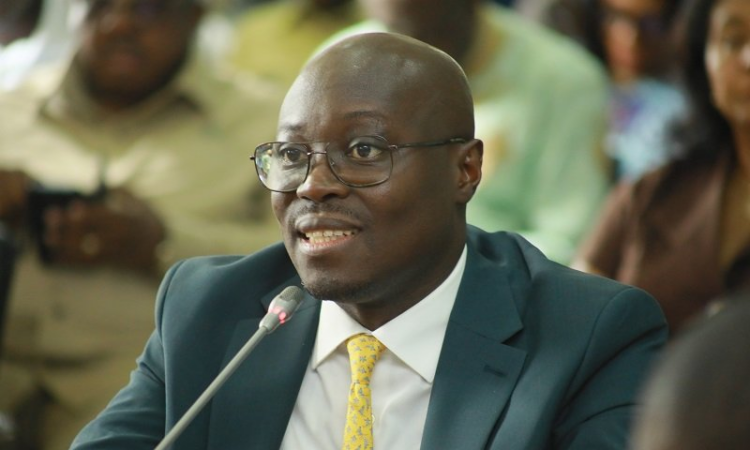
Presenting the Ghana Accelerated National Reserve Accumulation Policy (GANRAP) for parliamentary approval, Cassiel Ato Forson said current reserves — at 5.7 months of import cover at end-2025 — leave the country exposed to external shocks of the kind that drove the sharp cedi depreciation in 2022–23.
Cabinet has endorsed the policy, which seeks to build what officials describe as an “economic war chest” to shield the currency, anchor macroeconomic stability and restore investor confidence after the 2022 debt crisis and subsequent IMF programme.
The strategy implies closing a 9.3-month import cover gap over three years, requiring average annual additions of roughly 3.1 months. After adjusting for debt service, energy payments and other foreign exchange outflows, authorities estimate that about $9.5bn must be added to reserves each year to meet the target.
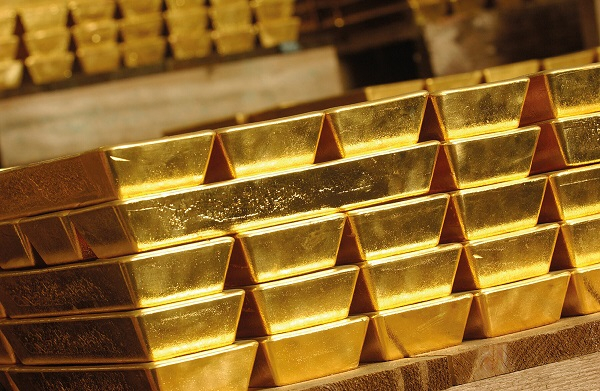
At the core of the plan is gold.
Under the framework anchored in the Ghana Gold Board Act, 2025 (Act 1140), the state will scale up domestic gold purchases to support reserve accumulation at the Bank of Ghana. The weekly acquisition target is set at 3.02 tonnes, split between artisanal and small-scale miners and large-scale producers.
The Gold Board is expected to secure at least 2.45 tonnes a week from the small-scale sector, while a minimum of 0.57 tonnes will be acquired from large-scale miners through the state’s pre-emption rights. The gold will be processed locally before being added to official reserves, with any future sales subject to cabinet and parliamentary approval.
At a gold price of $5,000 per ounce, projected annual gross receipts could exceed $25bn, providing a substantial foreign exchange cushion. Officials argue that the model is markedly cheaper than the borrowing-heavy approach of recent years.
Between 2017 and 2024, Ghana relied extensively on Eurobonds, swaps and short-term facilities to shore up reserves, accumulating an estimated $21.7bn in borrowings at interest costs exceeding $3.8bn, alongside significant domestic obligations. Eurobond issuance alone between 2018 and 2021 cost about $2.5bn in interest. The country remains in debt restructuring following its 2022 default.
By contrast, the government says gold operations in 2025 generated about $10bn in foreign exchange at a cost of $214m — well below the expense of raising equivalent funds at market rates.
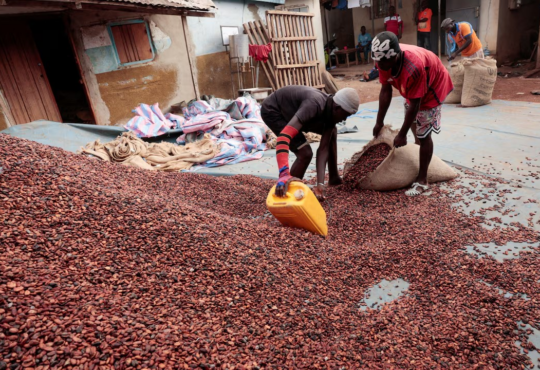
The broader rationale reflects shifting fundamentals. Cocoa earnings have been hit by price volatility and climate risks, while oil output has declined amid underinvestment. In a context of geopolitical tensions, commodity cycles and climate disruption, policymakers argue that a larger reserve buffer is essential to reduce exposure to sudden stops in capital flows.
Not all lawmakers are convinced. Gideon Boako, MP for Tano North, said elements of the gold accumulation strategy pre-date the current administration and questioned aspects of its implementation. By contrast, Felix Kwakye Ofosu, MP for Abura Asebu-Kwamankese, described the plan as forward-looking, crediting the government’s resource mobilisation efforts for the recent stabilisation of the economy.
The policy’s success will depend on sustained gold output, effective governance and prudent fiscal management. But if delivered as outlined, the shift from debt-financed reserve build-up to domestically anchored gold accumulation would mark a structural change in how Ghana defends its currency — and seeks to break the cycle of recurrent external crises.