Ghana reclaims $100bn economy as Mahama signals “Take-Off Mode” — Minority urges caution


By Eugene Davis
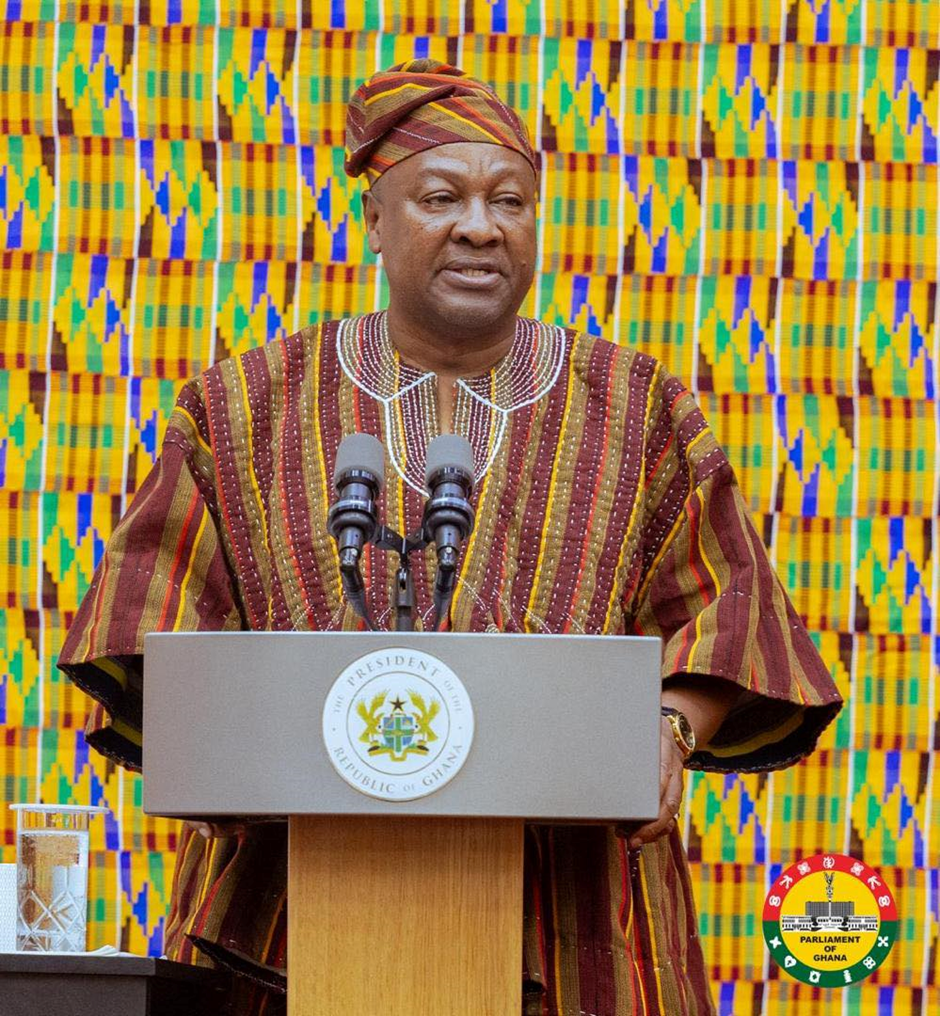
Ghana’s economy has crossed the $100bn mark for the first time, a milestone President John Dramani Mahama used to declare the country “open for business” and firmly back on a path of stability.
Delivering his second State of the Nation Address since returning to office, Mr Mahama told 275 lawmakers in Accra that the country was in “take-off mode”. “Our nation is on the runway. It is in take-off mode, and you are all advised to fasten your seatbelts,” he said.
The headline figures are robust. Gross domestic product is projected to reach $113bn in 2025, up from $83bn at the end of 2024, positioning Ghana among Africa’s ten largest economies by size. Average growth for the first three quarters of 2025 stood at 6.1 per cent.
On the fiscal front, the primary surplus reached 2.6 per cent of GDP, exceeding a 1.5 per cent target, while the deficit narrowed to 3.1 per cent, below the projected 3.8 per cent. Public debt fell by GH¢82.1bn, cutting the debt-to-GDP ratio from 61.8 per cent to 45.3 per cent. Foreign exchange reserves climbed to $13.8bn, equivalent to 5.7 months of import cover.
A key plank of the administration’s narrative is the formalisation of gold exports through the Ghana Gold Board, which it says helped lift recorded artisanal and small-scale gold exports from 63.6 to 103 tonnes, bolstering foreign exchange inflows and easing pressure on the cedi.
Inflation, which peaked at 54.1 per cent at the end of 2022, slowed to 23.5 per cent by end-2024 and further to 3.8 per cent by January 2026 after 13 consecutive months of decline. The cedi, according to the President, appreciated sharply against the dollar, pound and euro over the past year.
For households and businesses, the macroeconomic repair has translated into relative currency stability and easing price pressures. A firmer cedi reduces imported inflation in an economy dependent on foreign inputs, while stronger reserves and fiscal consolidation enhance Ghana’s standing with investors.
Yet the Minority in Parliament has urged caution, questioning both the sustainability of the gains and the lived reality behind the headline numbers.
The Minority Leader, Alexander Afenyo-Markin argued that the $100bn milestone, while symbolically important, reflects currency effects and statistical expansion as much as structural transformation. They contend that high utility tariffs, elevated borrowing costs and persistent youth unemployment continue to weigh on households and small businesses.
He also raised concerns about the durability of the cedi’s appreciation, warning that heavy reliance on gold inflows exposes the economy to commodity price swings. Without deeper export diversification and industrial expansion, they argue, the country remains vulnerable to external shocks.
On public debt, the opposition maintains that headline reductions must be weighed against domestic arrears and the broader social costs of fiscal tightening. They have called for greater transparency in the operations of the Ghana Gold Board and clearer reporting on contingent liabilities.
The government, for its part, insists that discipline has replaced drift. The newly signed 24-Hour Economy Authority Act is intended to drive productivity and job creation, while anti-corruption efforts — including GH¢600m recovered by the Economic and Organised Crime Office by December 2025 — are presented as evidence of institutional strengthening.
The broader economic impact of the rebound is undeniable. Lower inflation restores purchasing power, a stable exchange rate improves planning for import-dependent firms and improved fiscal metrics may, over time, reduce the sovereign’s cost of borrowing. For a country that recently grappled with high inflation and debt stress, the rebuilding of buffers marks a significant shift.
The political debate now centres on durability. For the government, the numbers signal restored credibility and a foundation for accelerated growth. For the Minority, the test lies in whether macroeconomic stability translates into sustained job creation, competitive exports and improved living standards.
Crossing $100bn may be a psychological milestone. Converting that scale into inclusive and resilient prosperity will determine whether the “take-off mode” becomes a lasting flight path or a brief surge of momentum.