Beyond Density: Why smart investors are rethinking Accra’s Real Estate Playbook

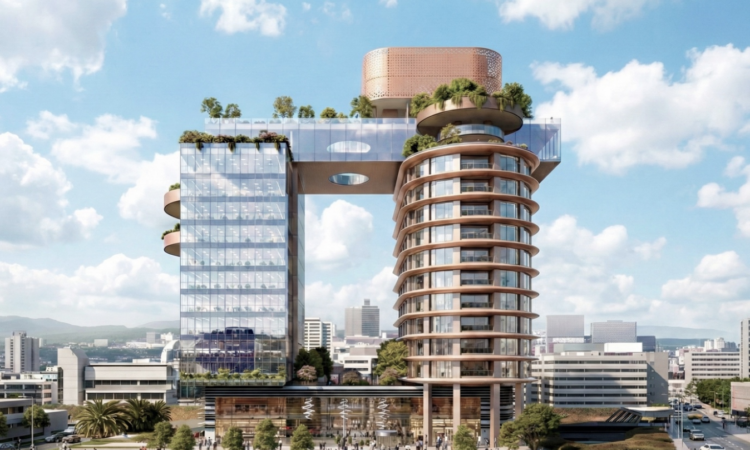

As investor preferences evolve and returns become more nuanced, low-density luxury living is emerging as a smarter, more resilient investment strategy.
For decades, real estate success in Accra was largely defined by density. The prevailing logic was simple: maximize unit count to maximize returns. Bigger blocks, tighter layouts, higher volume. While this model delivered results in earlier growth phases, its limitations are becoming more evident as the market matures.
Today, a growing class of sophisticated investors are reassessing that assumption. Rather than focusing solely on unit count or short-term yield optimization, attention is shifting toward fundamentals that sustain value over time, space, privacy, livability, and defensible differentiation.
This evolution reflects a broader change in Accra’s investor base. As real estate investors become more informed and selective, developments are increasingly evaluated on their ability to deliver a high-quality residential experience alongside financial performance. Low-density luxury living has therefore emerged not as a lifestyle preference, but as a strategic response to a market that now rewards intention, restraint, and long-term value creation.
The trend is particularly pronounced among seasoned and high-net-worth investors, many of whom are globally exposed and familiar with residential standards in mature international markets. In cities such as London, Dubai, New York, and Cape Town, premium residential value is rarely driven by density alone. Instead, it is defined by space, privacy, and quality of execution.
When these investors assess opportunities in Accra, they apply the same benchmarks. High-density developments, even in prime locations, often face challenges related to congestion, rising operational costs, and tenant turnover. Over time, these factors can erode net yields and weaken resale performance.
Low-density developments, by contrast, benefit from scarcity and differentiation. Fewer units translate into reduced internal competition, stronger pricing power, and a more stable occupier profile. These dynamics support steadier appreciation, longer tenancies, and more predictable cash flows attributes increasingly valued in a competitive investment environment.

Sustainability further reinforces the case. Low-density projects are typically better positioned to integrate natural ventilation, green spaces, and energy-efficient design, reducing long-term operating costs while aligning with the preferences of today’s environmentally conscious occupiers.
As Accra’s real estate market enters its next phase, the central investment question is no longer how much can be built on a parcel of land, but how well. Density will continue to have its place, but it is no longer sufficient on its own.
In an increasingly discerning market, developments that balance prime location with disciplined density and quality of life are likely to prove the most resilient over the long term.
Author Bio:
Duston Properties is a Ghana-based real estate development company focused on design-led, low-density residential projects that prioritise quality, privacy, and long-term investment value.