Avoiding the 19th IMF Bailout:Ghana’s sector-by-sector blue print for sustainable economic independence



By Vivian Kai Lokko
As the 2025 Spring Meetings of the World Bank and International Monetary Fund (IMF) convene in Washington, D.C., Ghana once again steps into the spotlight of global economic scrutiny.
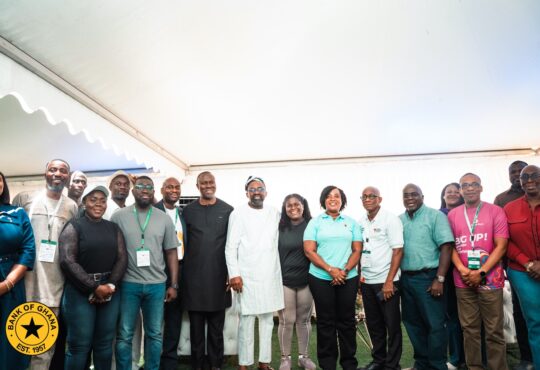
A high-level government delegation, led by the Minister for Finance, Dr. Cassiel Ato Forson, is participating in these meetings amid a mix of cautious optimism and lingering domestic uncertainty.
Ghana’s recent re-entry into an IMF-supported programme—its 18th since independence—raises critical questions about the country’s long-term fiscal resilience and the recurring structural weaknesses that continue to pull it back.
With global debt distress and geopolitical shocks redefining economic recovery for many emerging markets, Ghana must chart a decisive path toward independence from external bailouts.
This article proposes a sector-by-sector roadmap that could reposition Ghana’s economy for sustainable growth, while ensuring it never needs to return to the IMF in crisis mode again.
Ghana’s Historical Engagement with the IMF
Ghana’s relationship with the International Monetary Fund (IMF) dates back to September 20, 1957, marking the beginning of a long and complex economic partnership. Over the decades, successive governments have turned to the Fund—often during balance-of-payment crises or periods of fiscal instability.
Among these interventions, the 1983 Structural Adjustment Programme stands out as the most transformative. It liberalized the economy and set Ghana on a path of recovery following near-total economic collapse.
Ghana has since returned to the IMF multiple times—in 2009, 2015, and most recently in 2022—each time prompted by a mix of external shocks, unsustainable debt, rising inflation, and currency depreciation.
These repeated engagements point to deep-rooted structural weaknesses, including a narrow export base, inefficient public revenue systems, and an overextended fiscal framework that continues to limit economic resilience.
Toward Economic Resilience: A Sector-by-Sector Strategy
If Ghana is to break the cycle of recurring IMF interventions, it must undertake bold, structural reforms and strategic investments across its most critical sectors. The path to economic independence requires a deliberate, coordinated approach that addresses both the root causes of fiscal vulnerability and the untapped potential within the economy.
Here is a sector-by-sector roadmap to building lasting resilience and ensuring Ghana never returns to the IMF in crisis mode. (Part 1)
Agriculture as Ghana’s Exit Strategy from the IMF
Ghana’s long entanglement with the International Monetary Fund (IMF) is a symptom of a deeper structural issue—our inability to unlock the full potential of agriculture. While we’ve talked endlessly about economic independence, the harsh truth is that our agricultural sector, the backbone of our economy, remains underpowered, underfunded, and largely untouched by innovation.
Despite agriculture’s potential to be the game-changer in Ghana’s quest for economic sovereignty, it continues to limp under outdated practices. The sector still relies heavily on rain-fed systems, cutlasses, hoes, and guesswork.
And while other nations—China, Japan, Israel—have made food production a matter of national pride and strategic policy, we in Ghana continue to approach it as a matter of charity and tradition.
It’s a stark contrast. China, for instance, moved from food shortages in the 1980s to becoming a global agricultural powerhouse by investing in technology, irrigation, and research. Japan, with very limited arable land, turned to scientific innovation to maximize yield. If Ghana is serious about weaning itself off IMF bailouts, this is the playbook we need—not one built on austerity and loans, but on bold agricultural reform.
Nothing highlights the sector’s neglect more than our irrigation statistics. According to Ing. Richard Oppong-Boateng, Acting CEO of the Ghana Irrigation Development Authority (GIDA), in an interview on Citi FM in 2024, Ghana has developed only 220,000 hectares of irrigable land — just 12% of the country’s potential 1.9 million hectares. That’s not just inadequate; it’s economically dangerous.
The cost of irrigating a single hectare stood at about $40,000 as of 2024. If the government truly believes in an agricultural-led transformation, then massive capital investments in irrigation infrastructure must become a national priority.
A few private firms like Golden Exotic Company Limited have shown what’s possible with drone technology and data-driven farming. But these are exceptions. Most Ghanaian farmers are still battling unpredictable weather, soil degradation, and low yields, with little to no institutional support.
Why hasn’t the government created incentives or subsidies to scale such innovations across the sector? Why aren’t we training our youth to deploy agri-tech, drones, and AI on farms instead of leaving them unemployed or migrating?
As cocoa faces declining yields due to climate change and land degradation from illegal mining, it is high time we rethink our export priorities. Shea butter and cashew, both resilient and climate-tolerant, placed seventh and tenth, respectively, in Ghana’s 2024 top export earners, contributing 0.9% and 0.7% of total export revenue.
Yet, these crops receive only a fraction of the attention cocoa commands. What if we invested in shea and cashew with the same seriousness we did cocoa? The potential for job creation, foreign exchange, and rural empowerment is enormous.
Institutions like CSIR-Crops Research Institute (CSIR-CRI) and the CSIR-Food Research Institute (CSIR-FRI) have developed game-changing innovations—climate-resilient crop varieties, food preservation techniques, and pest-resistant seeds. Unfortunately, much of their research remains buried in files, not fields.
Examples include drought-tolerant maize varieties and improved yam and cowpea strains developed by CSIR-CRI—technologies that could double yields under harsh conditions. But these breakthroughs have been ignored due to poor funding, lack of commercialization, and weak policy alignment. We cannot afford to let science sit idle when it could feed our nation and boost our economy.
Finally, no talk of agricultural revival is complete without addressing logistics. Poor rural roads delay the transport of food, inflate prices, and cause needless post-harvest losses. Farmers watch their crops rot because they can’t reach urban markets in time. Until we fix these roads, we will keep blaming inflation on global forces while ignoring our domestic inefficiencies.
If Ghana truly wants to say goodbye to the IMF, agriculture must be the foundation of that farewell. That means:
A. Massive investment in irrigation and mechanization.
B. Support for agri-tech and youth-led innovation.
C. Scaling up non-traditional exports like cashew and shea.
D. Funding and applying agricultural research.
E. Fixing rural infrastructure to link farm gates to market shelves.