
By Eugene Davis
Patrick Boamah, Member of Parliament for Okaikwei Central, has raised concerns over a sharp decline in the Bank of Ghana’s gold holdings, warning that the fall could dent confidence in the government’s flagship Gold Reserves Programme and complicate the country’s broader economic recovery.
New data from the central bank’s Summary of Economic and Financial Data show that Ghana’s gold reserves dropped from about 37 metric tonnes to 18.6 metric tonnes by the end of 2025 — nearly a 50 per cent reduction within a year and one of the most significant changes in the composition of the country’s reserves in recent times.
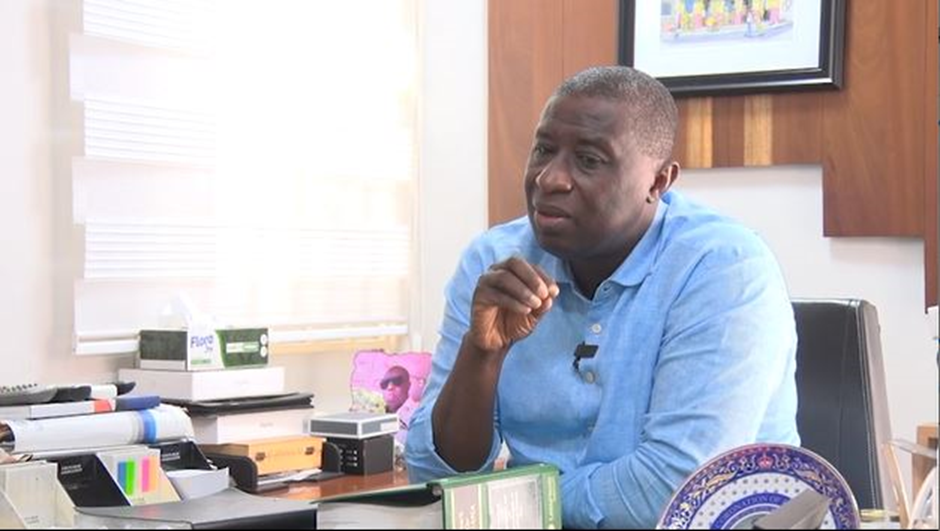
For Mr Boamah, who is also the chairman of the Subsidiary Legislation committee in Parliament, indicated that the figures warrant closer scrutiny.
“The government’s Gold Reserve Programme will naturally be questioned,” he said in an interview with Channel 1 TV monitored by Business24. “Given the investment through GoldBod and the Bank of Ghana, we need clarity on whether the quantities reported were accurate, why there has been such a sudden drop and what it means for our economic outlook.”
He stressed that while the development should not trigger alarm, it raises legitimate policy questions.
“These are issues people will interrogate. We must understand why this happened and what effect it has on the economy,” he said.
A shift in composition, not necessarily in strength
At face value, the drop appears at odds with the central bank’s recent push to accumulate bullion as a buffer against external shocks and currency volatility.
But some economists argue the decline reflects a strategic reallocation rather than depletion.
Dr Theo Acheampong, an economist and risk analyst, in his x(twitter) handle notes that the fall in gold tonnage coincided with increases in gross and net international reserves — suggesting that part of the gold stock was converted into foreign exchange during a period of elevated global prices.
“The numbers are consistent with monetisation of gold into more liquid foreign exchange assets,” he said. “It improves immediate liquidity and import cover instead of simply holding physical bullion.”
Gold’s share of net international reserves has fallen from roughly 41 per cent at the end of 2024 to about 23 per cent a year later, indicating a clear pivot toward cash and near-cash assets.
Why it matters for Ghana
For Ghana’s economy, the implications cut both ways.
Holding more foreign exchange gives the Bank of Ghana greater short-term firepower. It can intervene more quickly in currency markets, meet external debt payments and finance essential imports such as fuel and food — critical for a country still rebuilding after debt restructuring and bouts of cedi volatility.
In that sense, converting gold into liquid assets could strengthen near-term stability, improve investor perception of reserve adequacy and reduce pressure on the currency.
But there are trade-offs.
Gold is often viewed as a long-term insurance asset — a hedge against inflation, global financial stress and exchange rate shocks. Unlike foreign currency holdings, it is not exposed to the policy risks of any single country.
A lower gold buffer therefore reduces diversification and may leave the central bank more exposed if global liquidity tightens or if major reserve currencies weaken.
The optics also matter. The Gold Reserves Programme had been presented as a cornerstone of economic resilience and monetary sovereignty. A sharp decline, even if strategic, risks sending mixed signals unless carefully explained.
For markets, perception can be as important as fundamentals.
Confidence and communication
The debate highlights a broader balancing act facing policymakers: whether to prioritise liquidity today or insurance for tomorrow.
With Ghana’s current account improving — driven largely by gold exports — the central bank appears to be betting that flexibility and quick access to foreign exchange are more valuable in the present phase of recovery.
Still, Mr Boamah maintains that transparency is essential to maintain trust.
“Ghanaians deserve clarity on how these reserves are being managed,” he said. “These decisions affect the stability of the economy and public confidence.”
Ultimately, the issue may not be the size of the gold stock alone, but whether the overall reserve position is strong enough to withstand future shocks.
If the conversion has boosted liquid reserves and strengthened import cover, the move could support macroeconomic stability in the short term. If poorly communicated, however, it risks fuelling doubts at a time when confidence remains fragile.
For a country still restoring credibility with investors, that distinction could prove just as important as the gold itself.