Parliament seeks deeper World Bank partnership to strengthen oversight and governance


By Eugene Davis
Ghana’s Parliament is pushing for an expanded partnership with the World Bank Group to deepen institutional capacity and strengthen oversight of Ghana’s economic and governance frameworks.
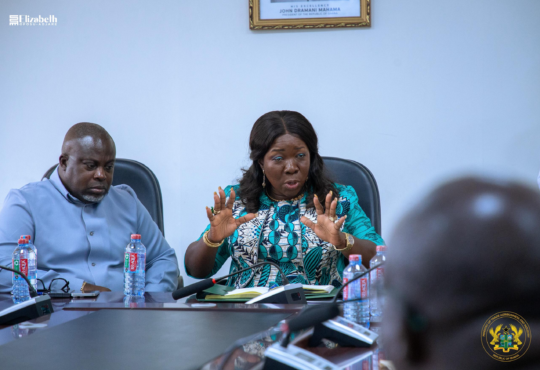
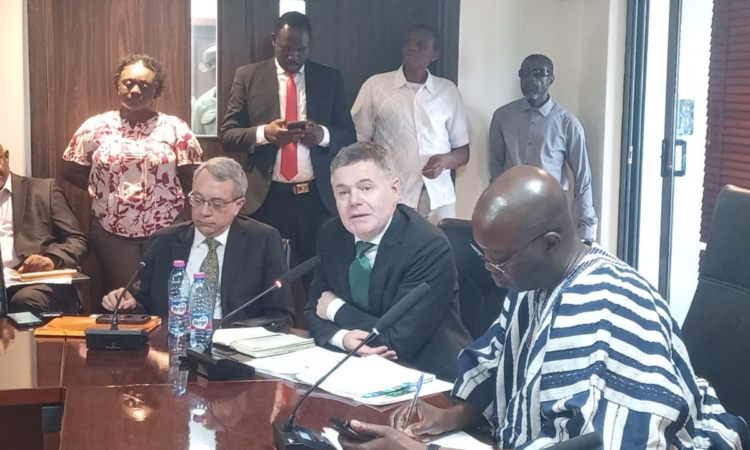
The First Deputy Speaker, Bernard Ahiafor, made the case during a meeting with the Bank’s Managing Director and Chief Knowledge Officer, Paschal Donohoe, calling for broader support beyond existing programmes.
Mr Ahiafor proposed extending assistance to parliamentary committees not currently covered under ongoing initiatives, as well as support for the Open Government Partnership (OGP) Caucus in monitoring Ghana’s commitments under the global transparency framework.
He also highlighted the need for collaboration to advance the digital transformation of parliamentary processes, improve data and knowledge management systems, and strengthen continuous professional development for Members of Parliament and staff.
“Your presence here is a testament to our shared commitment to strengthening democratic governance and advancing sustainable economic development,” he said, while acknowledging support from both the World Bank and the Foreign, Commonwealth and Development Office.
Building capacity for economic oversight
The engagement builds on an ongoing $1.6m capacity-building programme (2025–2026) aimed at enhancing Parliament’s role in economic and financial governance.
Key interventions under the project include:
training for the Budget Committee on the Public Financial Management Act and budget scrutiny
capacity-building for the Committee on Economy and Development on Ghana’s medium-term development framework
the Speaker’s Public Financial Management Dialogue, which brought together policymakers and business editors
training for the Parliamentary Press Corps to improve reporting on fiscal policy and economic governance
Mr Ahiafor described the initiative as timely, particularly given the economic challenges facing Ghana and the broader global economy.
World Bank investment and outlook
Mr Donohoe said the Bank is currently supporting five parliamentary committees under its governance programme, noting that stronger legislative institutions benefit both government performance and economic outcomes.
“We know that if Parliament is strengthened, it is good for Parliament, for government and for the economy,” he said.
He added that the Bank has an active investment portfolio of more than $3bn in Ghana, spanning the public and private sectors, with a focus on education, transport and energy.
The Bank is also preparing a report on growth and jobs, alongside research on the role of agriculture and food systems in the Ghanaian economy, including investment opportunities in irrigation, transport and skills development.
Political consensus on reform priorities
The Majority Leader, Mahama Ayariga, welcomed the Bank’s focus on agriculture, describing it as aligned with government priorities. He noted that recent improvements in macroeconomic indicators point to growing stability, adding that disciplined policy management could help the country withstand external shocks.
On the opposition side, Minority Leader Alexander Afenyo-Markin called for greater emphasis on skills development, arguing that elevating apprenticeship training could address both unemployment and security concerns. He also urged increased support for Parliament and highlighted the need to build capacity in emerging areas such as artificial intelligence.
Economic implications
Analysts say stronger parliamentary oversight could play a critical role in improving fiscal discipline and policy credibility in Ghana.
Enhanced scrutiny of budgets and public financial management processes is likely to improve transparency and reduce inefficiencies in government spending — a key concern for investors and development partners.
Deeper collaboration with the World Bank could also help unlock additional financing and technical support, particularly in priority sectors such as infrastructure, agriculture and human capital development.
Moreover, efforts to digitalise parliamentary processes and strengthen data systems could improve the quality of policymaking, enabling more evidence-based decisions that support long-term growth.
At a broader level, institutional strengthening is seen as central to sustaining recent macroeconomic stability. A more effective Parliament can reinforce accountability, bolster investor confidence and contribute to a more predictable policy environment — all of which are critical to economic recovery and expansion.
For Ghana, the challenge will be to translate these capacity-building efforts into tangible improvements in governance outcomes, ensuring that stronger institutions ultimately deliver more inclusive and resilient economic growth.