Ghana’s babies at risk: Sunda flags influx of dangerous diapers…appeals to Parliament for action



The Managing Director of Sunda International Group Ghana, Mr. Wei Ye, has raised alarm over the increasing presence of substandard imported baby diapers on the Ghanaian market, warning that these products pose serious health risks to infants.
According to him, these diapers—often waste products in their countries of origin—lack branding, manufacturing dates, and basic quality standards. “They are extremely cheap and are flooding the market because of greed and profit-seeking. These are products that should be discarded, but they’re being dumped in Ghana,” Mr. Ye stated.
He estimated that nearly 800,000 babies are born in Ghana every year, and children between the ages of 1 to 3 use baby diapers. Based on this, he warned that over 2.5 billion instances of diaper use per year could expose Ghanaian children to harmful infections and skin diseases if the government fails to intervene.
“These diapers are not manufactured under regulated conditions. They pose a risk of skin irritation and viral infections. We need immediate government, societal, and media action—along with continuous consumer education—to address this crisis,” he emphasized.
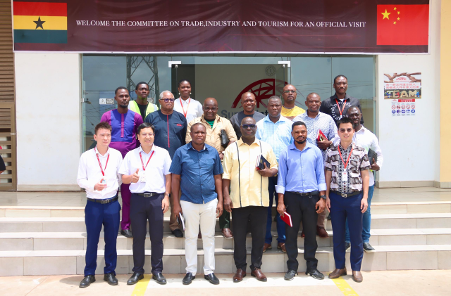
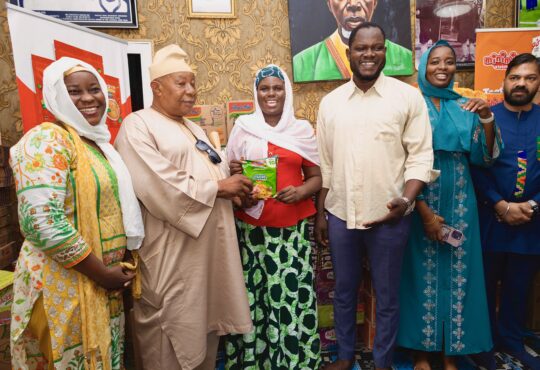
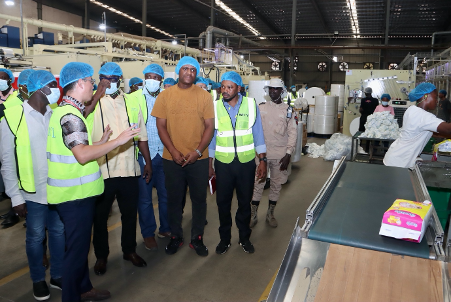
Mr. Ye made these remarks during a working visit by the Parliamentary Select Committee on Trade, Industry, and Tourism to Sunda International’s facility in Accra.
$2.2 Million lost annually to Substandard diaper imports
Mr. Ye revealed that Ghana imports over 300 million diapers annually, leading to an estimated US$2.2 million loss to the local economy. He added that only one-third of these products are properly declared at the ports, raising concerns over import regulation loopholes.
He appealed to Parliament to treat the importation of substandard diapers as a national security and public health issue, noting that children’s health is critical to Ghana’s future.
“Children are the future of this nation. We need to define the importation of these fake products as a threat to national health,” Mr. Ye stated.
Local capacity exceeds national demand
Mr. Ye also highlighted that Ghana has eight baby diaper manufacturing factories with a total production capacity of three billion pieces annually—three times the national demand of one billion diapers. He questioned the need for any imports at all.
Similarly, Ghana has two washing powder manufacturing plants with a combined capacity of 250,000 tons per year, which is sufficient to meet domestic demand.
Policy recommendations to protect the Industry
To curb the influx of poor-quality imports and support local manufacturers, Sunda International proposed several policy actions:
Ban imports of substandard diapers from their countries of origin.
Enforce stricter inspections at ports and markets.
Implement pre-shipment inspections.
Raise import tariffs on finished products (e.g., diapers, sanitary pads, washing powder) from 20% to 35%.
Consider import quotas or restrictions to protect local manufacturers.
Define substandard imports as a national health risk.
Parliament and AGI pledge support
Chairperson of the Parliamentary Select Committee, Hon. Hottordze Roosevelt Alexander, commended Sunda for its investment in Ghana’s economy. He acknowledged the seriousness of the issues raised and pledged to escalate them to relevant agencies, including the Food and Drugs Authority and Ministry of Trade.
“We’ll brief the necessary institutions and ensure something is done. The idea of an import quota may be excessive, but some form of restriction is worth considering,” Hon. Hottordze noted.
The CEO of the Association of Ghana Industries (AGI), Mr. Seth Twum Akwaboah, also backed the concerns raised, stating that many local firms face similar challenges. He stressed that Ghana’s industrial capacity is often underestimated.
“When market conditions are favorable, local industries quickly scale up. Ghana has far more capacity than most people realize,” he said.
Sunda’s long-term commitment
Founded in 2004 and headquartered in Guangzhou, China, Sunda International was one of the earliest international trading companies to enter the African and South American markets. In Ghana, it has invested over US$240 million and operates across three sectors: building materials, fast-moving consumer goods (FMCG), and hardware, with plans to expand into the beverage industry.