
By Eugene Davis
The Acting CEO of the Ghana Chamber of Mines, Ahmed Nantogmah, has announced the Chamber’s intent to advocate for a Mineral Revenue Management Act, modeled after the Petroleum Revenue Management Act, to ensure transparency and accountability in the use of mineral revenues.
Mr. Nantogmah asserted that Ghanaians must see and feel the benefits of the resources extracted from the country’s lands, and are calling for a fully operational resource-backed development framework, such as the Mineral Development Fund, with regular reporting and citizen oversight to ensure accountability.
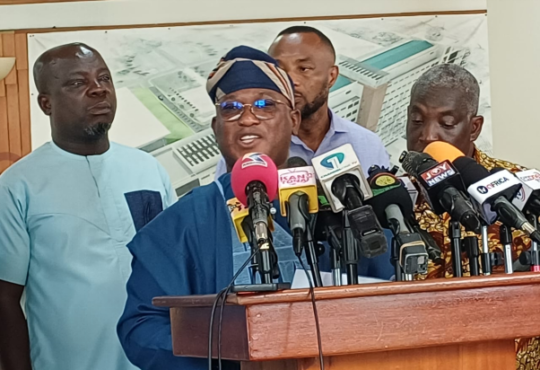
Addressing members at the 2025 Annual General Meeting of the Chamber in Accra, Mr. Nantogmah said “In furtherance of this transparency agenda, the Chamber continued its advocacy on the need to establish a Mineral Revenue Management Act, akin to the Petroleum Revenue Management Act (PRMA). Such legislation will provide a structured and transparent framework for the collection, allocation, and utilisation of mineral revenues, particularly at the national and sub-national levels.
Ghana has set a good precedent with the PRMA, which has helped instil public confidence in how oil and gas revenues are managed. Extending a similar governance framework to the mining sector would not only enhance transparency but also deepen public trust in the industry.
It would ensure that revenues generated from mining are effectively channelled into priority development sectors such as health, education, infrastructure, and industrialisation particularly in the host mining communities.”
More importantly, the CEO indicated that a Mineral Revenue Management Act would define clear rules for savings and stabilization funds, promote intergenerational equity, and enable Parliament and civil society to exercise informed oversight, arguing that the Chamber is ready and willing to support the government and Parliament in the design and development of this legislative instrument, drawing on both local and international best practices.
The CEO asserted that Ghana contributes over 45percent of mineral revenue into the state coffers – so when somebody says Ghana gets only 14percent it is not true, Ghana gets between 45 and 50percent, and it is among the highest in the sub-region.
According to the Chambers report, producing member companies spent US$5.5 billion (73.7% of revenue) within Ghana’s economy: US$2.9 billion on local procurement, US$1.4 billion in taxes,US$600+ million in employee emoluments and US$28 million on community development.
Offshore-related expenditures included: US$972.8 million in capital expenditure (12.9% of revenue),US$240.7 million on imported consumables (3.2%),US$111.3 million in amortisation (1.5%) and US$660.1 million transferred to non-government shareholders (8.8%)
For comparison, 2023 figures were US$804.9M (capex), US$306.6M (consumables), US$162.7M (amortisation), and US$274M (shareholder transfers).
The President of the Chamber, Michael Edem Akafia maintained that the sector continues to deliver stellar performance, driving economic recovery, foreign exchange stability, and social development, “Yet, to unlock our full potential, we need a fair and predictable fiscal regime, competitive operating costs, and robust infrastructure”
Importantly, he revealed that in 2024 the mining sector faced multiple headwinds from ;
Fiscal Pressure: The Growth and Sustainability Levy was increased by 200% to 3% on gross revenue, threatening operational viability. A review is essential to sustain investor confidence.
Fuel Pricing Distortions: Non-applicable levies like the Energy Debt Recovery Levy and Fuel Marking Margin inflated diesel costs. A pricing overhaul is needed.
Permit Bottlenecks: Exploration permits dating back to 2009 remain unresolved. We urge expedited approvals.
Security Threats: Illegal mining continues to endanger legitimate operations. Enhanced state-led security is critical.
Rail Infrastructure: The poor state of the Western rail corridor forces costly reliance on road transport. Rehabilitation must be prioritised.
VAT on Exploration: Exploration is vital to sustaining mineral production. We call for a VAT exemption to incentivise investment in new discoveries.
The Minister of Lands and Natural Resources, Emmanuel Armah-Kofi Buah, called on all stakeholders to support the government’s efforts to combat illegal mining. He attributed part of the surge in illegal mining to the cumbersome licensing process, which often requires miners to travel to Accra.
To address this, the government is decentralizing the licensing system by establishing district centers nationwide to ease access and promote compliance.