Growth Levy and fuel costs undermine mining profitability -Chamber of Mines


By Eugene Davis
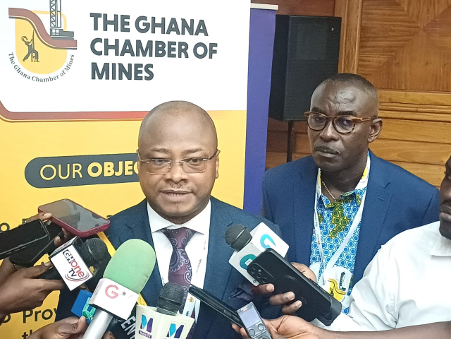
The President of the Ghana Chamber of Mines, Michael Edem Akafia, has identified major headwinds that affected the mining sector in 2024, including the Growth and Sustainability Levy (GSL), fuel pricing inefficiencies, and permit delays.
Speaking at the Chamber’s 97th Annual General Meeting in Accra, Mr. Akafia called for urgent policy reforms to sustain investor confidence and unlock future investments.
Concerns Over the Growth and Sustainability Levy (GSL)
Mr. Akafia criticized the recent increase in the GSL from 1% to 3%, a 200% hike applied to gross revenue instead of profits. He warned that this burdens even loss-making firms and could deter investors.
Unlike royalties, the GSL is non-deductible, worsening its impact. He also argued that justifying the levy with high gold prices is unfair to other mineral producers like bauxite and manganese.
Operational Bottlenecks identified
Fuel Pricing Inefficiencies:
The Chamber highlighted non-applicable levies—such as the Energy Debt Recovery Levy and Fuel Marking Margin—which inflate diesel prices. A review is urged to align fuel costs with actual services rendered.
Permit Delays
Exploration permits dating back to 2009 remain unprocessed. The Chamber called for expedited approvals to boost exploration activity.
Security Threats
Illegal mining continues to threaten licensed operators. The Chamber reiterated calls for enhanced state-led security interventions.
Dilapidated Rail Infrastructure
The Western Rail Corridor remains in poor condition, forcing companies to use expensive road transport. Revamping the railway is a top priority.
VAT on Exploration
The Chamber urged the government to remove VAT on exploration activities to stimulate investments and secure future mineral production pipelines.
Strong Fiscal Contributions in 2024
Despite challenges, the mining sector made substantial contributions to Ghana’s economy: total fiscal payments: GH₵17.7 billion (up 51.2% from GH₵11.7B in 2023), dividends to the state: GH₵1.03 billion (600%+ increase)
Share of direct domestic taxes: Rose from 22.7% to 24.3%, share of domestic revenue: Increased from 8.8% to 9.6%
Royalties paid: GH₵4.9 billion (up 76.7% from GH₵2.8B in 2023), representing 27.7% of total fiscal contributions
Foreign Exchange Repatriation
Total repatriated: US$4.99 billion (70.8% of earnings)
US$906.3M sold to Bank of Ghana via MSR (from US$784M in 2023)
US$749.7M through Foreign Exchange Purchase Programme
US$3.3B through commercial banks (22.2% increase over 2023)
Revenue Expenditure Overview
Domestic spending: Member companies spent US$5.5 billion (73.7% of revenue), US$2.9B on local procurement, US$1.4B in taxes, US$600M+ on employee emoluments and US$28M on community development.
Offshore spending: US$972.8M (12.9%) on capital expenditure, US$240.7M (3.2%) on imported consumables, US$111.3M (1.5%) on amortization, US$660.1M (8.8%) transferred to non-government shareholders.