EPA engages Parliament…calls for support on climate adaptation plans


By Eugene Davis
The CEO of the Environmental Protection Agency (EPA), Prof. Nana Ama Browne Klutse, has called on Parliament to provide strong legislative backing as the agency works to finalise key climate initiatives. These include a national adaptation plan, monitoring framework, economic impact analysis, and a climate vulnerability information portal to enhance data-driven decision-making.
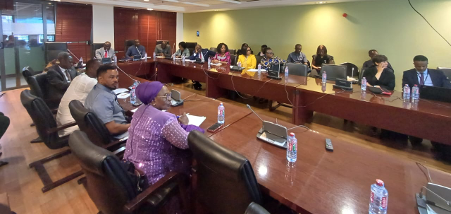
The engagement with Parliament was to raise awareness and deepen the understanding of Parliamentarians on the National Adaptation Process (NAP)process and objectives. It is also an avenue to re-emphasize the critical role of Parliament in climate policy oversight, resource mobilization, and legislative support.
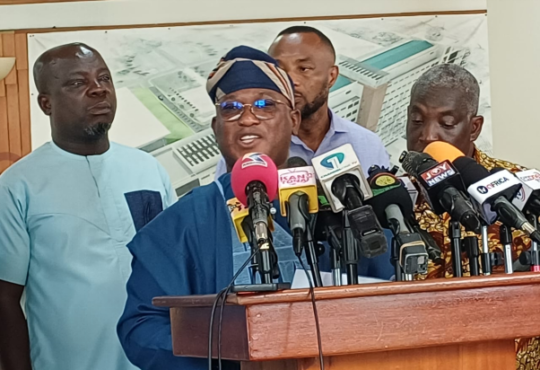
At a meeting with the Committees on Environment, Gender, Local Government and Climate Caucus as well as United Nations Environment Programme (UNEP), Prof.Browne Klutse in a speech read on her behalf indicated that strengthening the capacity of Parliament in this regard is crucial for mainstreaming adaptation actions into national policies and ensuring sustainable climate governance including oversight.
She disclosed that “We are currently finalising draft adaptation plans, monitoring framework, economic analysis as well as a national climate vulnerability information portal to support data driven decision making.
We believe these efforts would be significantly enhanced through active legislative support and advocacy especiallly as Ghana strengthens its climate financial architecture and integrate adaptation measures into policy and budgetting cycle.”
The Environmental Protection Agency (EPA), under the Ministry of Environment, Science and Technology (MEST), has led the development of Ghana’s National Adaptation Plan (NAP) since 2020, with support from the Ukraine Climate Fund and UNEP, and oversight from the Ministry of Finance.
The EPA has consistently engaged the 7th and 8th Parliaments through briefings and consultations. It recently held sessions on carbon markets and Nationally Determined Contributions (NDCs) to enhance understanding of opportunities and challenges under UN climate processes.
The Chairman of Environment, Science and Technology, Yaw Frimpong Addo expressed Parliament’s readiness to support EPA’s adaptation plans.
He indicated that the successful implementation of Ghana’s NAP requires strong political commitment and sustained leadership at the highest levels of governance.
“Parliamentarians, as representatives of the people and key actors in policy approval, oversight and budget appropriation play a critical role in advancing climate adaptation.
Their engagement is vital to ensure that adaptation priorities reflected in legislation, national development planning and resource allocation.”
The United Nations Environment Programme (UNEP) representative highlighted the increasing intensity of climate events such as droughts and flooding in Ghana, noting that 77% of the population depends on climate-sensitive sectors.
He emphasized the importance of the National Adaptation Plan (NAP) as a strategic tool to shift from reactive responses to integrated, long-term development planning.
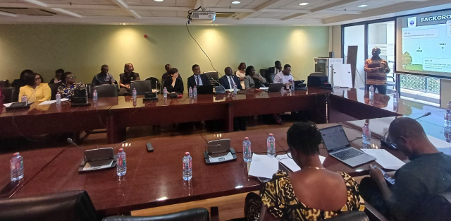
The session was organised to brief Members of Parliament on the NAP process, share key findings and priorities, and clarify the institutional roles—particularly that of Parliament—in ensuring its effective implementation.
The NAP process systematically identifies climate vulnerabilities and defines adaptation priorities at national and sub-national levels. It also aims to mainstream climate adaptation into development planning across critical sectors, including agriculture, water, infrastructure, ecosystems, health, and disaster risk management.
With downscaled climate data now available for more than 10 districts across Ghana’s five climate zones, EPA’s planning has become increasingly evidence-based, context-specific, and locally responsive.
Organisers expressed hope that these efforts would be significantly enhanced through stronger legislative support and advocacy—especially as Ghana works to strengthen its climate finance architecture and embed adaptation into its policy and budgeting cycles.
Expected outcomes of the session included:
Enhanced understanding among MPs of Ghana’s NAP process, climate risks, and adaptation priorities.
Clear articulation of Parliament’s oversight and legislative roles in supporting climate adaptation.
Expressions of commitment from MPs to champion climate action within their constituencies and committees.
Strengthened collaboration between Parliament, MESTI, EPA, and development partners for coordinated climate action.