Ghana’s EV market gears up for growth with supportive policies



By Eugene Davis
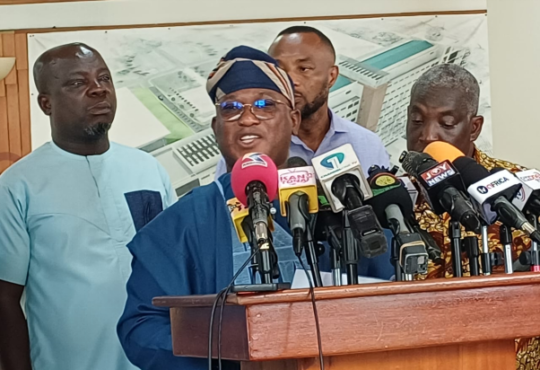
The Minister for Transport, Joseph Bukari Nikpe, has reaffirmed the government’s commitment to providing both financial and non-financial incentives to accelerate the adoption of electric vehicles (EVs) in Ghana.
Appearing before Parliament to respond to a question on the timeline for implementing these incentives—outlined in Section 5.1.1 of Ghana’s Electric Vehicle Policy—Mr. Nikpe emphasized that these measures are central to achieving sustainable transportation goals.
He noted that the first phase of the implementation roadmap, which spans from 2024 to 2026, is focused on establishing these incentives to support the rollout of electric vehicles across the country.
“As part of our commitment, the government has already operationalized provisions under the Value Added Tax Act, 2013 (Act 870), as amended by Act 1107 in 2023, which exempts electric vehicles imported for public transport from VAT,” he stated.
He further disclosed that plans are underway to review the Road Traffic Regulations, 2012 (L.I. 2180), to accommodate the evolving electric vehicle ecosystem in Ghana.
Section 5.1.1 of the Electric Vehicle Policy, as highlighted by the Energy Commission, provides the regulatory framework for integrating renewable energy and establishing EV charging infrastructure. This includes setting national standards for fast-charging networks, conducting grid impact assessments, and promoting smart charging schemes to reduce pressure on the national grid.
The policy also outlines a national strategy for the recycling, reuse, and environmentally safe disposal of EV batteries, ensuring the long-term sustainability of the sector.
Globally, the electric vehicle market has witnessed significant growth—from 400,000 EVs in 2013 to over 16.4 million in 2021. According to the International Energy Agency (IEA), light-duty plug-in electric vehicles are projected to reach 140 million units by 2030, with electric two- and three-wheelers hitting 490 million.
In Ghana, the 2022 Electric Vehicles Baseline Survey Report by the Energy Commission revealed that between January 2017 and December 2021, approximately 17,660 plug-in electric vehicles were imported into the country. Additionally, 9,431 motorized electric two- and three-wheelers were imported during the same period—98% of which were Battery Electric Vehicles (BEVs) primarily from China.
Data from the Ghana Revenue Authority (GRA) in 2021 further showed that standard hybrid electric vehicles (HEVs) accounted for the largest share of total EV imports at 91.5%, followed by BEVs at 5.1% and plug-in hybrid electric vehicles (PHEVs) at 3.3%.
Electric vehicles available on the Ghanaian market are broadly categorized into Pure Electric Vehicles (BEVs), Hybrid Electric Vehicles (HEVs), and Plug-in Hybrid Electric Vehicles (PHEVs).
The government remains optimistic that through a combination of legislative support, tax incentives, and infrastructure development, Ghana can accelerate its transition to a cleaner and more sustainable transport system.