
By Eugene Davis
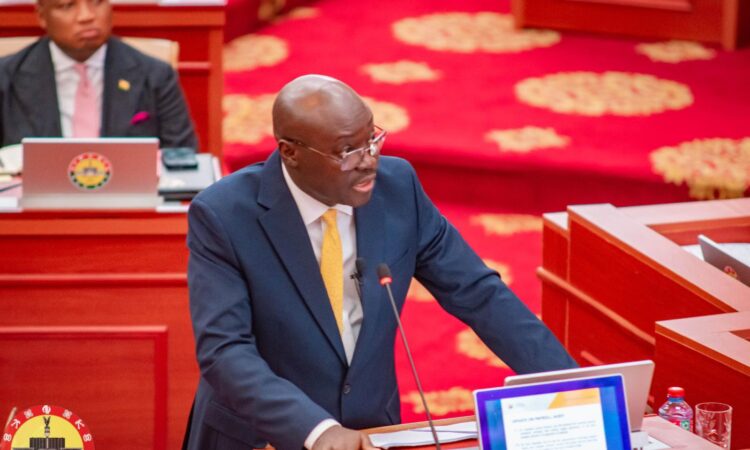
Finance Minister Dr. Cassiel Ato Forson has announced government’s intention to reopen the domestic bond market as part of efforts to finance the budget deficit and strengthen fiscal stability.
Presenting the 2025 Mid-Year Budget Review to Parliament on Thursday, July 24, Dr. Forson stated that the government’s debt management strategy will now prioritize the use of treasury bills strictly for short-term cash management.
“Beginning August, we will initiate the selection of new bookrunners to assist with the reopening of the domestic market,” he said. The focus will be on banks and investment dealers capable of achieving broader market reach and providing expert advice on pricing and structuring, he explained.
According to the Minister, reopening the bond market is aimed at creating a more competitive and efficient primary market that delivers optimal pricing and volume to help reduce borrowing costs. The move also forms part of a broader strategy to restore investor confidence, deepen the domestic capital market, and ensure long-term debt sustainability.
In 2024, the domestic bond market was managed by Barclays, Stanbic, and SAS, who acted as bookrunners for the Ministry of Finance. Since 2015, these institutions have been responsible for regular bond issuances, publishing debt calendars, and providing price guidance.
Dr. Forson further noted that Ghana has made significant progress in stabilizing its fiscal position, reporting a primary budget surplus and a reduced overall fiscal deficit. As part of fiscal consolidation measures, the government has revised its 2025 budget-deficit target to 2.8% of GDP, down from an earlier projection of 3.1%. The primary balance is projected to remain in surplus at 1.5% of GDP, with an economic growth target of at least 4%.
He also disclosed that Ghana expects to sign bilateral debt restructuring agreements with France and another country by Friday, with two additional deals anticipated before the end of the month. The government is preparing to meet all debt servicing obligations from 2025 onwards, backed by newly established cedi and dollar sinking fund accounts.
Starting in August, the government will begin building cash buffers to support domestic debt repayments.
Ghana entered a $3 billion IMF-supported programme in 2023, following a 2022 debt default caused by unsustainable public borrowing. Since then, fiscal reforms and President John Mahama’s renewed commitment to consolidation have helped stabilize the economy. The cedi has appreciated by 41% against the dollar this year, making it the second-best performing currency globally after the Russian ruble, according to Bloomberg.