No funds released yet for government’s ‘Big Push’ Programme — Former Finance Minister reveals


By Eugene Davis
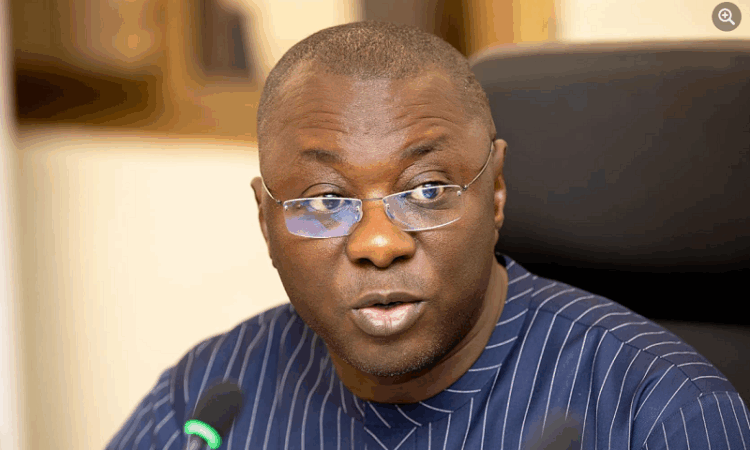
Former Minister for Finance, Dr. Mohammed Amin Adam, has revealed that the government is yet to release any funds for its flagship “Big Push” infrastructure programme more than halfway through the year.
The government allocated GH¢13.85 billion to the initiative, which aims to boost economic growth through investments in key infrastructure sectors such as transportation, energy, and social development. However, speaking during the debate on the 2025 Mid-Year Budget Review in Parliament, Dr. Amin Adam expressed disappointment that not a single cedi has been disbursed for implementation.
“I have reviewed all releases made toward the government’s priority programmes, and I am saddened by the lack of financial commitment. For the Big Push programme, they allocated GH¢13.85 billion, but not one cedi has been released,” he said.
Dr. Amin Adam also pointed out that other critical programmes such as the Agriculture for Economic Transformation Agenda — including initiatives like the Feed Ghana Programme and the Organic Grains Development Project — have also been neglected. Despite an allocation of GH¢1.5 billion, he noted that the Finance Ministry has yet to release any funds for these projects.
“I’m shocked that halfway through the year, after the budget was presented, the Ministry has still not found it necessary to release funds. They are now only beginning procurement,” he added.
He further disclosed that the Bank of Ghana has been pre-financing the operations of the Ghana Gold Board, contrary to the GH¢279 million allocation made in the budget for its activities, of which nothing has been released.
Dr. Amin Adam attributed the failure to release funds to ongoing fiscal challenges. According to him, the Finance Minister has launched 28 treasury bill auctions in the past six months, 13 of which failed due to low subscription rates — all with cover ratios below one.
“The funds meant for development programmes have been redirected to cover auction shortfalls, amounting to billions of cedis. The Minister tried to manipulate interest rates by suppressing T-bill yields without proper coordination with the Bank of Ghana,” he explained.
He criticized the disconnect between fiscal and monetary policy, saying, “How can the Finance Ministry borrow at 15%, now 10%, while the Bank of Ghana borrows at 28%? Investors prefer to buy BoG bills, forcing the Minister to divert resources meant for initiatives like Adwumawura to cover self-inflicted deficits.”
In a related contribution, the MP for Atiwa East, Abena Osei Asare, urged the government to match fiscal figures with real outcomes. She called for accountability, stressing that those who violate the Public Financial Management (PFM) Act should face consequences. “We must not shortchange the people of Ghana,” she warned.
Meanwhile, the Chairman of the Economy and Development Committee, Eric Afful, defended the government’s economic performance, describing it as “historic and unprecedented.” He argued that the true state of the economy is best measured through data.
He cited a GDP growth of 5.6% and highlighted improvements in key indicators: “The NPP left inflation at 23.8%, the NDC brought it down to 13.3%. That’s remarkable. Imported inflation is falling, and the fiscal deficit is now around 0.7% of GDP, down from the 1.7% left by the NPP. Primary balance is at 1.3%.”
Mr. Afful also emphasized Ghana’s strengthened reserves, stating, “Our gross international reserves now stand at $11.12 billion — enough to cover four months of imports. Government is showing financial discipline and prudent spending.”