Chamber of Mines, Railway Authority back rail drive to speed mineral transport


By Eugene Davis
The Ghana Chamber of Mines has pledged to work closely with the Ghana Railway Development Authority (GRDA) in advocating for government investment in the country’s railway network—seen as a critical driver for efficient mineral transportation and reduced environmental impact.
Despite the poor state of roads in the Western Region, particularly the Tarkwa–Takoradi stretch, the mining sector continues to rely heavily on road haulage. Currently, all bauxite from Awaso and about 90% of manganese from Nsuta are transported by road to the Takoradi Port, worsening road deterioration and increasing maintenance costs.
Ghana is estimated to require $30 billion to construct approximately 4,000 kilometres of rail network nationwide.
Strategic Partnership Discussions
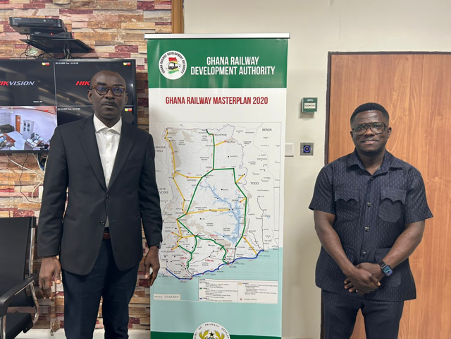
In line with this vision, the Chamber’s Chief Operating Officer, Mr. Ahmed Nantogmah, recently met with Dr. Frederick Appoh, CEO of the GRDA, to explore collaborative strategies for expanding Ghana’s rail system—particularly for transporting bulk minerals such as bauxite and manganese more efficiently.
The GRDA used the opportunity to call for increased funding to implement key projects under the Ghana Railway Master Plan. The plan, first developed in 2013 and revised in 2020, serves as the official blueprint for modernising and expanding Ghana’s railway infrastructure.
Both institutions expressed a shared commitment to working together to deliver railway infrastructure that meets the needs of the mining sector while supporting broader economic growth.
Chamber of Mines’ Role in Driving Change
Mr. Nantogmah reaffirmed the Chamber’s readiness to facilitate partnerships between mining companies, government, and private investors to fast-track railway projects. He stressed that shifting bulk mineral transport from road to rail would not only ease pressure on the road network but also significantly lower the environmental footprint of mining operations.
He intimated that rail transport was critical to achieving a more sustainable mining industry, as it reduces carbon emissions, enhances efficiency, and improves safety in mineral transportation.
Historical Investments and Future Priorities
The previous government committed about $2 billion towards railway development through various financing programmes. However, stakeholders agree that much more needs to be done to achieve the ambitious targets of the Railway Master Plan.
Western Line in Focus
A key priority for the GRDA is the Western Railway Line, which connects the Takoradi Port to the mineral-rich enclaves of Tarkwa and beyond. Plans are underway to extend this line to Kumasi, improving connectivity between the Western, Ashanti, and Central regions.
The Western Line upgrade is considered crucial for boosting export capacity, reducing haulage costs, and ensuring year-round reliability of mineral transport.
A Shared Vision for Modernisation
The GRDA, a statutory body mandated to oversee the development and modernisation of Ghana’s railway system, continues to work with stakeholders like the Chamber of Mines to implement strategic projects. The goal is to create a modern, reliable, and sustainable rail network that supports industrial growth, boosts exports, and reduces pressure on the country’s road infrastructure.
Both institutions have committed to sustained engagement, joint advocacy, and strategic planning to ensure the railway network evolves into a robust pillar of Ghana’s transport and mining logistics system.