
By Edward Adjei FRIMPONG
Ghana’s capital market is showing remarkable strength this year, with both equities and fixed-income segments posting solid growth and reflecting renewed investor confidence.
As of August 21, 2025, the GSE Composite Index — which tracks the overall performance of stocks on the Ghana Stock Exchange — had surged by 50.08% since the start of the year. The Financial Stock Index, which measures the performance of listed banks and financial institutions, also advanced by an impressive 43.30%. These gains underscore the resilience of listed companies and the strong appetite from investors seeking value in the stock market.
The fixed-income market has been equally vibrant. By August 20, 2025, trading volumes on the Ghana Fixed Income Market (GFIM) had hit GH¢143.21 billion, a 51.33% jump compared to GH¢94.63 billion recorded during the same period last year. The surge signals growing confidence in bonds and other fixed-income securities as investors diversify their portfolios.
The Deputy Managing Director of the Ghana Stock Exchange (GSE), Frank Berle, said all six market platforms are well positioned to meet the financing and investment needs of corporates and individuals. These include the Main Market, Ghana Alternative Market, Ghana Fixed Income Market, Green and Sustainable Bonds Market, Commercial Paper Market, and the Over-the-Counter Market.
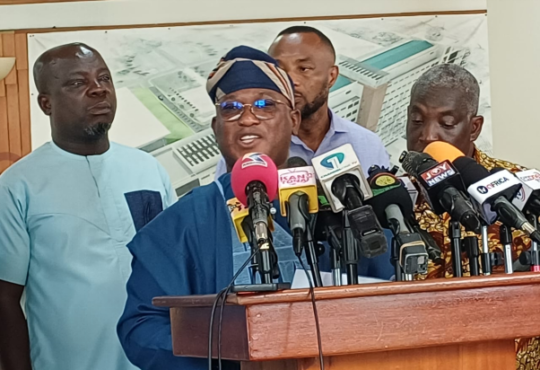
He made the disclosure in a speech read on his behalf by Mrs. Harriet Bus-Moses, Head of Trading and Surveillance at the GSE, during a training programme for members of the Institute of Financial and Economic Journalists (IFEJ) in Accra.
The training, held under the theme “Demystifying Corporate Disclosures: Telling Powerful Stories from Corporate Announcements,” sought to enhance the capacity of financial and economic journalists to interpret corporate disclosures accurately and translate them into stories that empower investors, businesses, and the public.
The programme forms part of ongoing efforts by the GSE to strengthen collaboration with the media, ensuring that financial reporting goes beyond headlines to provide meaningful insights that promote confidence and growth in Ghana’s capital markets.
Mr. Berle stressed the vital role of the media in promoting transparency and deepening investor education. “With the right knowledge and tools, you can help demystify technical information and bring clarity, balance, and accuracy to financial reporting. We deeply value our long-standing relationship with financial and economic journalists as critical partners in nation-building through the capital markets,”he said.

The President of IFEJ, Rayborn Bulley, underscored the need for financial and economic journalists to deepen their understanding of capital market dynamics in order to deliver accurate and impactful reporting.
“In today’s economy, tangible assets are limited, with services increasingly dominating growth. The role of journalists in disseminating information that enhances public appreciation of the stock exchange is therefore critical,” he said.