Parliament’s Economy Committee to probe 2024 progress reports, tighten oversight on spending


By Eugene Davis
The Economy and Development Committee of Ghana’s Parliament is set to interrogate the Annual Progress Reports (APR) of Ministries, Departments, and Agencies (MDAs), as well as Metropolitan, Municipal, and District Assemblies (MMDAs) across the country.
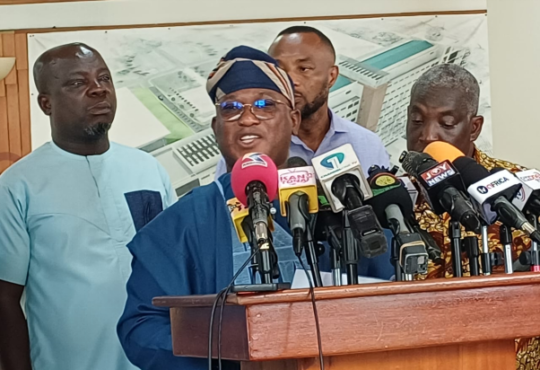
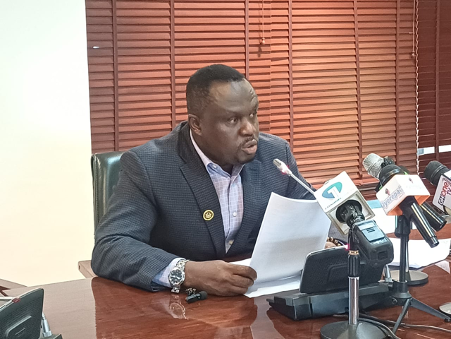
Committee Chairman, Eric Afful, disclosed in an interview that the exercise aims to ascertain the accuracy and status of government projects while ensuring strict adherence to value-for-money principles. He highlighted that prudent management of public resources and effective monitoring of capital expenditure are crucial for restoring macroeconomic stability and public confidence.
According to him, the National Development Planning Commission (NDPC) has finalized its 2024 progress reports covering all government agencies, including district assemblies. The committee will soon commence public hearings, giving MPs the platform to interrogate ministries and agencies on the progress and impact of projects executed with state funds.
Mr. Afful, who also serves as the MP for Amenfi West, noted:
“We will carefully peruse the NDPC reports to ensure that projects conform to the Public Financial Management Act and other statutory frameworks. This process is not just an audit of paperwork but a deeper interrogation into whether government spending is truly improving lives and contributing to sustainable development.”
Beyond project oversight, the committee has engaged the Bank of Ghana, which is now expected to report to Parliament twice annually. This, according to Mr. Afful, will enhance accountability in monetary policy and the management of Ghana’s foreign reserves—critical issues given the ongoing fiscal constraints and IMF conditionalities.
On infrastructure, the committee has confirmed that contractors are set to move to site under government’s ‘Big Push’ programme, a flagship initiative earmarked to inject an estimated $10 billion over four years into infrastructure development. For 2025, approximately ₵10 billion has been allocated, largely for road construction, with expansion into health facilities and other sectors expected in subsequent years.
Mr. Afful stressed that commencement letters have already been issued to contractors:
“Very soon, Ghanaians will witness massive road construction across the country. The ‘Big Push’ is central to government’s capital expenditure strategy, even as we navigate economic challenges.”
The Economy and Development Committee, one of Parliament’s newly established finance-related committees, wields oversight responsibility over the NDPC, the Bank of Ghana, and related state institutions. Unlike the Public Accounts Committee, which often investigates after infractions occur, this committee’s focus is preventive—ensuring excesses in government spending are curtailed before harm is done.
Ultimately, its mandate is to strengthen parliamentary oversight, foster fiscal discipline, and guarantee that scarce national resources—especially under IMF programme restrictions—are channelled into projects that genuinely drive inclusive development.
Ghana’s economy outperformed expectations in the second quarter of 2025, driven largely by the ICT sector, which posted its strongest performance in two years.
According to provisional data from the Ghana Statistical Service (GSS), Gross Domestic Product (GDP) grew by 6.3% year-on-year in the three months ending June, matching the revised growth of 6.3% recorded in the first quarter. Government Statistician Alhassan Iddrisu announced the figures during an online briefing last Wednesday.
The local currency, the cedi, remained relatively stable following the release, trading at ₵12.15 per US dollar in Accra at 11:42 a.m.
The stronger-than-anticipated growth offers some relief to the administration of President John Mahama, who has vowed to reset Ghana’s economy after years of turbulence marked by high inflation, a weakened currency, and the 2022 sovereign debt default.
With Ghana currently under an IMF-supported recovery programme, the robust ICT performance is expected to provide a buffer for government efforts to stabilize growth, restore investor confidence, and drive diversification in an economy still heavily reliant on commodities such as gold, cocoa, and oil.