
AGI to Gov’t: “Walk the talk” on VAT reforms and long-term financing
By Eugene Davis
As Ghanaians await the presentation of the 2026 Budget Statement, the President of the Association of Ghana Industries (AGI), Dr. Humphrey Ayim-Darke, has urged the government to match its promises on Value Added Tax (VAT) reforms with real action.
He said the business community expects the Finance Minister, Dr. Cassiel Ato Forson, to deliver on his commitment to “walk the talk” and correct the distortions and cascading effects in the current VAT structure, which have burdened both industries and consumers.
Dr. Ayim-Darke’s remarks come ahead of the 2026 Budget, where the Minister is expected to outline bold fiscal and structural measures to stimulate economic recovery and support private sector growth.
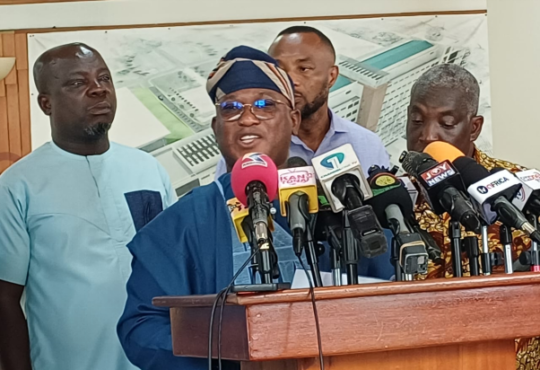
Speaking on the sidelines of the Chartered Institute of Bankers’ 29th National Banking and Ethics Conference in Accra, he emphasized that industry players are particularly keen on seeing comprehensive VAT reforms materialize.
“The Minister promised us a tax review—one of the major ones we expect to see. We will hold him to the VAT total reforms because the cascading and distortion effects have had real consequences on pricing and competitiveness,” he stated.
The government’s proposed VAT reforms include abolishing the COVID-19 Levy, removing the NHIL and GETFund components from the VAT calculation, reversing the VAT flat rate system, and raising the VAT registration threshold for small businesses. These measures are intended to simplify the tax regime, reduce compliance costs, and ease pressure on households and industries.
Beyond Tax: Financing and Structural Reforms
Dr. Ayim-Darke, however, cautioned that the conversation must go beyond tax reforms. He said the next frontier for government policy should be long-term financing, which remains a major bottleneck for Ghanaian businesses.
“Beyond tax reforms, we want to see what’s on the table for long-term financing. Without access to patient capital, sustainability will be compromised. We want to know the strategies the Finance Minister and the Bank of Ghana are designing to support commercial banks to lend long-term,” he noted.
He added that while government’s ‘Big Push’ infrastructure agenda—which includes major investments in roads and construction—is commendable, its true impact will depend on how it stimulates production and private investment rather than just driving up public expenditure.
Strengthening Financial Linkages
The AGI President also called for better coordination between commercial banks and development finance institutions (DFIs) such as GIRSAL, Ghana EXIM Bank, and the Development Bank Ghana (DBG).
“How do we structure the relationship between these DFIs and the commercial banks to support sectors like agriculture and manufacturing? These are critical areas where funding gaps need to be bridged if we want sustained growth,” he said.
Value Addition and Industrial Growth
Dr. Ayim-Darke acknowledged some positive strides made under government’s home-grown economic initiatives, including the establishment of the Ghana Gold Board (GoldBod). He noted that the agency’s move into the jewellery and value-addition segment is promising but will require significant long-term financing to achieve meaningful transformation.
“Now that the GoldBod has ventured into the jewellery business, we must ensure there is adequate long-term capital to make value addition a reality. That’s how we reshape the economy,” he stressed.
Outlook
As the 2026 Budget approaches, the business community will be watching closely to see whether the government’s fiscal and structural commitments translate into tangible support for industries. For the AGI, the message is clear: Ghana’s growth story must now shift from short-term stabilization to sustainable, long-term industrial financing and productivity-led transformation.