
Ghana’s economy is on the cusp of a historic shift, with GDP expected to surpass the US$100 billion mark by the end of 2025 — a development the Ministry of Finance says underscores why economic growth must remain the ultimate benchmark of the country’s economic health.
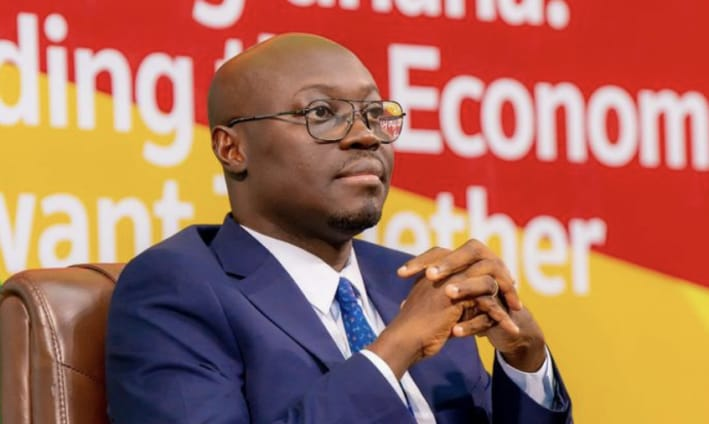
Speaking on behalf of the Finance Minister at Deloitte’s 2026 National Post-Budget Discussion, Coordinating Director of the Real Sector Division, Samuel Arkhurst, said growth is the foundation on which every major fiscal indicator is built.
“If you want to test the strength of any economy in one figure, economic growth reigns supreme,” he said. “It encapsulates almost everything.”
Arkhurst explained that core budget measures — from revenue performance to the fiscal deficit — are meaningful only when analysed as a ratio of GDP.
This, he noted, is why sustaining strong, consistent growth is essential. But he highlighted a detail often overlooked in the national conversation: the need to view Ghana’s GDP the same way the global community does.
“Historically, we present our GDP in cedis in the budget,” he said. “But when you want international comparison, you express it in US dollars so you can compare your strength against others.”
Using this global standard, Ghana’s economic leap becomes clearer. A decade ago, the country’s GDP was around US$49 billion, with per-capita income at US$1,756. Current projections put GDP on course to hit US$100 billion, while per-capita income could reach US$3,000 for the first time — pushing Ghana further up the lower-middle-income ladder.
Still, Arkhurst cautioned that growth headlines alone do not tell the full story.
“The distribution of growth matters, and so do the contributors to growth,” he said, adding that the 2026 budget aims to bring more sectors and economic actors into the growth effort.