Build resilience first: Economist urges Govt to focus on “low-hanging fruits” in 2026 budget


By Eugene Davis
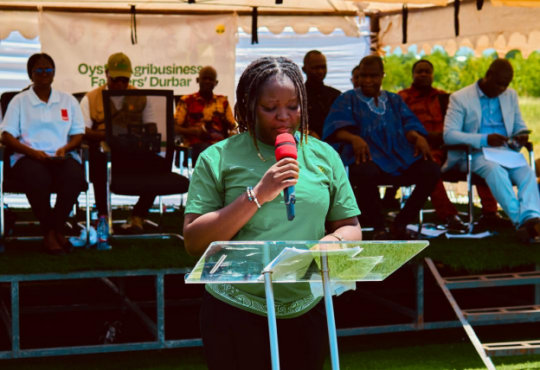
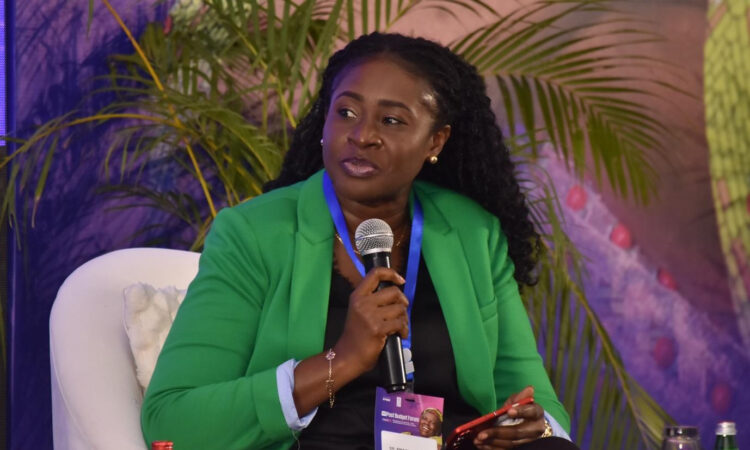
Professor Priscilla Twumasi Baffour, an economist and senior lecturer at the University of Ghana, has urged government to be more deliberate about building local economic resilience by tapping into the “low-hanging fruits” of Ghana’s industrialisation agenda.
Speaking at the 2025/2026 KPMG Post-Budget Forum in Accra, she welcomed the broad direction of the 2026 Budget—particularly the government’s flagship Big Push infrastructure programme—but noted that expectations should remain realistic.
“At least the Budget gives a sense of intention,” she said. “We do not expect every major project under the Big Push to be delivered in 2026. But the direction is encouraging. As a developing country, however, many of the outcomes do not depend entirely on us. The economy is showing signs of stability, and we hope that—barring external shocks—the momentum continues. That is why we keep emphasising the need to intentionally build domestic resilience by focusing on low-hanging fruits, especially around value addition in the agriculture value chain. This is how we strengthen the base while moving towards the bigger ambitions the Budget outlines.”
Professor Twumasi stressed that macroeconomic stability remains fragile and depends heavily on two factors the 2026 Budget itself acknowledges: continued fiscal discipline and strong export performance. According to her, much of the stability experienced in recent quarters has been underpinned by buoyant gold exports and the rebound in cocoa production after the pest-related slump.
“When you examine the Budget, it is clear many of the indicators driving stability are outside our direct control. Gold and cocoa are doing the heavy lifting. This is why caution is important.”
She further explained that some of the major funding streams for the Big Push raise vulnerability concerns.
“A significant part of the proposed financing relies on mineral revenues through the ABFA, and on petroleum resources. But petroleum output has been declining in recent years. So there is an inherent risk when the Budget’s financing model depends on commodities whose performance is not guaranteed.”
The 2026 Budget also proposes increased use of Public–Private Partnerships (PPPs) to deliver large projects. But Professor Twumasi warned that PPP processes typically involve long negotiation cycles, extensive feasibility assessments, and regulatory approvals.
“The Budget rightly positions PPPs as an option, but these arrangements take time. They may not deliver immediate fiscal relief in 2026.”
She noted by reiterating that while the 2026 Budget sets a broadly positive tone, Ghana’s resilience will depend on accelerating value addition, strengthening local capacity, and reducing exposure to external shocks.
Ghana’s economy has begun a steady rebound from what many analysts describe as its most severe economic crisis in decades, with signs pointing toward more durable growth in 2026 as market sentiment improves. Presenting the 2026 Budget to Parliament, Finance Minister Cassiel Ato Forson noted that despite the country still operating under an IMF-supported reform programme, the macroeconomic indicators suggest that the worst is behind Ghana.
According to him, a combination of fiscal consolidation measures, structural reforms, and tighter expenditure controls has helped restore a measure of stability. Government is projecting real GDP growth of at least 4.8% in 2026, fueled by improved investor confidence, a recovery in key export sectors, and a gradual easing of domestic financial pressures.
Forson added that from 2026 onwards, government targets a fiscal deficit of 4.0% of GDP (cash basis) and a primary surplus of about 1.5% of GDP, consistent with the IMF programme’s requirements for long-term debt sustainability.
Inflation—once Ghana’s most stubborn challenge—has decelerated sharply. After reaching an alarming peak of 54% in January 2023, consumer inflation has now slowed for 10 consecutive months, dropping to 8.0% in October 2025, down from 9.4% in September. This marks the country’s lowest inflation rate since mid-2021 and represents one of the clearest signs that macroeconomic pressures are easing.
Reflecting this improved outlook, the Bank of Ghana implemented a record 350-basis-point policy rate reduction in September, bringing the benchmark interest rate to 21.5%. The central bank attributed the cut to the sustained decline in inflation, improved foreign exchange stability, better fiscal discipline, and renewed optimism in the broader macroeconomic environment.
Despite these gains, the Finance Minister stressed that Ghana must maintain momentum—particularly as it remains under the IMF programme—by advancing fiscal reforms, safeguarding revenue mobilization, and continuing structural changes needed to strengthen the economy’s resilience.
Professor Priscilla Twumasi Baffour