
By Eugene Davis
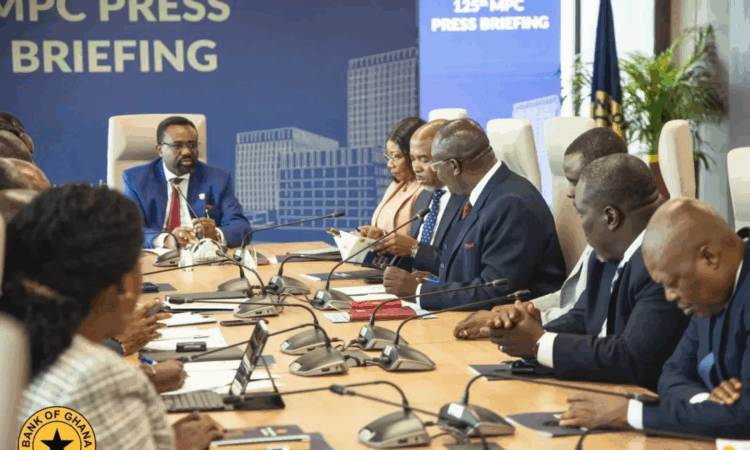
The Bank of Ghana has cut its policy rate by 350 basis points to 18.0 percent, citing continued easing in inflation and a reduction in risks to the inflation outlook.
In a statement, the Bank noted that price pressures have moderated significantly, allowing room for policy easing to support the ongoing economic recovery. With real interest rates still high, the MPC believes further gradual adjustments could help sustain growth.
Globally, growth has remained steady, supported by looser financial conditions and fiscal measures, although trade tensions and geopolitical risks continue to cloud the outlook. Inflation worldwide is easing due to lower energy and food prices, though progress remains uneven.
Since April 2025, global financing conditions have improved sharply, easing external pressures for emerging markets. Central banks continue to monitor global inflation closely as they adjust their policy stance.
On the domestic front, Ghana’s economic momentum remains solid. GDP expanded by 6.3 percent in the first half of the year, with provisional August data showing 5.1 percent growth, driven mainly by services and agriculture. The Bank’s Composite Index of Economic Activity rose by 9.6 percent in September, reflecting stronger industrial output, trade, credit, and consumption. Business and consumer confidence remains strong.
Inflation has fallen sharply—from 23.5 percent in January to 8.0 percent in October—returning to the Bank’s target range. Both food and non-food inflation are now in single digits for the first time since 2021. Improved food supply, tight monetary policy, fiscal restraint, and currency stability have all contributed to this progress. Inflation expectations have also eased, with forecasts pointing to 6–8 percent inflation by year-end.
Interest rates across the market have declined in line with the policy rate, helping revive private sector credit growth from a contraction earlier in the year to 5.4 percent in October.
Fiscal consolidation remains strong. Despite revenues falling slightly below target, expenditure was significantly lower, resulting in a 1.5 percent deficit—better than the planned 3.2 percent. Public debt has fallen to 45 percent of GDP from 61.8 percent in December 2024, supported by effective debt management and a stronger cedi.
The banking sector remains sound, with improved solvency, profitability, and asset quality. The NPL ratio has declined to 19.5 percent, though some banks will still require recapitalisation.
External sector performance has strengthened significantly. The current account surplus rose to US$3.8 billion, driven by strong gold and cocoa export earnings. Remittances remained robust, helping lift reserves to US$11.4 billion, or 4.8 months of import cover. The cedi has appreciated 32.2 percent against the US dollar this year.
With inflation easing, reserves strengthening, and macroeconomic conditions improving, the MPC concluded that it now has space to begin cautiously reducing interest rates to reinforce Ghana’s growth recovery.