
By Eugene Davis
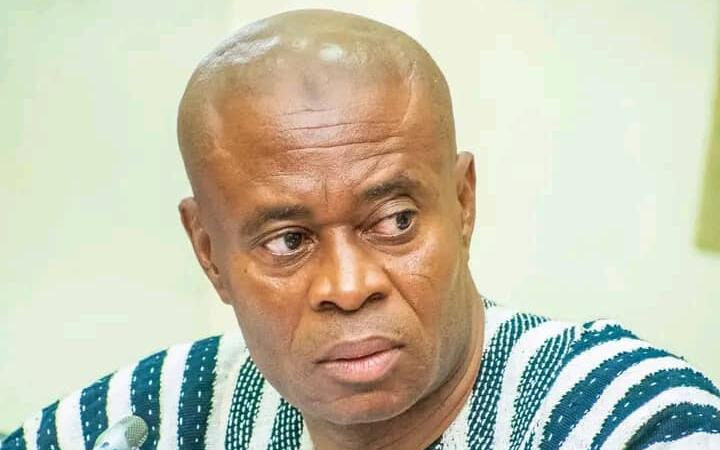
Government, through the Ministry of Lands and Natural Resources, has formally withdrawn the lithium mining lease agreement between the state and Barari DV Ghana Limited. This was announced to Parliament by the Deputy Minister for Lands and Natural Resources, Alhaji Yusif Sulemana.
According to the Deputy Minister, the withdrawal follows widespread concerns raised by civil society organisations, industry experts, community representatives, and Members of Parliament from both the Majority and Minority sides. These concerns centred on transparency, the fiscal terms of the agreement, and the long-term national interest in the emerging lithium industry.
Speaking on the floor of Parliament, he said:
“I rise to withdraw the mining lease agreement between the Republic of Ghana, represented by the Ministry of Lands and Natural Resources, and Barari DV Ghana Limited for the mining of lithium and other associated minerals at Mankessim, covering approximately 42.63 square kilometres in the Mfantseman District of the Central Region.”
Why the Agreement Was Withdrawn
The lease was initially laid before Parliament on 11 November 2025 and subsequently referred to the Committee on Lands and Natural Resources for review. However, following significant public debate and technical concerns, the Ministry deemed it necessary to pause the process.
The Deputy Minister explained that the decision aims to ensure broader consultations:
“This withdrawal will enable the Ministry to engage further with all relevant stakeholders before resubmitting the agreement to this august House. My colleagues on the other side have made this easier by highlighting the need for deeper scrutiny. We have listened to prominent individuals, NGOs, civil society organisations, and community voices—all calling for more work to be done.”
He added that the government remains committed to a transparent, fair, and mutually beneficial framework for lithium exploitation, especially as Ghana positions itself within the global energy-transition minerals market.
Next Steps
The Ministry intends to:
Conduct additional consultations with civil society, local communities, industry experts, and mining governance institutions.
Review the fiscal, environmental, and value-addition components of the agreement to align with Ghana’s strategic minerals policy.
Ensure that any future agreement guarantees significant local participation, environmental safeguards, and fair revenue returns for the state.
The Deputy Minister emphasised that the government would bring all stakeholders along to craft a final agreement that protects Ghana’s national interest while promoting responsible exploitation of lithium—an increasingly critical mineral for the future global economy.
Government, in 2023, signed its inaugural lithium mining lease with Barari DV Ghana Limited, a subsidiary of Atlantic Lithium, to develop the Ewoyaa Lithium Project in the Central Region. However, the agreement was not ratified by Parliament before both the legislature and the previous administration were dissolved following the 2024 General Elections.
Eleven months into the current administration, the Lands Minister has brought what he described as a “revised deal” back to Parliament for approval during the 13th sitting of the 3rd Meeting of the 1st Session of the 9th Parliament.
Mr. Buah explained that at the time the initial agreement was signed, the global price of lithium stood at about US$3,000 per tonne but has since dropped to around US$630, putting the project’s viability at risk.
Analysis: What the withdrawal means for Ghana
The withdrawal of the Barari DV agreement reflects a critical moment in Ghana’s management of strategic minerals. Several key issues emerge:
Growing Demand for Transparency and Fairer Terms
The strong reaction from civil society and Parliament shows increasing public expectations for transparent, equity-focused resource contracts. There is pressure on government to avoid deals perceived as undervaluing Ghana’s mineral wealth—especially with lithium’s long-term strategic importance.
Global Market Volatility influencing policy
The dramatic fall in lithium prices has reshaped the economics of the Ewoyaa project. This creates an opportunity for Ghana to renegotiate terms that protect national interests while addressing investor concerns about project viability.
Need for Stronger local participation
Stakeholders have pushed for improved local content, value addition, and domestic processing capacity. The pause allows Ghana to refine policies that ensure the country benefits beyond raw mineral exportation.
Opportunity to build a national consensus
By reopening consultations, government signals willingness to avoid unilateral decision-making. A more inclusive process may produce a more robust, politically acceptable agreement.
Implications for investor confidence
While withdrawals can create uncertainty, clear communication and transparent renegotiation can reassure investors that Ghana wants stable, durable, well-structured agreements rather than rushed contracts that may later be contested.
However, the agreement has now been withdrawn to enable additional stakeholder consultations before it is resubmitted to Parliament.
Alhaji Yusif Sulemana