
By Edward Adjei FRIMPONG
The cocoa industry has long been a cornerstone of Ghana’s economy, particularly in regions like the Eastern Region, where the harvest season once echoed with the promise of wealth. However, the vibrant rhythm of cocoa harvesting is now increasingly disrupted by environmental and economic challenges.
In the Suhum Municipality, a significant cocoa-producing area, the familiar sounds of prosperity are fading, replaced by the stark realities of declining yields and struggling farms. This shift raises critical questions about the sustainability of cocoa farming and its impact on the livelihoods of those who depend on it.
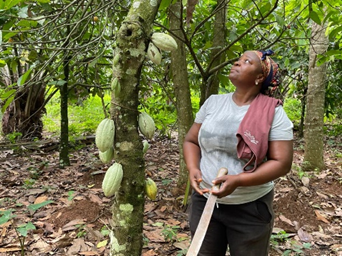
A 45-year-old smallholder farmer at Jato, Vida Korlekie Djamgbah, owns one and a half acres of cocoa farm. For the past 11 years, cocoa has been her major source of livelihood, but she fears the growing impact of climate change on production. “In the past, our cocoa trees produced abundantly, but things have changed. These days, heavy rains often knock off the flowers before they mature, leaving us with smaller harvests. We’re doing everything we can to adapt.”Her struggle is not an isolated one. It is the frontline of a battle for the survival of Ghana’s “golden bean”—a crop that serves as the nation’s economic heartbeat and the primary livelihood for millions of rural citizens. As climate change intensifies, the very foundations of the world’s second-largest cocoa producer are being shaken by rising temperatures, erratic rainfall, and a surge in pest invasions.
The data of a crisis
The scale of the challenge is laid bare in the latest production figures. In the 2023/2024 season, Ghana’s cocoa output plunged to 530,872 metric tons. This represents the lowest yield in 15 years, a staggering decline that has sent ripples through global commodity markets and local economies alike.
For the farmers in Suhum, these statistics are not just numbers on a ledger; they represent the erosion of dreams and the threat of poverty. The traditional weather patterns that once dictated planting and harvesting cycles have dissolved into unpredictability. Prolonged droughts now bake the soil hard, while sudden violent deluges wash away nutrients and destroy the delicate flowers necessary for pod development.
The rise of agroforestry
Despite the grim outlook, a new narrative of resilience is emerging from the fields. It is led by farmers like 28-year-old Felix Tettey, who owns a two-acre farm in the village of Abenabo. His production dropped from 16 bags (64 kg) in 2021 to nine bags in 2024, a change he blamed on the adverse impacts of climate change.
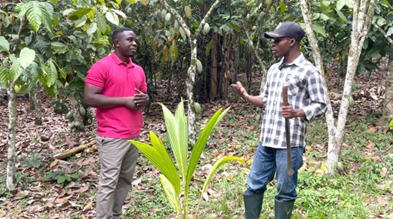
Representing a younger generation of growers, Felix is moving away from the monoculture practices of the past in favour of climate-smart agriculture. He has embraced agroforestry—the practice of intercropping cocoa trees with taller, shade-providing economic trees. This method creates a microclimate that protects the sensitive cocoa plants from the scorching sun and helps the soil retain moisture during dry spells.“We have embraced agroforestry to sustain our farms. For us, this isn’t just about environmentalism; it’s about economic survival,” he said.
The strategy is backed by experts from the Ghana Cocoa Board (COCOBOD). Mohammed Alhassan, a Community Extension Agent with COCOBOD, spends his days traversing the Suhum Municipality, advising farmers on how to integrate trees effectively.
“Intercropping trees with cocoa is vital to protect soil, retain moisture, and boost yields. However, the practice requires precision. Not all economic trees are suitable. We must select species that complement cocoa growth rather than compete for sunlight and nutrients. It is a delicate balance of biology and management,” Mr. Alhassan explained.
The irrigation hurdle
While shade trees provide a natural defence, the increasing frequency of droughts has made water management a critical priority. For many, irrigation is the difference between a surviving farm and a graveyard of dead wood.
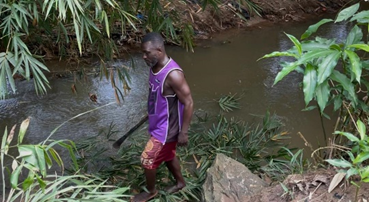
One of the farmers attempting to bridge the gap between traditional rain-fed agriculture and modern technology is Thompson Yeboah. The 47-year-old farmer’s six-acre farm sits near a water source at Abenabo, but the transition to irrigation has been fraught with financial and technical obstacles.“I tried installing a small irrigation system, but the pump was too weak to do the job,” Yeboah said. The lack of capital to purchase high-capacity equipment has forced him into a grueling routine of manual labour. “So we improvise—filling drums and watering the farm by hand. What we really need is a higher-horsepower pump, or even a solar or electric system, to make irrigation work the way it should.”
His situation highlights a systemic gap in the climate adaptation strategy: while the knowledge of how to adapt exists, the resources to implement those changes are often out of reach for the average smallholder farmer.
The power of mulching
In the absence of expensive machinery, farmers are turning to the land itself for solutions. One of the most effective tools in their arsenal is the very husk of the cocoa pod that was once discarded as waste. After removing the beans for sale, farmers like Felix now spread the empty cocoa husks across the floor of their farms. This natural mulch serves a triple purpose: it enriches the soil with organic matter, locks in moisture during periods of intense heat, and suppresses weeds.
“It gives the trees the strength to withstand harsh weather,” Mr. Alhassan noted. This circular approach to farming—using the crop’s own byproducts to protect its future—has become a cornerstone of the Suhum farmers’ adaptation toolkit.
Diversification as a safety net
The volatility of the climate has also forced a shift in the economic mindset of the cocoa belt. Relying solely on a single crop is no longer a viable strategy. Farmers are increasingly diversifying their land, planting food crops alongside their cocoa.
This diversification provides a dual benefit: it ensures food security for the farmer’s family if the cocoa harvest fails, and it offers an alternative stream of income throughout the year. In the fields of Suhum, it is now common to see plantains, cassava, and maize growing between cocoa rows.
A call for national action
The resilience of farmers like Vida, Felix, and Thompson is a testament to the ingenuity of Ghana’s rural population. However, the burden of adaptation cannot rest on the shoulders of smallholders alone.
The 15-year low in production is a national emergency. Cocoa contributes significantly to Ghana’s GDP and is a major source of foreign exchange. If the industry collapses under the weight of climate change, the economic repercussions will be felt from the halls of government in Accra to the smallest village markets.
The resilience of farmers is clear—what they need is a nation that stands with them. For the cocoa legacy to survive, experts argue that a coordinated effort is required. This includes government investment in large-scale irrigation infrastructure, subsidised access to climate-resilient seedlings, and enhanced support for extension services.
As the sun sets over the hills of Suhum, the farmers continue their work. They are mulching, planting shade trees, and hand-carrying water to thirsty plants. They are fighting to ensure that the golden bean remains a symbol of Ghana’s future, rather than a relic of its past.