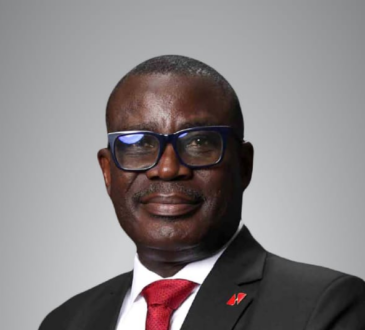

The Governor of the Bank of Ghana, Dr. Johnson Pandit Asiamah, has urged Ghana’s media—particularly private newspapers and online publishers—to play a stabilising role in the country’s economic reset, warning that weak economic reporting can undermine confidence even as headline indicators improve.
Speaking at a capacity-building workshop for journalists at the Peace Holiday Resort in Ada, the Governor in a speech read on his behalf said the task of rebuilding the economy must be matched by a reset of the national narrative, arguing that public understanding of monetary policy is now as important as policy execution itself.
“When citizens understand why decisions are taken, they engage with confidence rather than fear,” he said, pointing to inflation dynamics, interest-rate signalling and foreign exchange market behaviour as areas where clearer explanation could help anchor expectations.
The workshop, held under the theme “Resetting the Economy: The Role of Journalists, News Publishers and Media Owners”, comes at a time when Ghana is seeking to consolidate recent macroeconomic stability following a period of sharp adjustment under an IMF-supported programme.
The Governor cautioned that incomplete or poorly contextualised reporting—particularly on market-sensitive issues—can amplify uncertainty in foreign exchange markets. He urged newsrooms to strengthen verification processes, rely on official data and use central bank channels to clarify information before publication.
While welcoming scrutiny of policy decisions, he said accountability must be evidence-based, encouraging journalists to distinguish between short-term volatility and longer-term policy direction.
To institutionalise engagement, the Bank of Ghana announced expanded training programmes for journalists covering monetary policy, FX operations, payments oversight and financial stability. It will also establish a regular Editors’ and Producers’ Forum to provide background and context ahead of major data releases and policy decisions.
In a bid to raise standards in economic reporting, the central bank unveiled an annual “Economic and Financial Story of the Year” award, with the winning journalist sponsored to attend the IMF–World Bank meetings. The award will be judged on accuracy, depth, clarity and public impact.
The Governor said closer cooperation between the media and the central bank would be critical to sustaining the recovery. “When the public understands, the economy functions better,” he said.
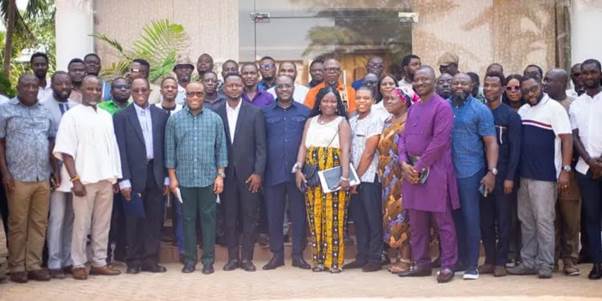
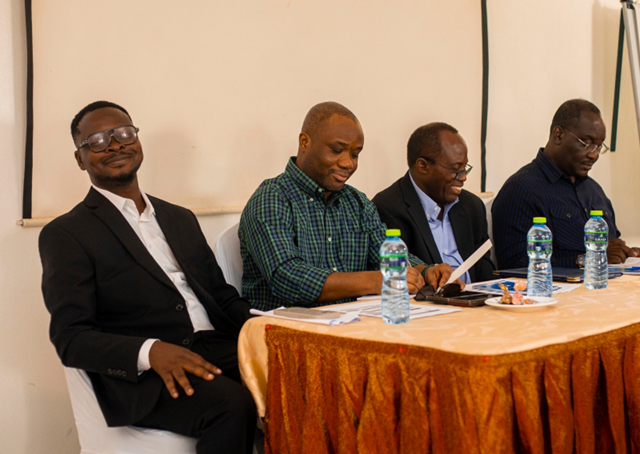
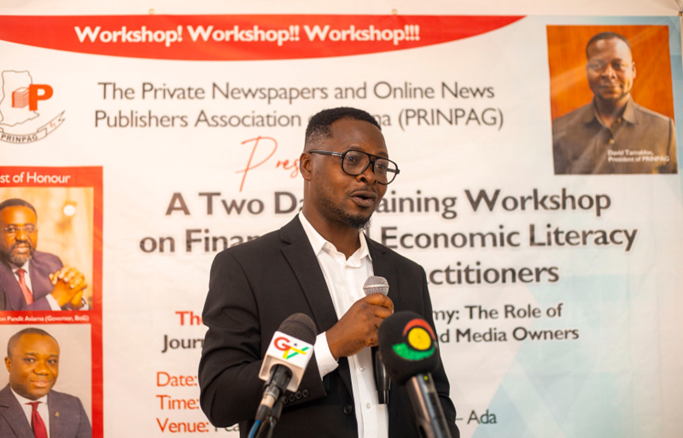
The two-day workshop, organised in partnership with the Private Newspapers and Online Publishers Association of Ghana (PRINPAG), brought together 45 participants from media organisations across the country.
Opening the programme, PRINPAG president David Sitsopé Tamakloe said the training was intended to equip journalists to interpret the Bank’s data-driven, forward-looking decisions and to report economic reforms as interconnected elements of recovery rather than isolated policy actions.
He described 2025 as a year of difficult but necessary adjustment, adding that as Ghana enters 2026—a period the central bank has framed around consolidation and discipline—the media’s responsibility becomes even more critical.
Also addressing the workshop, Minister of State in charge of Government Communications Felix Kwakye Ofosu urged media organisations to innovate in response to digital disruption, disclosing that government plans to re-establish the Media Development Fund to support the sustainability of the sector.
For the central bank and media leaders alike, the message was clear: stabilisation is not only a function of fiscal and monetary tools, but also of how economic reality is explained, tested and trusted in the public space.