Africa’s future hinges on jobs and trade, says Mahama at APD 2026


By Eugene Davis
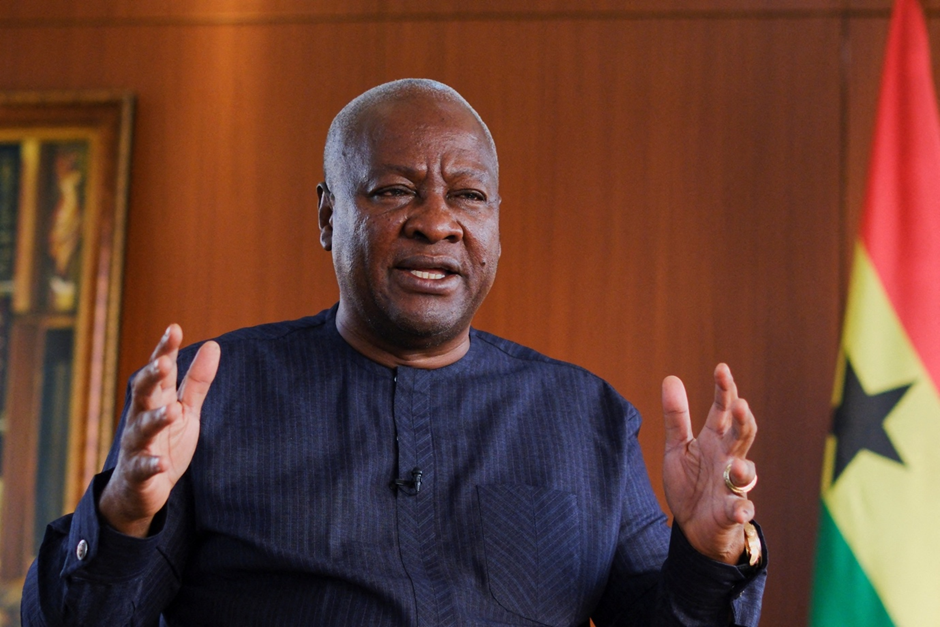
President John Dramani Mahama has asked African governments to turn ongoing reforms, stronger coordination and more confident leadership into lasting economic transformation across the continent.
He said durable growth will demand clarity of focus, expanded intra-African trade and deliberate industrial policies that strengthen priority sectors, build skills and boost local production.
Speaking at the opening of this year’s Africa Prosperity Dialogues in Accra — in remarks delivered on his behalf by Vice President Jane Naana Opoku-Agyemang — the President noted that Africa already has momentum.
“Today we are seeing sustained efforts, deeper coordination and increasingly confident leadership. The task now is to convert this into durable economic transformation,” he said, stressing the need for infrastructure, innovation, technology, strong institutions and effective governance to anchor progress.
Using Ghana as an example, President Mahama pointed to the government’s proposed 24-hour economy initiative, aimed at unlocking productivity through better coordination of infrastructure, finance and public institutions so businesses are no longer constrained by avoidable delays and inefficiencies.
He added that the ‘Big Push’ Infrastructure Development Programme is designed to strengthen trade corridors and industrial growth, while aligning Ghana’s priorities with those of ECOWAS and the African Union.
“And we must continue to integrate our borders. This is not about erasing sovereignty,” he said. “It is about organising our sovereignty in service of shared prosperity — enabling an entrepreneur in Accra, Kigali or Luanda to see Africa as one connected market.”
President Mahama also described the African Continental Free Trade Area (AfCFTA) as more than a technical trade pact, calling it a strategic tool capable of unlocking the continent’s vast economic potential and delivering shared prosperity. However, he cautioned that its success will depend on inclusivity, particularly support for the informal sector that sustains millions of Africans.
Beyond the policy messages, the Africa Prosperity Dialogues itself has increasingly become a practical platform for aligning governments, banks and private sector leaders around implementation — from financing and infrastructure to payments and SME growth — moving the conversation from rhetoric to execution.
Special Guest Speaker and First Lady of Angola, Ana Afonso Dias Lourenço, echoed the call for deeper integration, arguing that Africa must dismantle not only customs barriers but also linguistic ones that quietly restrict trade and trust among its people.
She urged greater investment in language education to help youth and women entrepreneurs negotiate and do business across borders, describing Africa’s diversity as a strength that should facilitate, not hinder, economic unity.
Highlighting Angola’s priorities, Lourenço said human capital development remains central to the country’s transformation, with renewed focus on education, technical and vocational training. She identified agriculture, industry, renewable energy, the digital economy and innovation as key drivers of jobs and resilience.
“There can be no sustainable free trade without climate-resilient agriculture,” she noted, calling for green technologies and stronger support for women farmers.
She stressed that women and youth inclusion is not merely social policy but sound economics. “Investing in women and youth is a strategic decision to build stronger economies, fairer societies and shared prosperity across Africa,” she said.
From the financial sector, Managing Director and CEO of Fidelity Bank Nigeria, Dr Nneka Onyeali-Ikpe, called for targeted support for women-led SMEs, emphasising skills development, digital platforms and better supply chain access to help small businesses scale.
Meanwhile, the Governor of the Bank of Ghana, Dr Johnson Pandit Asiama — in remarks delivered by Deputy Governor Matilda Asante-Asiedu — reminded participants that trade agreements alone do not create trade.
“Payments make trade possible,” he said, noting that slow and costly cross-border payment systems remain a major bottleneck. He pointed to Ghana’s fintech growth and mobile money interoperability as models that could underpin faster regional transactions.
Held under the theme Empowering SMEs, Women and Youth in Africa’s Single Market: Innovate, Collaborate, Trade, the 2026 Africa Prosperity Dialogues, organised by the Africa Prosperity Network, continues to position itself as a convening ground where policy ambition meets practical solutions — a critical step if AfCFTA is to translate from promise into real economic gains for businesses and households across the continent.