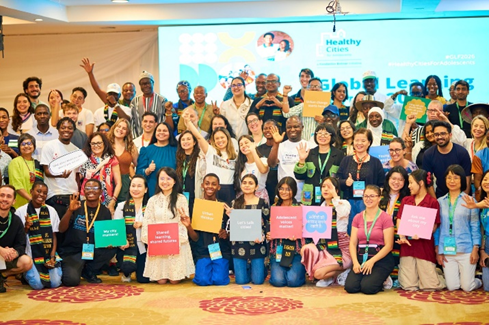

Ghana has successfully hosted the Global Learning Forum (GLF) 2026, drawing global attention to the power of youth leadership in shaping healthier and more inclusive cities.
Held from February 2 to 6 in Ho and Accra, the week-long forum brought together more than 200 practitioners, policymakers, youth advocates, researchers and development partners from Ecuador, India, Colombia, Senegal, Vietnam, Australia and Ghana. The event positioned Ghana as a vibrant hub for global dialogue on adolescent wellbeing.
The forum, held in Ho and Accra, formed part of the Healthy Cities for Adolescents (HCA) Programme — a flagship initiative by Fondation Botnar in collaboration with Ecorys UK. The platform enables implementing partners to assess progress, exchange lessons and co-create solutions that place young people at the centre of urban development.
The forum was opened by the Programme Director at Ecorys UK, Kathryn Scurfield, who is also a key member of the HCA Global Team. She highlighted the programme’s significant achievements, including reaching more than 24,000 adolescents across six countries.
While celebrating the milestone, she stressed the need for humility and adaptability in managing a long-term, multi-country initiative. She encouraged participants to see both successes and challenges as part of collective growth.
Throughout the week, delegates participated in interactive workshops, peer exchanges and thematic sessions on adolescent mental health, youth participation in governance, inclusive urban design and digital innovation for wellbeing.
The Ho segment focused on reflection and field learning, allowing partners to assess what has worked and identify areas for improvement. In Accra, discussions shifted toward future planning, partnerships and strengthening global networks to ensure long-term policy impact.
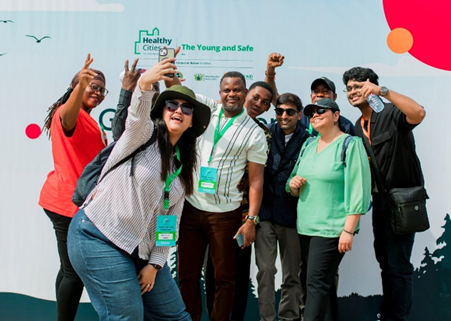
The highlight of GLF 2026 was the Urban Youth Dialogue in Accra — a public-facing event that opened the forum to city authorities, civil society organisations and other stakeholders.
More than 150 participants joined adolescent leaders from Ghana, Senegal, Ecuador, Colombia, India and Vietnam in a dynamic, youth-led engagement. Unlike traditional conferences, young people moderated discussions, shared lived experiences and led conversations on safety, mobility, mental wellbeing and access to opportunities.
The session challenged conventional power dynamics by positioning adolescents not as beneficiaries but as co-creators of solutions.
Through interactive activities such as Cityscaping and Futurescoping, young leaders and policymakers collaboratively mapped urban challenges and designed ideas for safer public spaces, youth-friendly services and inclusive governance systems.
Participants described the dialogue as energising and transformative, noting that authentic youth engagement brought clarity and urgency to discussions on urban wellbeing.
Hosting GLF 2026 underscored Ghana’s rising role in adolescent-focused development programming. Local partners showcased innovative models that integrate youth leadership, community engagement and policy advocacy. Ghanaian adolescents also shared their experiences directly, reinforcing the programme’s commitment to meaningful participation rather than token engagement.
As the forum concluded, participants left with renewed energy, strengthened partnerships and a shared commitment to deepen youth participation in governance and urban planning. GLF 2026 demonstrated that healthier, safer and more inclusive cities can only be built when adolescents are recognised as active partners in shaping the future.