By Eugene Davis
Ghana’s push to recalibrate its mining sector gathered pace this week, as the Lands Minister and the regulator signalled a tougher stance on enforcement and a sharper focus on turning mineral wealth into domestic industrial capacity.
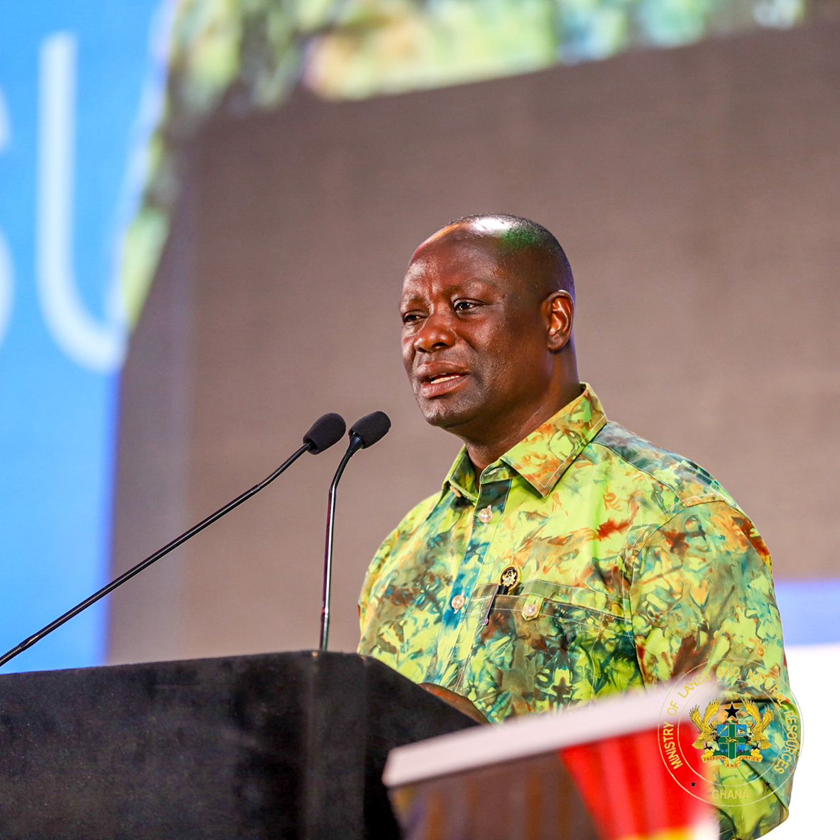
Addressing the Maiden Mining Local Content Summit, Emmanuel Armah-Kofi Buah said the era of symbolic local participation must give way to what he described as “a structured, intentional, backed-by-capital-and-technology opportunity — the kind that transforms potential into performance”.
Invoking the legacy of Kwame Nkrumah, Mr Buah framed the government’s indigenisation drive as part of the unfinished project of economic independence. Ghana, he argued, must move beyond extraction and embed its firms meaningfully across the mining value chain.
At the centre of that strategy is a new Mining Local Content and Local Procurement Policy Framework developed by the Minerals Commission, alongside plans for a Special Purpose Vehicle to catalyse industrial partnerships. The intention is to shift local content from a compliance exercise to a commercial model built on equity, technology transfer and supplier development.
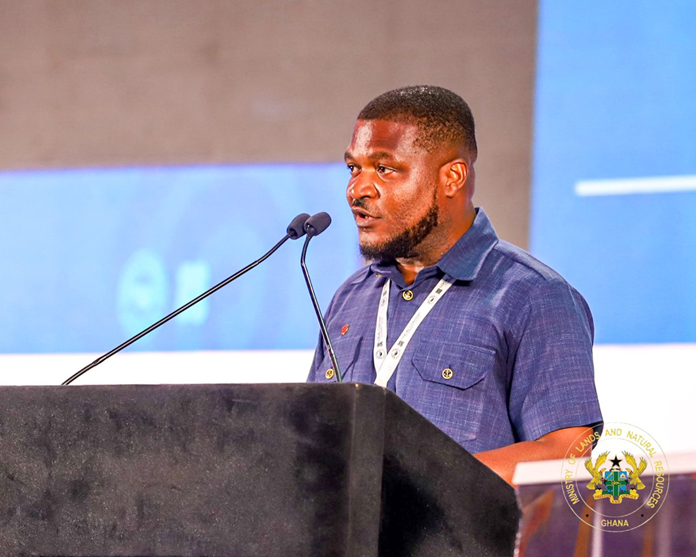
But both the minister and the Commission’s chief executive, Isaac Tandoh were blunt about what has undermined previous efforts: fronting. The practice, in which foreign operators hide behind Ghanaian entities to satisfy regulatory thresholds while retaining effective control, has hollowed out ownership and distorted incentives, particularly in the small-scale segment.
“We will not condone any form of fronting using Ghanaians,” Mr Buah said, describing it as a theft of opportunity. The Commission’s CEO echoed the warning, stressing that employment gains alone do not equate to economic control. “Labour is not ownership,” he said.
The regulator has begun tightening the screws. Over the past year, more than 300 small-scale licences deemed fraudulently acquired or improperly held have been revoked following due process. District Mining Committees — long dormant in practice — have been operationalised to ensure local oversight before licences are issued.
A broader legislative overhaul is under way. The Minerals and Mining Act, 2006 (Act 703), and the 2014 Mining Policy have been reviewed to close loopholes, while Legislative Instrument 2462, which allowed mining in forest reserves, has been revoked. A new medium-scale licensing category has been introduced to bridge the gap between small- and large-scale operations, creating space for responsible Ghanaian firms to scale up.
Development agreements, which the Commission says have in some instances delivered limited value relative to concessions granted, are being phased out. A revised royalty framework is also being proposed to ensure the state captures a greater share of windfall gains when gold prices are elevated.
“This is not about punishing investors,” the CEO said. “It is about ensuring that when prices are high, the Ghanaian people also benefit.”
The economic implications are significant. Mining remains one of Ghana’s largest foreign exchange earners, yet much of the high-value engineering, fabrication and technology input is imported. By insisting on joint ventures that transfer skills and capital — whether in fabrication, digital monitoring systems or equity participation — policymakers are attempting to retain a larger share of value within the domestic economy.
If implemented effectively, the reforms could deepen local supply chains, stimulate manufacturing and technical services, and create higher-skilled employment. Greater equity participation by Ghanaian firms would also mean dividend flows and retained earnings circulating locally rather than being fully repatriated, with positive knock-on effects for investment and tax revenues.
There are risks. More stringent rules and revised royalty terms may unsettle some investors at a time when global capital for mining is increasingly selective. The credibility of the reforms will hinge on consistent enforcement and regulatory predictability.
Still, the direction of travel is clear. Ghana is seeking to reposition itself not merely as a destination for mineral extraction, but as a jurisdiction where mining underwrites industrial capability. As Mr Buah put it, minerals are finite. The capacity built around them need not be.