JCS Investment backs Ghana’s circular economy commissions eco-friendly bus stop


By Eugene Davis
The chief executive and founding partner of JCS Investments Limited, Patricia Safo, has called on government and municipal authorities to play a more active role in advancing Ghana’s circular economy through incentives, clear regulatory frameworks and sustained policy support.
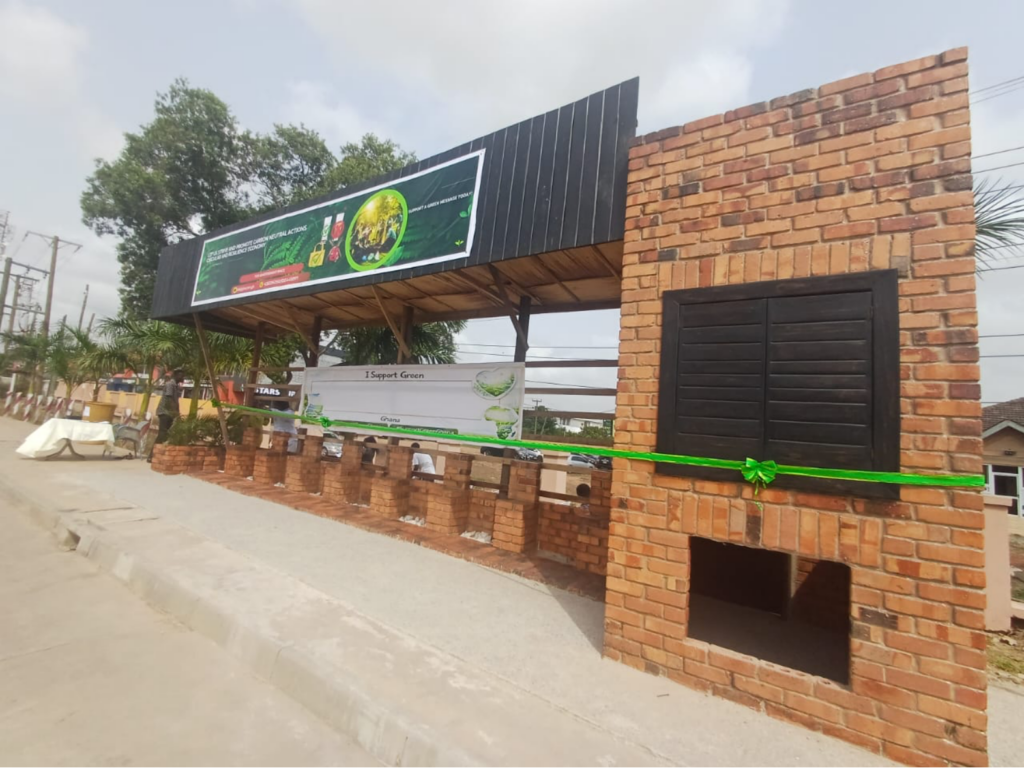
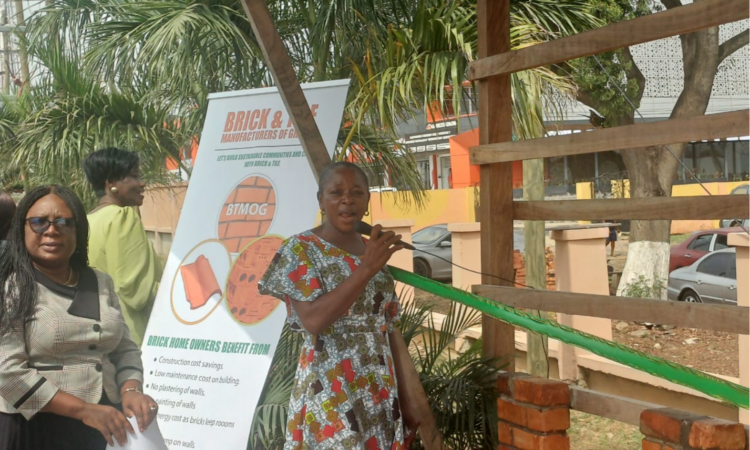
Speaking at the commissioning of an eco-friendly bus stop on the Spintex corridor in Accra, Ms Safo said private initiatives alone would not be enough to drive the transition toward more sustainable production and consumption patterns.
“This is where policy must play a critical role,” she said, urging authorities to create the conditions that would allow circular economy initiatives to scale beyond isolated projects.
Globally, the circular economy — which emphasises reuse, recycling and local production to minimise waste and carbon emissions — is gaining momentum as countries pursue carbon-neutral development pathways. Ghana has signalled similar ambitions in its climate commitments, though implementation on the ground remains uneven.
Against that backdrop, a modest roadside structure on the busy Spintex stretch is emerging as a practical example of what such an approach could look like.
The bus stop, commissioned by JCS Investments, was built largely with locally sourced bricks, wood and woven matting, a deliberate departure from the concrete-and-steel designs that dominate most urban bus shelters in the capital.
For Ms Safo, the project serves both a practical and symbolic purpose. Beyond providing commuters with a safe and dignified waiting space, it also demonstrates how businesses can align infrastructure development with environmental responsibility.
By prioritising Made-in-Ghana materials and working with local artisans, the company sought to reduce the project’s carbon footprint while retaining value within the domestic economy. The approach shortens supply chains, supports small producers and cuts emissions associated with imported construction materials.
The benefits extend beyond environmental considerations. For the Greater Accra Region, the facility improves commuter safety and adds to the urban landscape along a heavily used transport corridor. At a national level, such initiatives could stimulate demand for local building materials, promote sustainable construction skills and encourage greater use of locally produced inputs.
Analysts say the real impact will depend on replication. If metropolitan, municipal and district assemblies adopt similar design principles — backed by procurement reforms and targeted incentives — small-scale infrastructure projects could become an effective lever for both industrial growth and emissions reduction.
JCS Investments may not be among Ghana’s largest developers, but its Spintex project illustrates a broader point: the shift toward a circular economy will rely as much on practical demonstrations as on policy commitments.
“This bus stop is more than infrastructure,” Ms Safo said. “It is a statement of values.”
In a country confronting rapid urbanisation, youth unemployment and growing climate pressures, that statement may carry significance far beyond a single roadside shelter.