
The Natural Resource Governance Institute (NRGI) is urging Ghana to adopt a strictly evidence-based approach to its renewed push for alumina refining, as stakeholders gathered in Accra to examine the viability of building a long-anticipated link in the country’s aluminium value chain.
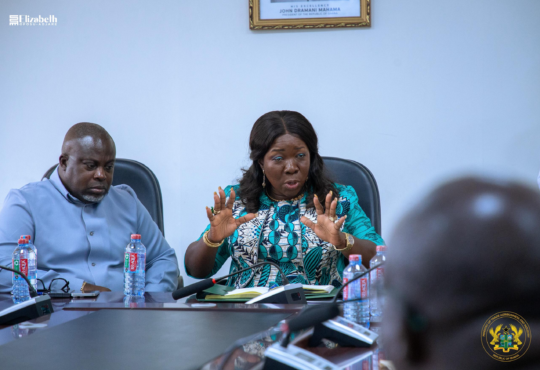
Speaking at sakeholder Engagement on Ghana’s Alumina Refining Viability, NRGI’s Ghana Country Manager, Patrick Stephenson emphasized that the discussion is not about promoting or opposing alumina refining, but about rigorously assessing whether it can deliver real economic and social value under current conditions.
He noted that Ghana is once again at a critical juncture where industrial ambition must be matched with realistic analysis, warning that decisions taken now will shape development outcomes and public trust for decades.
“Ghana’s ambition to build an integrated aluminum industry dates back to the post-independence era, anchored by the and the smelter. While the energy infrastructure has endured, the broader vision of linking bauxite mining to domestic alumina refining has never been realized. As a result, Ghana continues to export raw bauxite while importing alumina, capturing limited value despite growing production. In 2023, bauxite contributed just 0.6 percent of mineral revenues”.
Recent efforts to revive the sector, including the establishment of the and renewed investor interest in refining and smelting, signal momentum. However, past challenges ranging from financial difficulties at VALCO to power pricing disputes and environmental concerns have reinforced the need for caution.
NRGI’s forthcoming alumina refining viability assessment builds on its broader work in Ghana’s extractive sector, including research on lithium refining, mining governance, and the role of infrastructure and energy pricing in industrial development. Across these studies, the organization has consistently stressed that value addition is only beneficial when it is economically viable, socially just, and supported by strong institutions.
The alumina study, discussed in detail at the engagement, seeks to answer a central question: under what conditions can value addition work for Ghana? It examines key variables such as energy costs, financing, infrastructure, and governance, while highlighting the risks of pursuing large-scale industrial projects without a clear understanding of trade-offs.
This analysis comes as the global aluminum industry undergoes rapid change. Demand is expected to rise significantly through 2040, driven by electrification and clean energy technologies. However, refining capacity remains heavily concentrated, particularly in , which dominates global production. At the same time, countries like and are emerging as competitive refining hubs, intensifying pressure on new entrants like .
NRGI cautioned that not every bauxite-producing country will succeed in refining domestically, noting that competitiveness will depend on factors such as energy affordability, infrastructure, and policy design. The organization also pointed to shifting global dynamics, including carbon-border measures and supply chain diversification efforts in the United States and Europe, as both opportunities and risks.
Importantly, NRGI clarified that the engagement does not endorse any specific project or investor, nor does it argue that alumina refining should proceed at all costs. Instead, it aims to promote transparent analysis using open-source modeling, identify key success conditions, and surface environmental, social, and fiscal risks early in the decision-making process.
The organization is also calling for greater transparency from government, including the publication of relevant studies and policy documents, to enable informed public debate.
As Ghana and other countries across Africa and the Global South seek to move from raw material exports to value-added production, NRGI warned that poorly designed strategies could undermine rather than enhance development outcomes. It argued that Ghana has an opportunity to set a different example one grounded in disciplined policymaking and strong governance
Thomas Scurfield, Senior Africa
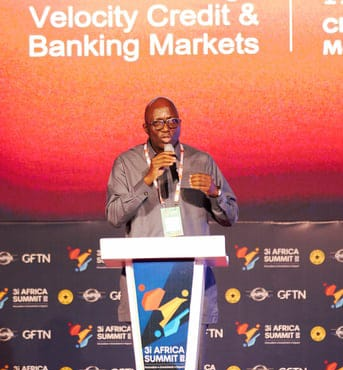
Economic Analyst, Natural Resource Governance Institute; in his powerpoint presentation, said Ghana’s plans to establish an alumina refinery will hinge on strong government support and the ability to produce low-emission outputs in an increasingly competitive global market.
He explained that new carbon-linked trade measures mean aluminum produced with high emissions could face higher tariffs, making low-carbon production a key factor for competitiveness and investor interest.
Thomas Scurfield noted that while opportunities exist such as supply chain diversification away from China and potential foreign investment Ghana faces stiff competition from countries like Indonesia and Guinea, which are rapidly expanding refining capacity.
He noted that an integrated mine-refinery project where investors undertake both bauxite mining and alumina refining offers the most cost-effective pathway to breaking even. However, even this approach would still require targeted government support, particularly in reducing key input costs.
According to him, in situations where investors are unwilling to engage in both mining and refining, the government would need to introduce a broader package of incentives. These may include significant reductions in input costs as well as tax reliefs to make the project attractive and sustainable.
Despite these options, Thomas Scurfield cautioned that all potential pathways come with considerable opportunity costs. He stressed that any form of government intervention would mean diverting public resources from other critical sectors of the economy.
He therefore urged policymakers to ensure that any decisions regarding the refinery project are made transparently and are grounded in solid evidence. Such an approach, he said, is crucial for effectively managing trade-offs and maintaining public trust in the decision-making process.