
By Eugene Davis
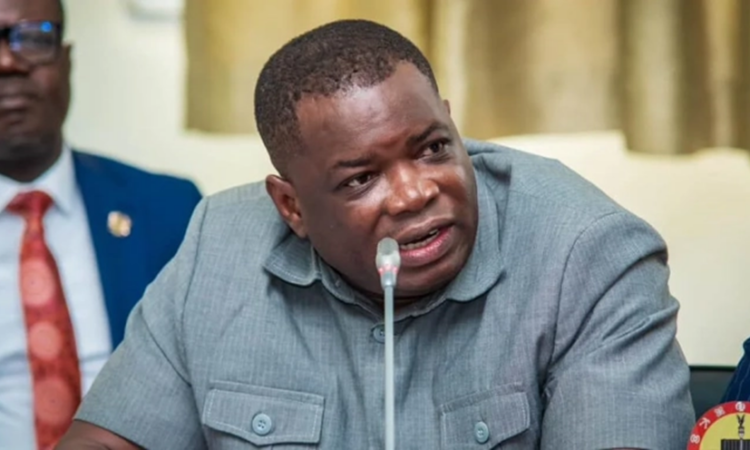
Roads and Highways Minister,Kwame Governs Agbodza has defended the government’s flagship “Big Push” infrastructure programme, telling Parliament that the initiative is already reshaping the country’s road network while tightening oversight on public spending.
Updating the House, the Roads and Highways Minister said the programme — launched in 2025 — is targeting critical corridors across all regions, with a focus on lowering transport costs, improving connectivity and supporting economic activity.
“Over 2,000 kilometres of roads are currently under construction or rehabilitation nationwide,” he said, adding that Parliament has approved close to GH₵50bn for multi-year road and bridge projects.
The initiative prioritises local contractors and labour, a move the minister said is intended to deepen domestic technical capacity in the construction sector while retaining more value within the economy.
Agbodza acknowledged sustained scrutiny of the sector but welcomed it as “necessary for accountability”, noting that contract details and project data have been made publicly accessible. “No ministry is subjected to as much consistent oversight,” he said.
Procurement and delivery
The minister rejected claims of excessive sole-sourcing, arguing that procurement has largely complied with the law and reflects the urgency of the programme. A mix of methods has been used to fast-track delivery, particularly for projects inherited in stalled condition.
More than 20 previously abandoned road projects have been absorbed into the programme with new funding structures, including key urban and intercity routes. These projects, he said, would have remained dormant without intervention.
To address cost concerns, the ministry has shifted towards in-house design and costing, combined with independent value-for-money assessments. “We have instituted stricter monitoring systems — no contractor will be paid without work done,” he told lawmakers.
Agbodza also pointed to efforts to clear legacy arrears in the sector, describing recent payments as one of the largest short-term settlements of contractor debt in Ghana’s history.
Economic rationale
The government has framed the Big Push as both an infrastructure and macroeconomic intervention. Poor road conditions, Agbodza said, had contributed to high transport costs and, in turn, food inflation — a dynamic the programme seeks to reverse.
Improved road networks are expected to reduce travel times, lower vehicle operating costs and ease the movement of goods between production centres and markets. That, in turn, could help stabilise prices and support productivity in agriculture and trade.
The scale of spending is also expected to have short-term stimulus effects, particularly through job creation in construction and related supply chains.
Risks and trade-offs
However, the programme comes with fiscal and execution risks. Large upfront capital commitments could strain public finances if not matched by sustained revenue flows, while accelerated procurement raises questions about cost discipline.
Agbodza dismissed concerns over transparency, insisting that Parliament retains oversight and that independent professionals validate project costs. He also cautioned against simplistic comparisons based on “cost per kilometre”, arguing that project complexity varies widely.
Outlook
With several flagship corridors now underway, the success of the Big Push will likely be judged on delivery speed, cost control and its broader economic impact.
If executed effectively, analysts say the programme could strengthen Ghana’s logistics backbone and improve competitiveness. But delays, funding gaps or weak oversight could dilute those gains — a balance Parliament is expected to continue testing as implementation gathers pace.